
Browse Items (422 total)
Sort by:
Suite des Remarques nouvelles sur la langue française
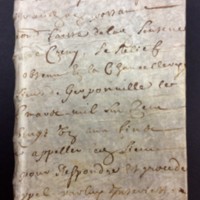
This title by Bounhours demonstrates the reuse of the materials by bookbinders. In this particular case, a very refined and aesthetically pleasing handwriting adds to the charm of this “recycled” bookbinding. The hand is unknown; does it stem from an…
Extract from the handbook: "Our Bodies Our Selves", Boston Woment's Health Cours Collective
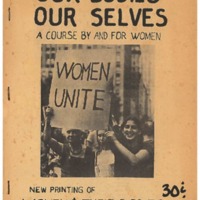
Extract from the handbook: "Our Bodies Our Selves", Boston Woment's Health Cours Collective, 1971
Ellipses Graecae; cum priorum editorum suisque observationibus edidit Godofredus Henricus Schaefer
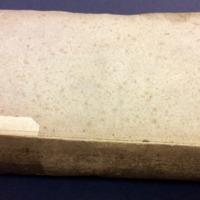
This shows us a variation in the rendering of roman numerals. Using a format scholar Paul Lewis calls “deep parenthesis”, an “I” flanked between by both a forward facing C and an upside down, backward facing C, would represent “1000”. And “I” before…
Oeuvres de monsieur Boindin
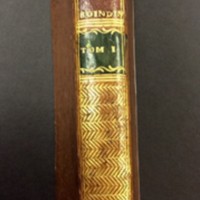
The use of marbling reaches its pinnacle with this example, with its swirling motif, which appear to be created in a “freestyle” manner. Of special note with this work is the fact that the edges of the book have been decorated using a similar…
Boetij Seuerini De diuisionibus & diffinitionibus libri emendatiùs quàm antea editi. Additis scholiorum vice adnotationibus vtilissimis
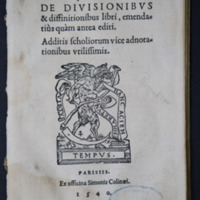
This work displays the printer’s device of Simon de Colines. De Colines (ca. 1475-1546) was active in Paris from about 1520 until his death in 1546. De Colines had actually collaborated with printer Henri Estienne (1528-1598), continuing printing…
Fighting Racism : Black Women Sharing Strength Building our Community

A flyer for a rally and march for International Women's Day March 8, 1986
1981 International Women’s Day.
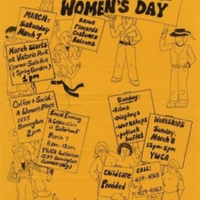
This poster was designed by Beth Foster and Pat Colp to announce various activities organized to celebrate 1981 International Women’s Day in Toronto.
Bartoli da Saxoferrato Prima super Infortiato
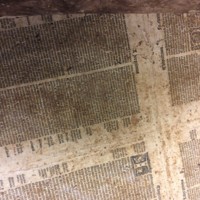
The pages that serve to form the inner boards of this work are actually composed of printer’s waste (printed sheets that could not be used by the printer or binder in a final copy). Boards of this nature were created by gluing several sheets of paper…
Le Livre nécessaire pour les comptables, avocats, notaires, procureurs, négociants, et généralement à toute sorte de conditions
The endpapers of this accounting “textbook” by François Barrême, a very popular work in its time, was used by its owner to puzzle out practical exercises of calculation, including problems and answers.
Jobs and Rights for Women! International Women’s Day!
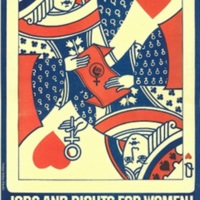
This poster was designed by the International Women’s Day Committee of Toronto for the 1979 International Women’s Day. The main image is based on a Queen of Hearts playing card. The theme of the year was “Jobs and Rights for Women!”. Women’s were…