
Browse Items (422 total)
Sort by:
Gulistan ou L'empire des roses : traité des moeurs des rois
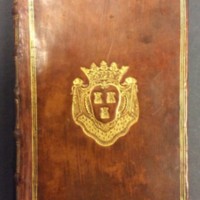
This first example is that of what is termed an “armorial binding”, where the coat of arms of an aristocratic family will serve to indicate ownership on a book’s binding. Such bindings are executed with exquisite care and a family’s arms are tooled…
L'utopie, traduicte par Samuel Sorbière
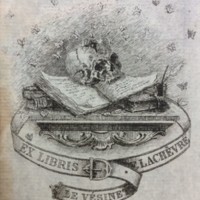
This bookplate of Fréderic Lachèvre (1855-1943), French bibliophile, literary critic, editor, and specialist in 17th century literature of the Libertines, is remarkable for the finesse of its engraving. The image of the skull resting on a pile of…
Political disquisitions
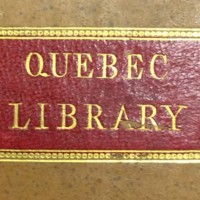
An ex-libris embossed on a leather over was one way of indicating ownership of a book. In this example, however, we do not see a familial coat of arms, as can be seen in image no.8, but the “Quebec Library” choosing to simply spell out its name in…
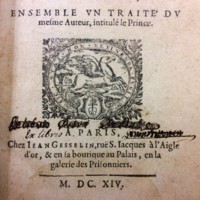
Les vies des hommes illustres, grecs et romains, comparées l'une avec l'autre
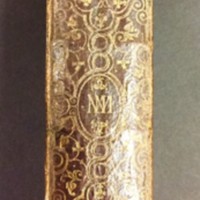
This binding in blonde calfskin, with hand-tooled motifs generated by many decorative finishing tools, is an example of “fanfare” binding. A “frame” is generated by a series of straight lines tooled into the leather, while the covers are completely…
Dialogues des courtisanesages
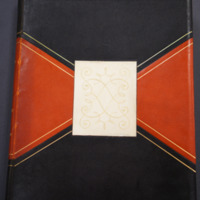
This binding is a geometric juxtaposition of blue and red morocco leathers with a centerpiece, also sporting tooled decoration in gilt, in white parchment. The binding is signed by G. Samucewicz, and although one sees mention of the binder in various…
Voyages and travels of an Indian interpreter and trader: describing the manners and customs of the North American Indians […]
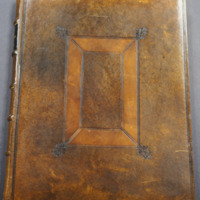
This speckled calf binding is created using a technique of depositing fine drops of acid on the binding’s leather to achieve the visual effect. A late 19th or early 20th century rebinding, this binding is executed in the “Cambridge” style. Very…
Elégie au génocide des nasopodeses
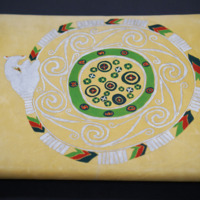
This collection of poetry from Québec poet, musician and actor Michel Garneau, is printed on loose leaves of paper and illustrated by Maureen Maxwell. All is housed in a leather “case” of a mosaic design, executed by artist Lise Rodrigue. This is…
Les gestes et faictz merveilleux du noble Huon de Bordeaulx […]
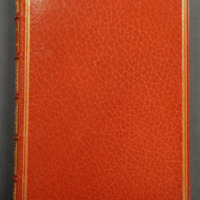
This exquisite binding in red morocco is a modern binding, probably dating to 350-400 years after the book was initially printed. Tooled and stamped in gilt, with elaborately gilded edges, this was a binding executed for someone with a love of luxury…
Le festin nuptial dressé dans l'Arabie heureuse au mariage d'Esope, de Phèdre & de Pilpai avec trois fées
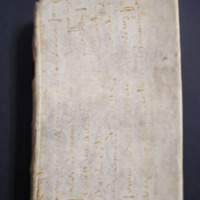
Bringing to life the adage of “waste not, want not”, this book’s binding is made of parchment that originally was someone’s correspondence. With paper and leather being expensive commodities due to the ever-increasing amount of titles being published…