
Browse Exhibits (27 total)
Montreal & the Irish
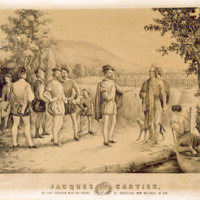
As the city of Montreal celebrates its 375th anniversary, it is important to both look back and reflect on the city’s long and storied history. From its simple beginnings as a ‘trading post’, Montreal has developed into one of Canada’s largest cities. Throughout the city’s transformation, there has almost always been a strong Irish community and presence within the city. The purpose of this site is to demonstrate the history of the city of Montreal in relation to “the role of the Irish immigrants as one of the five founding peoples” of Montreal. Through the demonstration of my research, I hope to paint a picture of the Irish community in Montreal between the sixteenth and the twenty-first century. In order to properly to do to this, this site will begin with a quick contextualization of the development of the the city of Montreal in relation to people of Ireland and their descendants. This will lead me into an analysis of the growth of both the city and its Irish population, as well as a recognition of the factors which contributed to the high influxes of Irish immigrants. I will then describe the social climate in Montreal between the end of the 19th century as it developed into what it is today. I will conclude by exploring the relationship of the established Irish community and the rest of the city. I hope to demonstrate the overall development of the Irish community in Montreal. While the relationship between the Irish and the rest of Montreal has not always been as friendly as it is today, I will be focusing on the positive aspects associated with the development of the Irish community in Montreal.
Nothing But Realism: Radio and Country Music Across America, 1920-1960
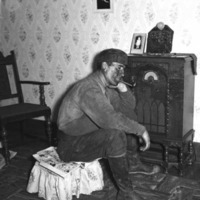
This exhibit explores the connection between radio and country music, especially related to radio's role in expanding the genre's audience beyond its Southern roots.
History and Hoarding: Compulsive Consumption Through the Ages

The exhibit analyzes compulsive hoarding disorder within the context of historical North American consumption patterns.
After the Fallout: Historical Memory of the Chernobyl Nuclear Disaster
This exhibit covers the 30-kilometer exclusion zone surrounding the site of the worst nuclear accident in history: Reactor 4 at Chernobyl Nuclear Power Plant (ChNPP).
You will learn about the history of the accident, explore areas of interest within the exclusion zone, hear firsthand accounts from those who lived and worked in the zone, as well as inform yourself about trends in popular culture related to Chernobyl.
☢☢☢
I chose this topic because it is not widely discussed despite the severity of the repercussions it had on many lives, the environment, and even politics. It is important to me that I foster my interest in this portion of history because there are many missing links and documentation -- I would like to fill in some gaps and hope to inspire others to do so as well. If history is not discussed or preserved, it can be lost to time. As the power plant and infrastructure in the exclusion zone decays, its history slowly slips away. As liquidators and former residents age, their narrative is at risk of being forgotten. This is why it is important to take action, to take it upon ourselves to make this history available for future generations. The Chernobyl nuclear disaster was both a terrible tragedy and a valuable lesson learned. By remembering its profound and damaging effects, we can ensure that history does not repeat itself.
Modernity and Movement: Transportation in Early-Modern Winnipeg
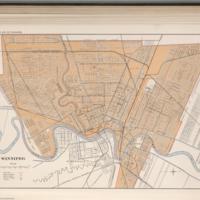
‘The Chicago of the North,’ Winnipeg entered the 20th century confident of its bright future as a major metropolis of North America. Yet, this expansion brought with it urban segregation, racism, and economic disadvantage that persists to this day. In charting the growth of Winnipeg during the boom years of the 1900s, this exhibition seeks to examine the material conditions which manifested from the spatial inequalities which existed in this rapidly developing city. The geographic segregation between the North Side and South, divided by the rail yards of the CPR engendered material inequalities which fostered an atmosphere of difference. This atmosphere of the Other was accelerated by the massive inflow of immigrants from lands considered exotic by the Anglo-Canadian elites that controlled Winnipeg. Winnipeg’s infrastructure development is thus examined to engage with the intersections of political and economic power, and its effect on the material conditions of urban life. In examining the material culture of Winnipeg roads, both the physical and spatial dimensions of this object will be examined. In addition, aspects of transportation heavily associated with the roads like the proliferation of bicycles and expansion of streetcars will also be integrated into this work. The integration of these aspects is carried out to provide a deeper understanding of examining the material deficiencies found in early-modern Winnipeg.