Browse Items (687 total)
Sort by:
"The Seaview African United Baptist Church," Africville: The Life and Death of a Canadian Black Community
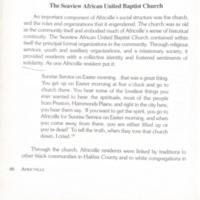
This passage from Africville: The Life and Death of a Canadian Black Community, highlights how central the Seaview African United Baptist Church was to daily life in Africville. The church was not just a religious space, it was also a social,…
"Kinship and Fluid Social Structure," Africville: The Life and Death of a Canadian Black Community

This passage explains how deeply connected Africville families were, and how the community’s social structure operated in ways that official records could never fully capture. It describes the various forms of tight-knit relationships that held the…
"Irvine Carvery's A 'Born Optimist'," in Stephenkimber.com, November 1994.
“Irvine Carvery’s a Born Optimist” by Stephen Kimber is a profile of Irvine Carvery written in 1994 that showcases Africville’s story within its continuing legacy. The article emphasizes resilience and pride among former residents and their…
"Why Shauntay Grant Created A Children's Book To Revisit The Legacy Of Africville," In CBC Books, 22 August 2018.

This article explains why Shauntay Grant created a children’s book to revisit the legacy of Africville. It highlights how the story offers a gentle, age‑appropriate entry point into a painful chapter of Canadian history, the story conveys a sense of…
Rockhead's Paradise

Rufus Rockhead’s Jazz Club was an extremely monumental location that defined St. Antoine's Street and Little Burgundy district as the “Harlem of the North”. Although there were restrictions on what property Black citizens could own at the time of its…

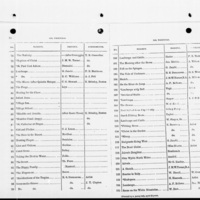
Église Union United Church
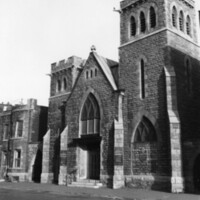
In 1905, Black women in Montreal founded the Coloured Women’s Club in response to widespread racial discrimination, including the denial of adequate health care during the smallpox epidemic. As Canada’s oldest Black womens institution, their work…
Procès-verbal de la vente d'un nègre envoyé aux sieurs Beaubassin
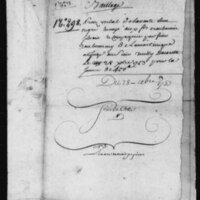
A record of a man sold at a slave auction in Louisbourg
Heated Exchange over Unreleased Residential School Documents

Survivors of St. Anne's residential school have been fighting the government in the courts for years for access to their documents. The Supreme Court of Canada announced it would not hear a motion to appeal the case.