
Browse Collections (4 total)
-
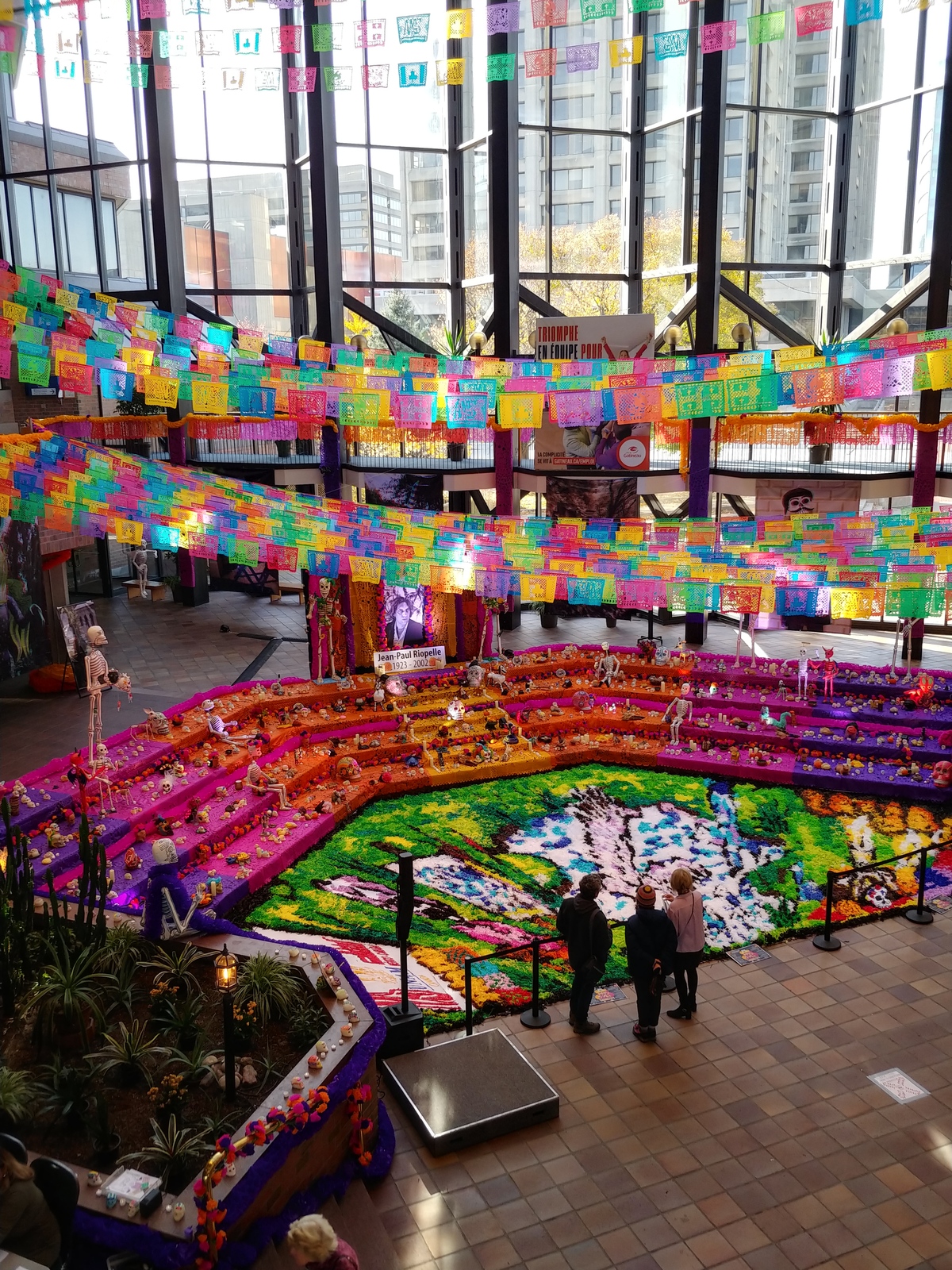
Latin American & Caribbean Organizations
As the capital of Canada, Ottawa is a city rich in diverse cultures and communities from around the world. Relocating to Canda from the southern hemisphere is a significant shift and challenge. For these immigrants, they face obstacles, including finding people who are culturally similar. Thankfully, there are many aid organizations which connect people with help.View the items in Latin American & Caribbean Organizations
In this section of AnthroHarvest, we showcase a few of these groups. They do not just celebrate immigrant cultures, they give them the chance to meet others and learn how to adjust to Canadian life. There are language classes, cultural events, and get-togethers. Each group is different. Some groups focus on keeping languages and traditions alive. Other groups help artists show their work. They provide spaces for people to meet and talk. All of these groups together illustrate the strength of Latin American and Caribbean communities here.
In the collections below, you will find more information about them: the Jamaican Ottawa Community Association, the Barbados Ottawa Association, Canada Habla Español, the Humanitarian Organization of Latin American Students, the Latin Hub and the Latin American Soldiers Committee in Canada. Specifically, we hope to emphasize different events, fundraisers, and resources they have, how to contact them and/or join their association, their social media pages, and a short description of the organization itself. -
Latin American stories from Ottawa
Beginning in Winter 2025, Professor Laurie Weinstein in ANT3340: Latin American and the Caribbean created Anthroharvest with the goal of inspiring students to explore the diversity of our city through ethnographic interviews. This collection stands as a pillar of students' ongoing efforts to interview friends, family, and members of Ottawa's Latin American and Caribbean communities in surrounding areas. Our ultimate goal is to create an archive of stories for those who identify with the Latin American and Caribbean community, accessible at any time, that preserves knowledge and promotes their cultures. Our project remains ongoing as we learn and connect with new students and people across Ottawa and eastern Canada. We invite you to browse the stories collected by our students, listen to the audio recording, and read transcripts and biographies of those interviewed.View the items in Latin American stories from Ottawa -

Sandy Hill Food Asset Mapping 2026
"Food systems considerations are an increasingly indispensable focus in urban planning. Resilient food systems, the systems and infrastructures needed for food production, processing, distribution, consumption and disposal, with the potential food supply chain disruption effects from climate change.” Shulman, Bulkan and Curtis 2022View the items in Sandy Hill Food Asset Mapping 2026
The students in Food and Food Systems Anthropology 4135 mapped the neighborhood surrounding uOttawa, called Sandy Hill. This historical neighborhood used to be the home to Ottawa's wealthy back in the late 19th and early 20th centuries. Today, embassies, government workers and university students live here.
The anthropology students were tasked with researching how people acquired food. Sandy Hill has a variety of eateries and convenience stores, but grocery stores are outside the central area. For lower-income residents, including students, accessing affordable fresh food is an issue. A number of charitable programs help fill that void, but not completely.
Students also looked at the transportation infrastructure here, the number of rentals to owners, green areas where gardens could be planted, charitable organizations offering food assistance and the history of Sandy Hill in maps. -
uOttawa Time Capsule 2025
The culture of the University of Ottawa can be understood through the everyday objects that define student life. It begins with the uOttawa student card, the first sign of belonging. Paired with a Gee-Gees lanyard or a bilingual business card, it reflects the university’s bilingual identity and its position as a meeting point between English and French. This duality shapes how students learn, communicate, and represent themselves both on and off campus.
View the items in uOttawa Time Capsule 2025
Student culture at uOttawa is also reflected in what people wear. Levi’s jeans, University of Ottawa hoodies, sherpa jacket, and Telfer sweatshirts show how clothing blends comfort, pride, and practicality. The 101er Frosh T-shirt and Shine Day shirt add another layer of meaning, symbolizing both community and philanthropy. Frosh week introduces students to campus life, while Shine Day connects them to broader causes like Cystic Fibrosis Canada. Together, they show that school spirit at uOttawa extends beyond academics.
The academic side of university life is seen in objects like the Apple products, headphones, notepaper, laptop stickers, syllabus, water bottles, and criminology string bags that fill classrooms and study spaces. These represent both creativity and routine. The Tim Hortons coffee cup might seem simple, but it captures a familiar ritual across campus. Coffee runs are part of the rhythm of student life, a shared pause in busy days.
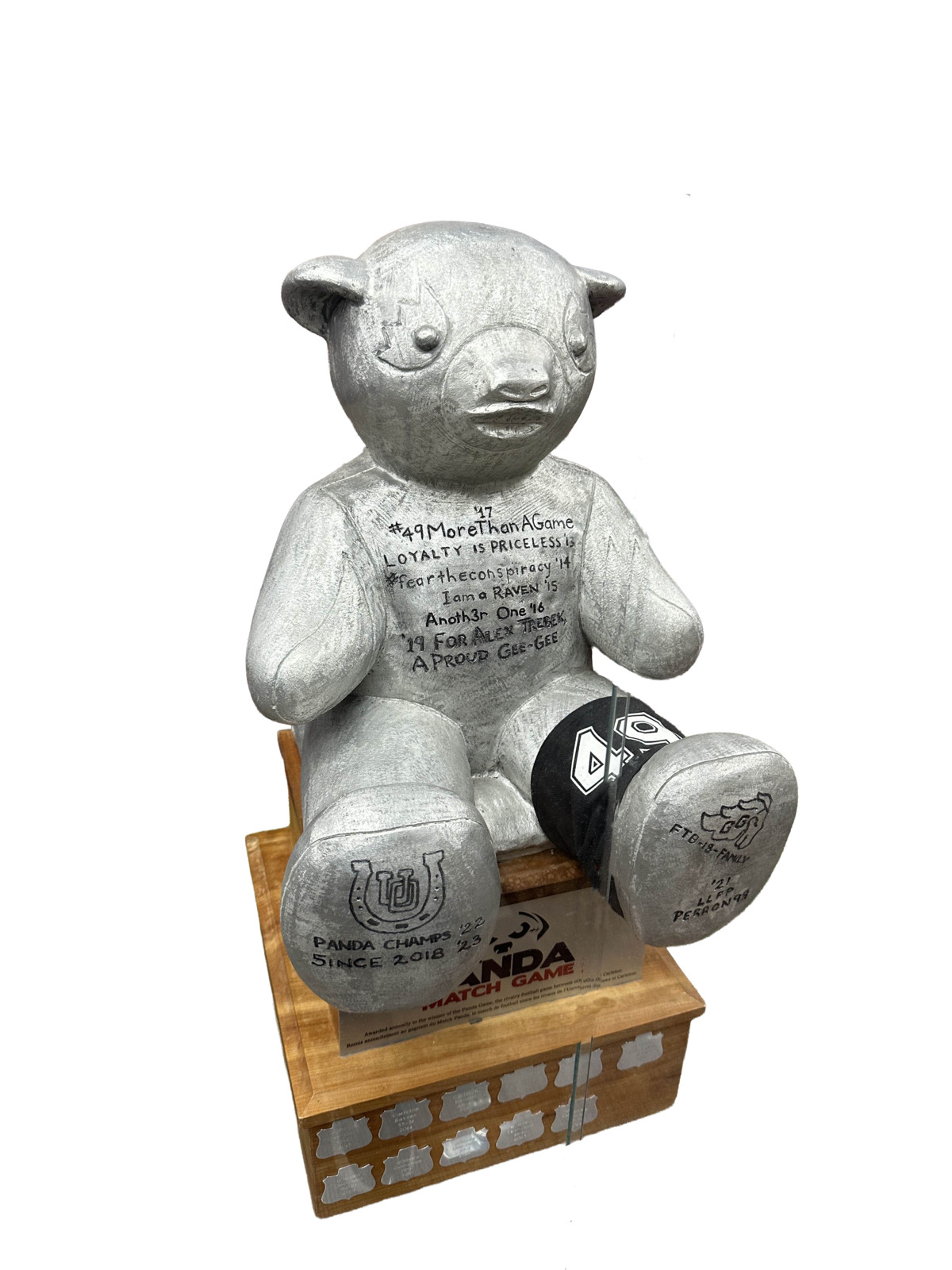
School pride and social life also find expression in items like Panda Game tickets and the Pedro Panda Trophy. These objects represent one of uOttawa’s biggest traditions, a yearly football rivalry with Carleton University that brings students together in celebration. Moments like this create a strong sense of community, even among a large and diverse student body.
The Orange Shirt acknowledges the atrocities and suffering experienced by those who attended residential schools in Canada as part of the national Truth and Reconciliation mandate to honor Indigenous peoples.
Finally, artifacts such as the U Cup mug, beer glasses from Father and Son's, a Prusa 3D printer, and even O-Frango’s—a popular student food stop, represent the blend of innovation and everyday culture. They show how uOttawa combines research, creativity, and social connection in a way that feels uniquely its own.
Taken together, these objects tell a story about identity and community. The culture of uOttawa is defined by hard work, inclusivity, and pride, but also by small moments of connection. From the student card to the Panda Game, each item reflects how students experience and shape university life every day.