
Survey Method and Demographics
 It has been well-documented that music plays a vital role in the well-being of seniors. In a 2002 Canadian study of the importance of music to seniors, most participants reported that they listened to music daily or at least twice a week, and rated music as a “very important” part of life. The researchers concluded, “within the group of seniors, whose age range spanned 30 years, musical importance was independent of age, geographical region (i.e. province), and level of mental competence” (Cohen et al. 2002, 96). Further studies have shown that frequent listening to religious music can reduce death anxiety, increase life satisfaction, and self-esteem (Bradshaw et al. 2015), and active participation in music contributes to an increased quality of life (Lehmberg and Fung 2010). While the present study does not address well-being directly, the research demonstrates the important intersection of music and faith in the lives of seniors.
Seniors attending Christian churches in Ottawa, Ontario, were invited to participate in a brief online survey which gathered some demographic information as well as details about how Covid-19 impacted their participation of singing in church. Nineteen respondents completed the survey.
Although Statistics Canada defines senior citizens as individuals over the age of 65 (2020), I invited participants over the age of 60 in order to gain a wider range of responses from individuals whose prior experience with music and technology was varied.
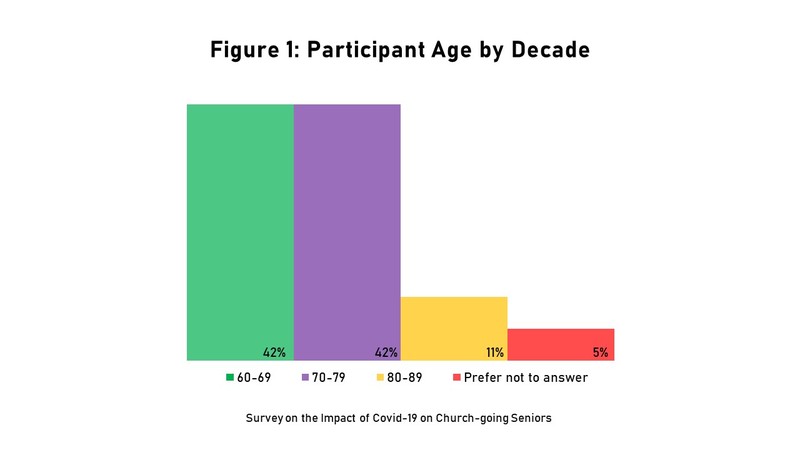
Figure 1 reveals the breakdown of participant age by decade. Of the nineteen participants who completed the survey, there was an equal number of participants aged in their sixties and seventies, as well as two participants in their eighties, and one who preferred not to answer.
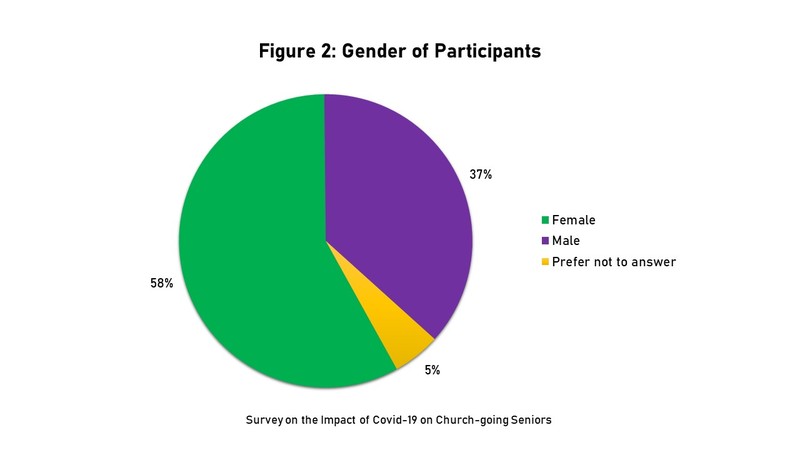
The graphs presented in this study do not show the options for which no data was collected. For example, in Figure 2, which summarises the gender of participants, only male, female, and "prefer not to answer" are listed as options. In the survey itself, a non-binary option was listed, but not selected. 58% of respondents are female, 37% male and 5% (one participant) chose not to answer.
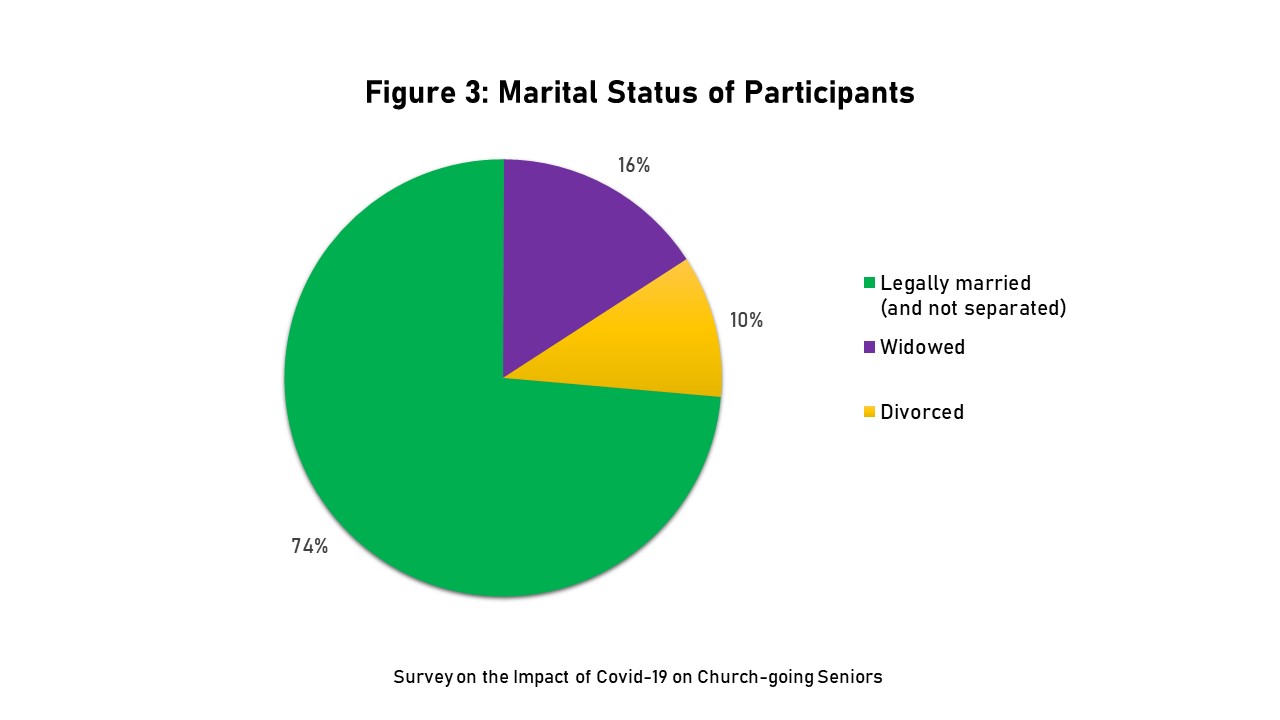
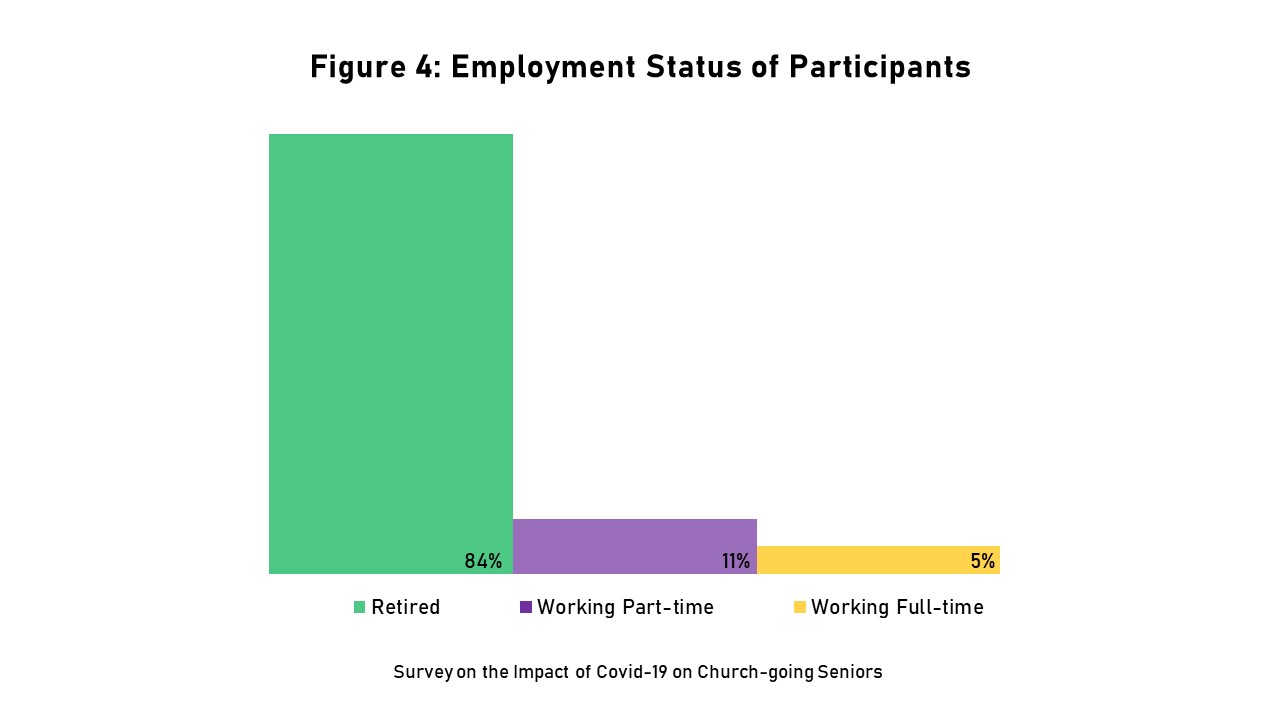
Figure 3 shows the marital status of participants, while Figure 4 shows the employment status of participants. 74% are married, and as Figure 4 shows, 84% are retired.
One of the main variables for which the survey did not account was seniors whose access to the internet is limited or non-existent. Because the survey was offered online, it did not reach the segment of the population who does not have internet access, or those who were not able to navigate the online platform. Further studies would do well to take this into account in order to address the impact of the pandemic on those who lack the means to participate in online services.