Browse Items (21 total)
Sort by:
Article on Bannister’s Prize-Winning Painting in The Billings Times
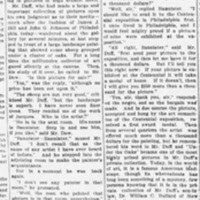
This posthumous report reflects the lingering racism, with writers still questioning whether a Black artist could truly have created the work attributed to him. Its inclusion exposes how paternalistic narratives persisted even after his death,…
Bronze Medal from the 1876 Centennial Exhibition
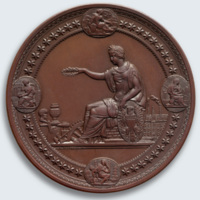
This medal represents the type of award Bannister won in 1876, symbolizing official validation of his artistic excellence. Its inclusion emphasizes the institutional significance of his achievement.
Edward Mitchell Bannister Biography in Men of Mark
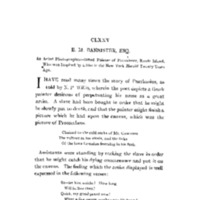
This biographical anthology entry places Edward Mitchell Bannister within a broader community of notable Black Americans in the late nineteenth century. It provides a rare contemporary acknowledgment of his artistic and abolitionist achievements at a…
Official Catalogue of the 1876 Centennial Exhibition

This catalogue provides the formal record of Bannister’s award-winning participation in the Centennial Exhibition. It is essential evidence of how his talent was recognized at a national level despite racial prejudice.
Report on Centennial Exhibition Award Recipients in The Boston Globe
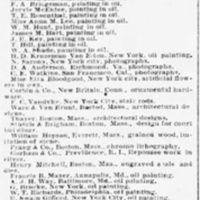
This report publicly acknowledges Bannister’s medal-winning success. It demonstrates how his recognition complicated racist assumptions about Black artistic capability on the national stage.
Report on Edward Mitchell Bannister’s Early Studio Work in the Boston Daily Evening Transcript
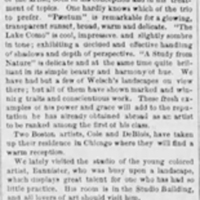
This early review documents one of Bannister’s first major public successes. It helps track how his reputation grew despite the racist skepticism circulating in white-led art circles early on.
Article on Massachusetts Artists at the Centennial Exhibition in The Boston Globe
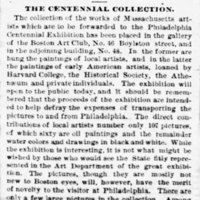
This article situates Bannister among the prominent Massachusetts artists who exhibited in 1876. It captures how his work circulated within regional artistic networks, leading to national fame.
Commentary on Edward Mitchell Bannister in the New York Globe
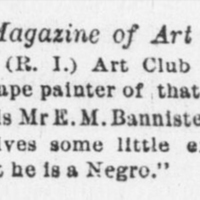
This newspaper commentary provides one of the earliest accounts of Bannister’s reception within cultural circles. The Globe notes the praises for his artistic achievements while acknowledging that it is still framed through the racism he endured. The…
Portrait of Edward Mitchell Bannister
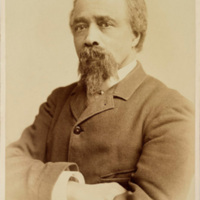
This portrait presents one of the few surviving likenesses of the artist created during his lifetime. It humanizes a man often only discussed in relation to his awards or critical reception. Showing Bannister’s face within the exhibit asserts his…
Portrait of Christiana Carteaux Bannister
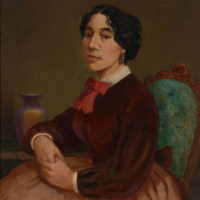
This portrait offers an intimate view of Christiana Carteaux Bannister, painted by her husband only a few years after their marriage in 1857. Bannister captures her in softer, warm colours, presenting her as composed and confident within an elegant…