
Browse Items (422 total)
Sort by:
Fulviae Moratae foeminae doctissimae ac plane divinae Opera omnia quae hactenus inueniri potuerunt […]
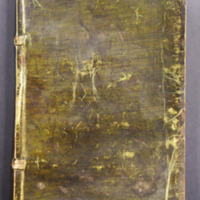
Leathers and parchments could be dyed so as to add colour to their external covers; they could also be painted. This third edition of the works of Olympia Morata, humanist, poet and linguist, of Italian origin, is an example of a parchment that has…
La Bulle d'Or, suivie De la Sanction Pragmatique et Loi perpétuelle

In the 20th century, in addition to the pasted-in ex-libris bookplate, we find many different styles and formats of ex-libris indications. The stamped ex-libris turns out to be not only a less onerous form but also one that is much more practical. We…
Aiegidii Menagii juris civilis amoenitates ad Ludov. Mublaeum, advocatum Parisiensem
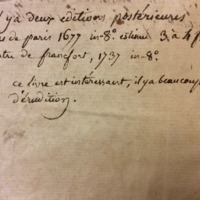
Published in Paris, this work does not have an ex-libris per se, but it does have a note written on the inner cover which might offer some insight into the person that owned it. The inscription reads “Il y a deux éditions postérieures l’une de…
Almanach nécessaire, ou, Porte-feuille de tous les jours
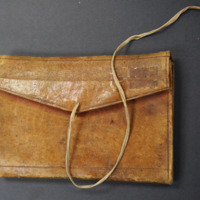
Like their modern cousins still available today, almanacs contained information necessary for the carrying out of many aspects of everyday life. Their biggest asset was their portability. The item held by Archives and Special Collections is in…
Nouvelles parodies bachiques : mèlées de vaudevilles ou rondes de table
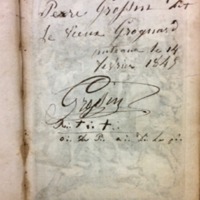
The front flyleaf has an elaborate inscription that is quite illegible due to its flamboyant handwriting. We do see the initial sentence “Souvenir de Pierre Grospin, dit le vieux grognard à M. Ballard.” These novellas parodying the bacchanalian seem…
Aesopi Phrygis Fabulae elegantissimis eiconibus [B. Salomon] veras animalium species ad viuum adumbrantes […]
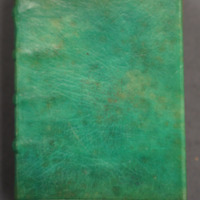
This item has been rebound at least once since its initial binding, this being demonstrated by evidence that the text block has been cut to fit a newer binding. The current binding is on calfskin which has been dyed green. While it is usually morocco…
Vocabvlario del hvmanista de Lorenço Palmireno : añadieron se en esta segunda impression, pons caesaris, selecta animalia, stromata, etc.
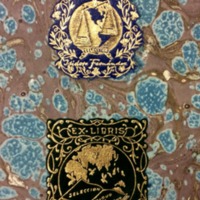
This work, published in Barcelona at the end of the 16th century, has two 20th century ex-libris labels affixed to its interior cover. These two ex-libris are associated with the same owner, namely Isodoro Fernandez, a Spanish collector and…
Officium Hebdomadae Sanctae : secundùm Missale & Breviarium Romanum, Pii V. Pont. Max. iussu editum, Clementis VIII. & Urbani VIII. auctoritate recognitum

This item’s binding is of black morocco (goatskin), one of the many colours that this very fine goatskin leather could be dyed with at the time. Its title appears in gilt on the spine, with gilt double borders on its front and back covers and gilded…
Essai sur la médecine du coeur […]
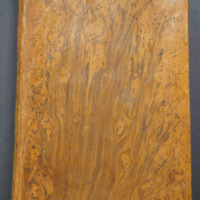
This is a tree-calf binding, with the tree-like appearance produced by pouring acid over the leather and the binding moved in a specific way to generate the desired pattern. Using a method that requires a high degree of mastery, the pattern is…
La Vie de Mademoiselle Le Gras : fondatrice et première supérieure de la Compagnie des Filles de la Charité, Servantes des pauvres malades
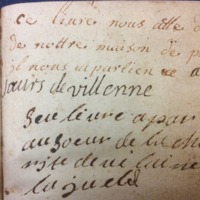
This book offers us an example of a new owner actually wishing to keep the traces of previous ownership. Besides the wish to keep track of the origin and physical journey of the book, it was also a way to assert ownership of the copy to anyone who…