Exhibition Report
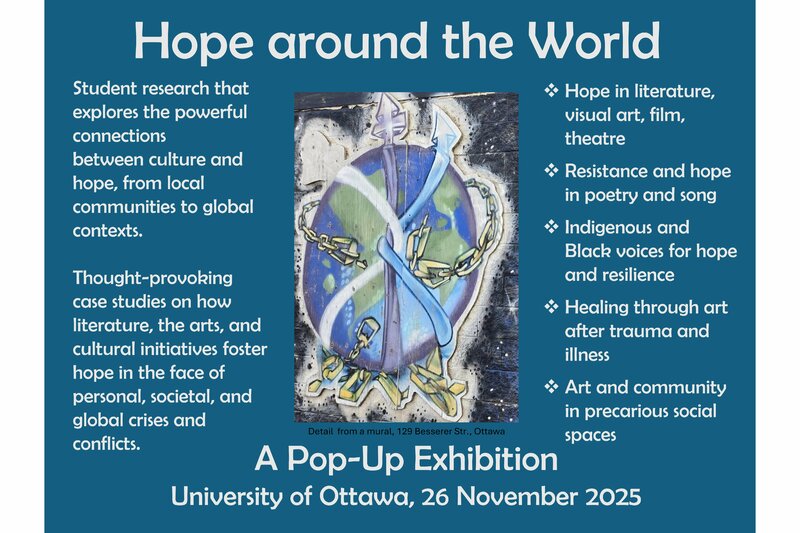
Hope around the World: A Pop-Up Exhibition
Report written by Faith Leroux
On the 26th of November, the Culture for Hope seminar’s pop-up “Hope Around the World” took place with sixteen students spread out into sections within Perez Hall's CreatorSpace. Each of Professor Joerg Esleben’s students from the joint LCM4199/ENG4188 course explored their own finalized takes on the applications of hope through a variety of past and present art exhibits, foundations, creative works, public media and Non-Governmental Organizations. While traffic was somewhat low—attracting few walk-in guests—writers Mirana Kelly and Navneel Agnihotri visited alongside the Faculty of Arts' own Vice Dean of Programs, Jada Watson. The exhibition was fruitful in reaching participants with their condensed arguments in favor of and criticizing hope. Visitors of the exhibition left feeling enriched and challenged to read up further on the topics proposed by the students.
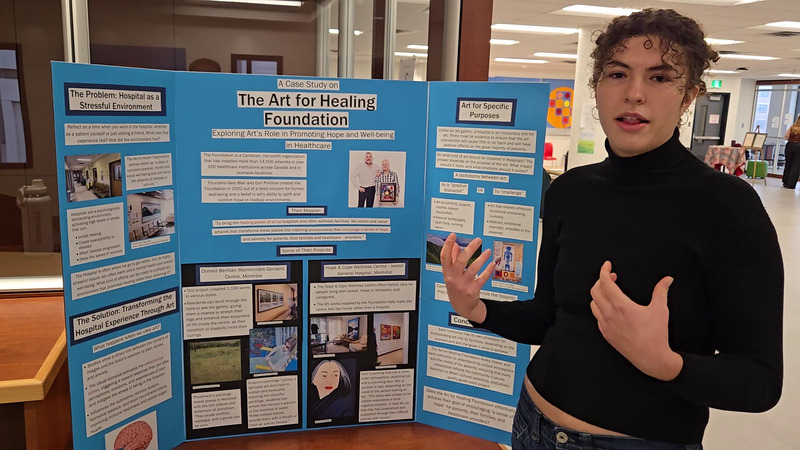
Kennedy Macey began the circle with her display of her semester work on “A Case Study on the Art for Healing Foundation”, a non-profit dedicated to the installation of art — mainly canvases and wall art — in medical facilities and exploring visual art’s role in “promoting hope and well-being in healthcare.” Her fold-out trifold details various different Canadian medical facilities' pieces obtained from the initiative and details the hope this foundation has spread through “positive distractors” and the way in which these works challenge visitors, patients, and employees of these institutions. Macey’s argument detailed how the foundation works around the involuntariness of observing these artworks and seeks to heal through comfort and direction of emotions.
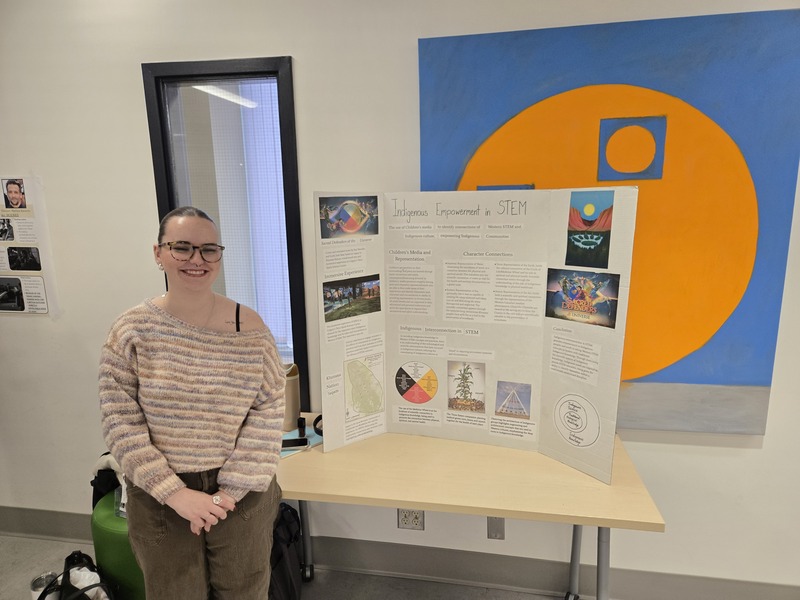
Second in the lineup, Ciara Robison focused on a different sort of healing. Robinson’s fold-out detailed “Indigenous Empowerment in STEM” within the framing of a cartoon animation and physical interactive exhibit called Sacred Defenders of the Universe and explaining how both portray hope of their own. Robison specified how children’s media can be used to identify intersections between Western and Canadian STEM with Indigenous culture to empower Indigenous communities. Namely, her poster-board highlighted specific examples of how Sacred Defenders of the Universe uses this intersection to introduce STEM relationships to Indigenous traditional knowledge, then through immersive experience deepens understanding by having viewers and participants—namely youth—identify within it. Robison hopes this experience inspires an interest in the pursuit of sustainable strategies.
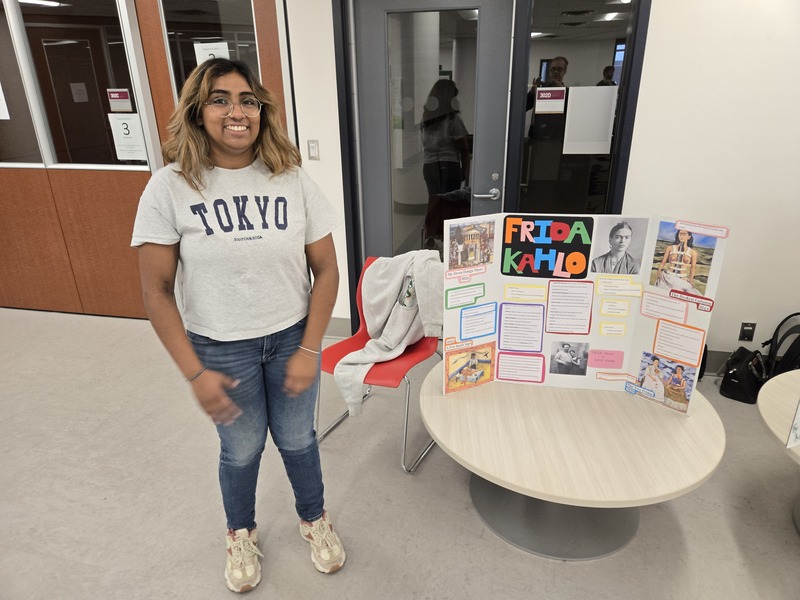
Third was Sofia Gonzalez with her colourful bristol board on Frida Kahlo, going in-depth on descriptions and social contexts of a few of Kahlo’s pieces. These include works such as The Broken Column and the portrait The Dress Hangs There. Both pieces are oil paintings, painted in 1944 and 1933 respectively, both of which were conceived during difficult moments of the artist’s life. The aim of Gonzalez’ case study was to showcase how art inspires a utopian form of hope, which can involve being uncomfortable—specifically within the context of Kahlo’s art and its focus in style. Gonzales explains how she wanted visitors to understand that “Frida wanted people to sit in the uncomfortable moments of life with her, and to keep pushing forward despite that feeling.”
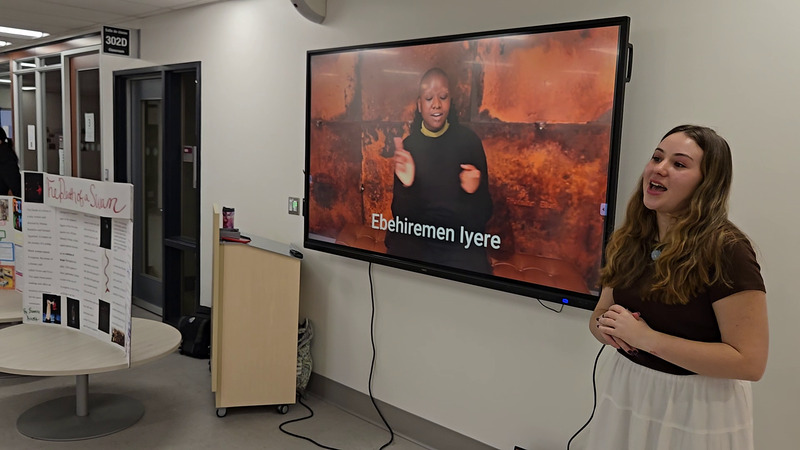
Breanna Sirois followed next with her exploration of the Ottawa Fringe festival play The Death of a Swan by the Moth & Firefly Theatre Collective—directed by Mirana Kelly and Navneel Agnihotri. The display of clips from the play and poster served to explore the safe spaces created through the work, and specifically how this art piece and its effects invoke change reliant on hope. Sirois’ project analyzed historical emblems of hopes through the historical figure William Dorsey Swann, discussing the role of the creative process within personal doubting of preconceptions. She argues that it is this form of critical hope that leads to productive kinds of change in society, imploring us “The play could not exist without hope. Do the work that seems invisible and tedious, for it is not for nothing.”
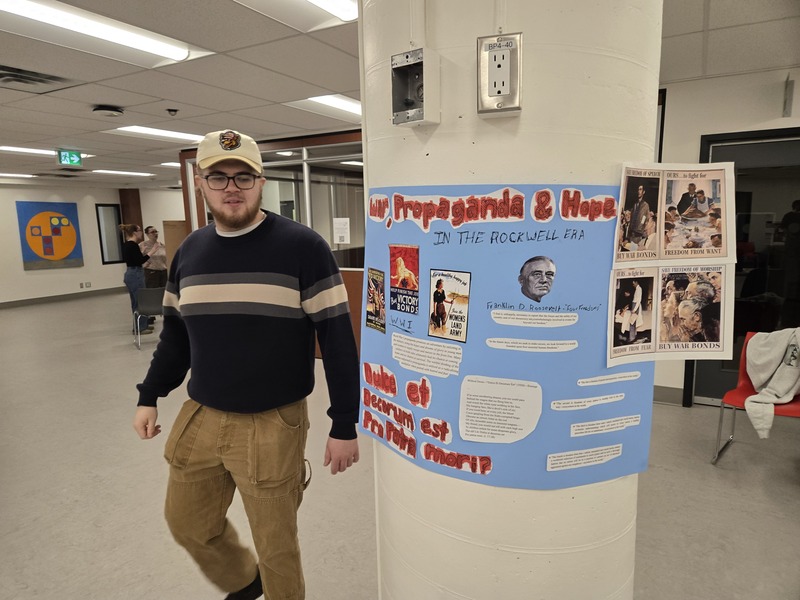
Keith Schoenfeld-Miller explains how “everybody can be a victim of propaganda; it is a mechanism to take advantage of anyone.” On his bristol board collage, his project “War, Propaganda & Hope in the Rockwell Era” displayed insight into a few WWI and WWII propaganda posters and poems between the Allied forces, the Triple-Alliance as well as the Axis powers. Specifically exploring the weaponization of hope, taken advantage of through radicalization, art, propaganda, and war bonds, he invites us to individually consider propaganda in its many forms and how social and historical context works with these forms to incite wishful thinking and false promises.
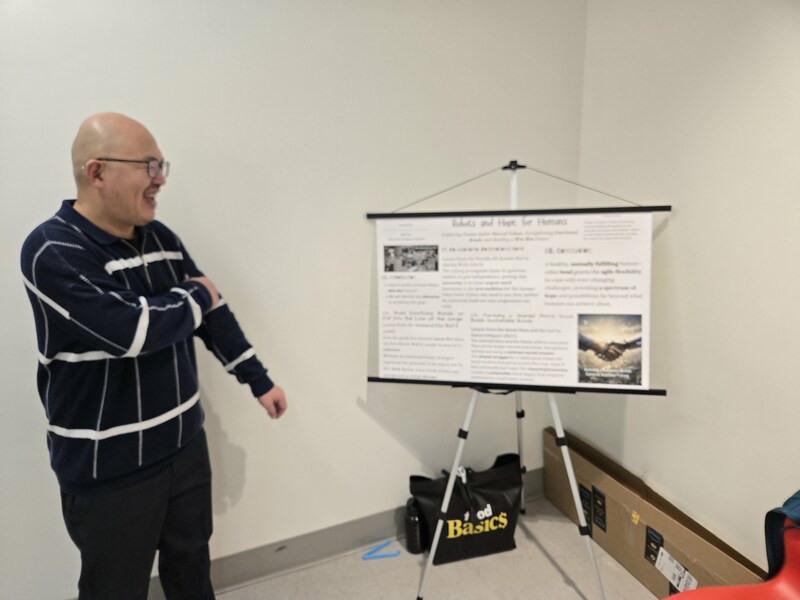
Alan Lu brought the exhibition back to the present and future of technology with his poster on “Robots and Hope for Humans.” This exhibit investigates the links between robots and hope in the animated film Wall-E (2008), the novella All Systems Red (2017) by Martha Wells, and the novel Klara and the Sun (2021) by Kazuo Ishiguro. Through analysis of these media, Lu breaks down the kinds of hope present in the possibility of building connections and partnerships between robots and people now, so that we may rethink the frameworks of interpersonal social treatment that exist already between humans. He explores how human-robot shared values can strengthen emotional bonds and build a “win-win future” through applications of transformative, active, and participatory kinds of hope. Lu wants “people to think more, to become more sustainable through building emotional bonds with long-lived and potentially immortal robots…considering their equality as an integral part of a united, good future.”
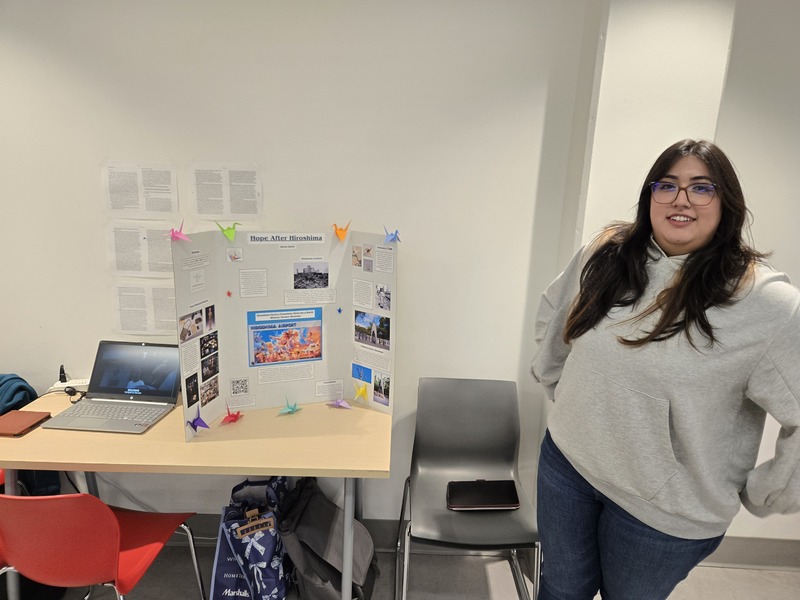
Olivia Gaeta followed with her origami-crane covered art showcase of pieces exemplifying “Hope After Hiroshima”. Through a variety of murals, statues, public pieces, permanent museum exhibits and the advocacy of Hibakusha—survivors of the atomic bombings—Gaeta demonstrated how art from tragedies like the Hiroshima atomic bombing can help inspire people and instill future-oriented hope within viewers. All of these pieces have served to bring awareness to the lasting impact of these attacks in Japan, generations after. The selection of installations together demonstrate that active hope in the forms of acknowledgement and education on the past are necessary in order to heal from collective trauma. Gaeta hopes that engaging with Japanese art inspired by the event encourages independent research leading to collective understanding and action in the present day.
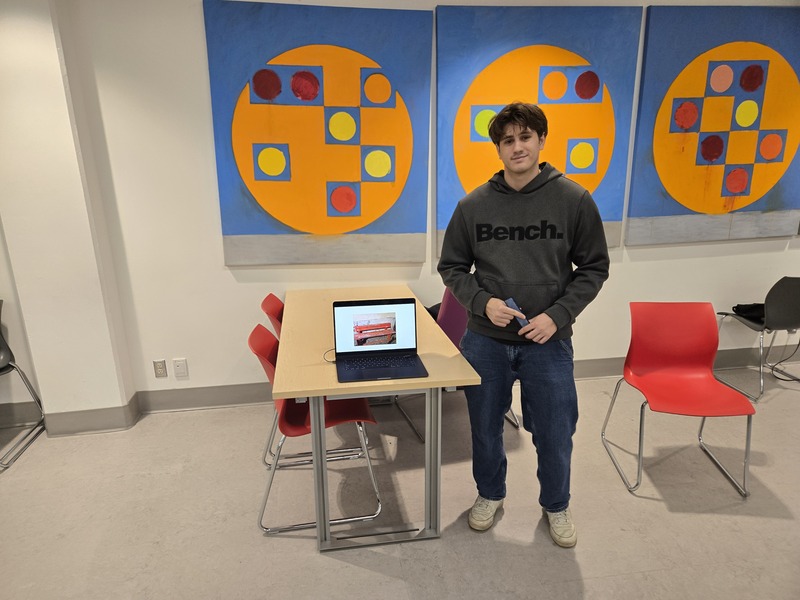
Anthony Conte dissected the cultural impact of murals in Naples, Italy. He argued how these and other murals in surrounding Italian towns can serve to inspire future generations in multiple aspects of life, including cultural identity. Especially through the effect of the Maradona mural in Naples, future and family-oriented hopes build community around a collective identity, then also creating hope for the future dependent on spreading peace. Ultimately, Anthony Conte hopes his work this semester inspires exhibit visitors to “go visit Naples!” and take part in Maradona's lasting legacy.
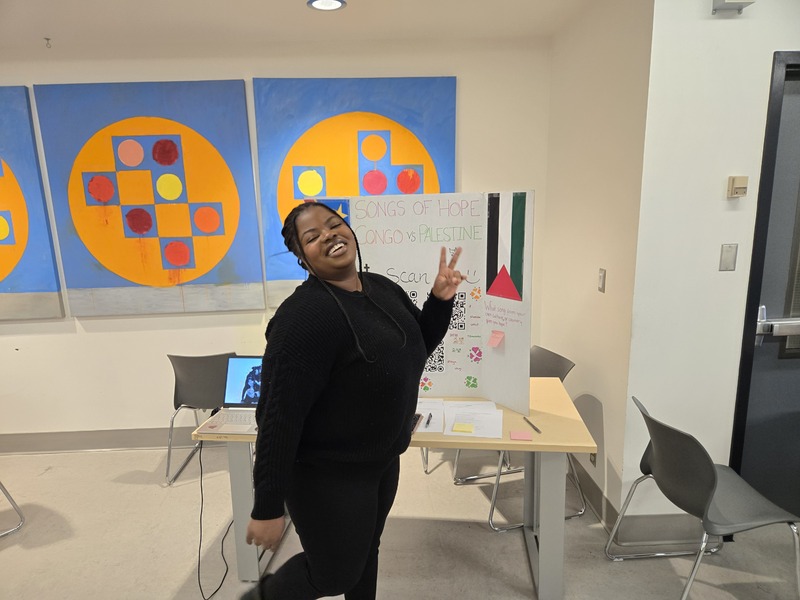
Jemima Mateta Nkelani next called upon similarities in history and artistic responses between two current conflicts with her exhibit “Songs of Hope: Congo vs Palestine.” Nkelani argues that while both countries experience devastating genocides, hope is a critical tool in uniting global action and response. With her trifold covered in symbols of peace, “hope” translated to multiple languages including Arabic and Congolese, Nkelani universalizes the hopes for international accountability and community. The songs she chose for her exhibit invite the audience to actively reflect on transformative kinds of hope and maintain energy through these kinds of media in order to fight actively. Songs such as these offer the opportunity for self-reflection that Nkelani believes is essential to activism. She stresses that “at the end of the day, anything can bring us hope, and we can all fight for any cause. We can all relate to being human and come together. We are all children of God.”
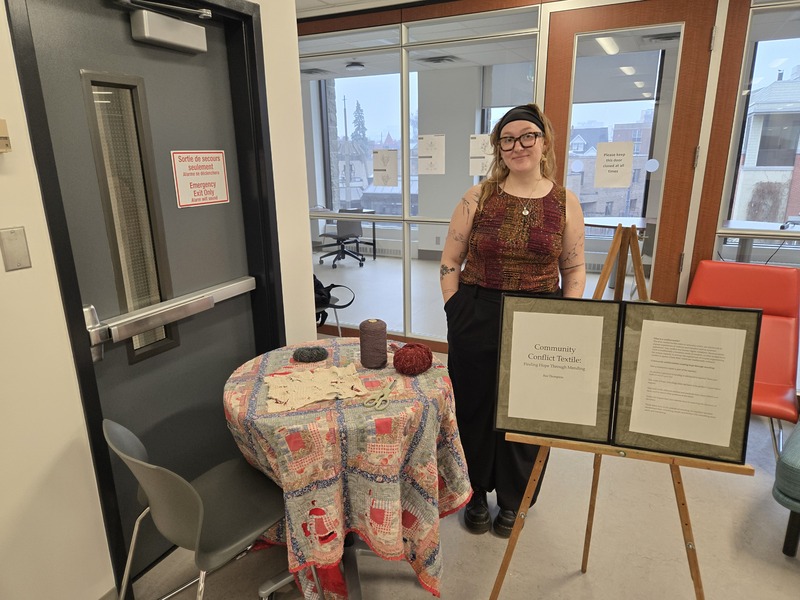
Next giving her take on hope in times of conflict, Rae Thompson invited visitors to the exhibition to physically participate in the mending of a crochet piece in the spirit of engaging with her project “Community Conflict Textile: Finding Hope Through Mending”, aiming to bring together people of all skill levels within the piece. All participants were encouraged to then reflect on their hopes and how the action of mending is an act of resilience. This, Thompson argues, exemplifies how fibre arts and textiles have the capacity to convey resilient hope and further bring communities together to act from inspiration and dedicated hope. Rae says that “hope isn’t perfect; you don’t have to be perfect at mending to make a difference.”
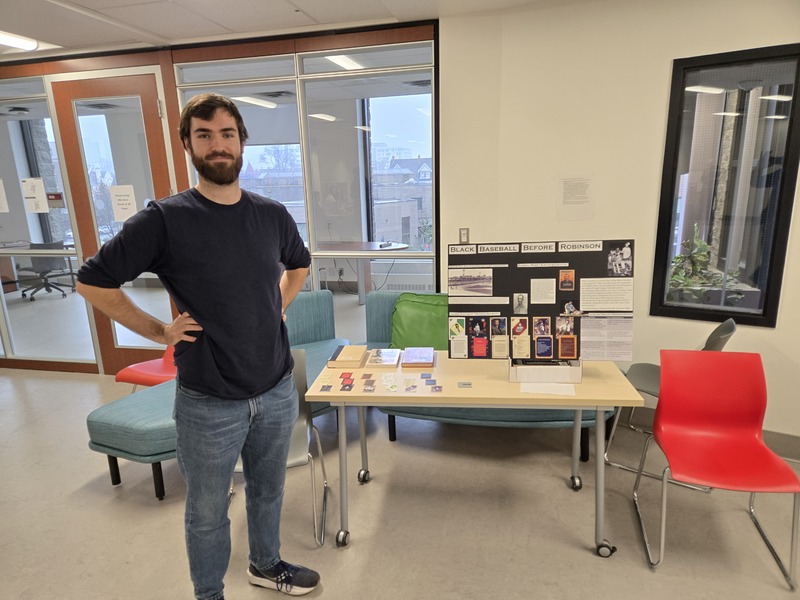
The next exhibit focused on “Segregation, Poetry, and Baseball in the United States,” where Nicholas Mccarthy spread out an array of baseball cards featuring important poets of the Harlem Renaissance. His poster board showed the relationship between the Black major leagues before 1947 and the hope stimulated by the Harlem Renaissance. Mccarthy portrayed this relationship in a way so as to dissect Jackie Robinson's popular debut in the MLB as a cultural moment, using an event at least familiar to most people in order to complicate and stimulate thought about an "obvious" narrative. Mccarthy hopes that his exhibit reaches viewers beyond its scholarly perspective as well, stating “I would be pleased with my seminar lesson and my exhibition if I'd succeeded in sharing my admiration for the struggle that these very skilled Black baseball players endured to play the game. I'd feel robbed if sports were taken from my life, and these players inspired me with their determination to create their own space and affirm how important the game was to them.”
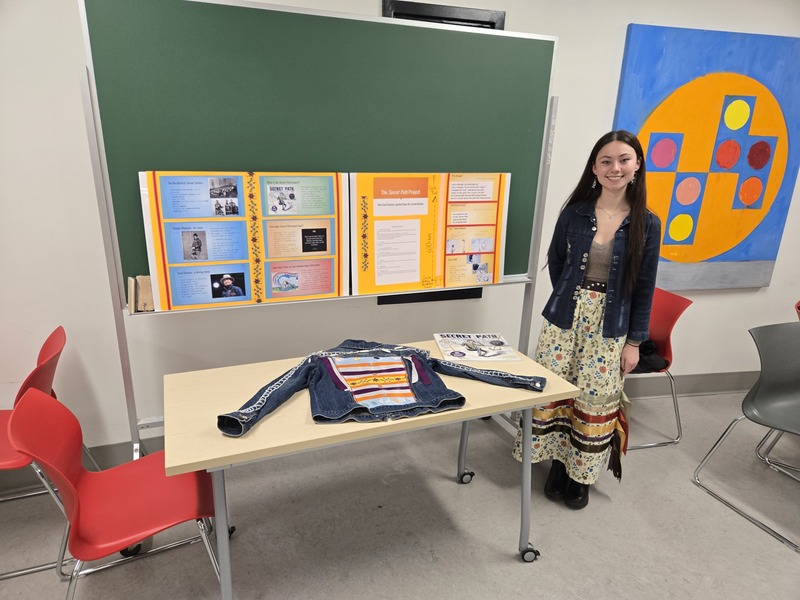
Julia Lucas' exhibit explores hope for reconciliation in the Secret Path multimedia project by Gord Downie and Jeff Lemire about the story of Chanie Wenjack, an Anishnaabe boy who died after escaping a Residential School and trying to return home to Marten Falls First Nation. Her poster “The Secret Path Project: How Gord Downie Sparked Hope for Reconciliation" aimed to showcase how storytelling and memory contributes to generational healing. Another form of storytelling present in the exhibit was a denim jacket covered in Lucas’ handiwork, ribbon and beadwork incorporated onto the tough fabric as evidence of Lucas’ own experience with the cultural healing aspect of reconciliation. Lucas argues how the Secret Path exhibit and animation both use an immersive first-person perspective in both mediums, and alongside physical art like beaded and designed clothing—that isn’t necessarily worn— both embody a physical symbol of stories and of generational memory. This mix of utopian and critical modes of hope, Lucas argues, allows viewers to engage with a new perspective in reconciliation, and she shared how “moving forward, I think one of the best ways that we can strive towards a more hopeful future is to put ourselves in someone else’s shoes or actively seek out first-person perspectives.”
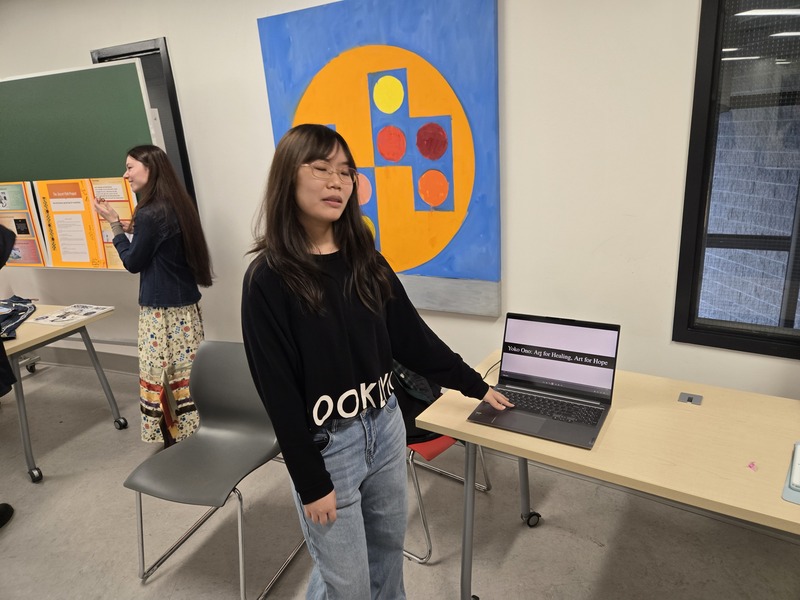
Returning to the effect of art, Yuyang Li delivered an insightful dissemination within her exhibit on "Yoko Ono: Art for Healing, Art for Hope", sporting pictures of Ono's many art installations and her book Grapefruit. These, Li argues, exhibit collective hope pursued through art, which, she further elaborates, invites others to create by engaging with Yoko Ono’s works. The main highlights of the exhibit were analyses of Grapefruit, Wish Tree, and the Imagine Peace Tower. The accompanying trifold clearly outlined the ways in which Li argues simple actions are a form of active hope that inspires collective hope as well, most evident in Ono’s art and poetry. “Collective hope preserves love and peace in both individuals and collectives”, Li asserts as a culmination of her research into Ono’s work.
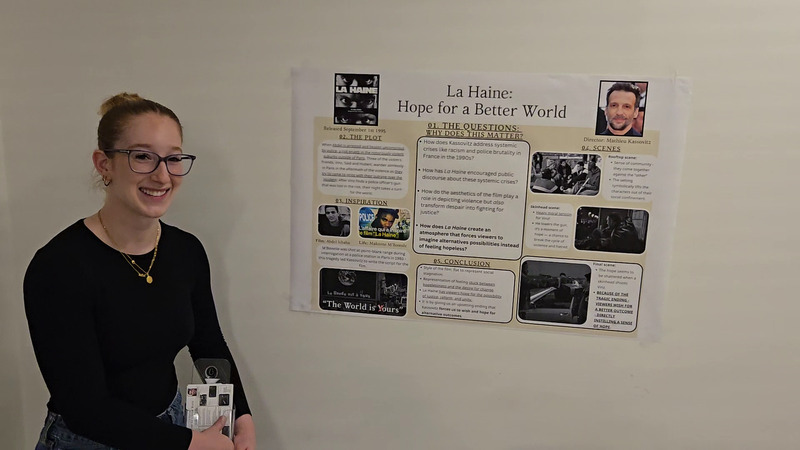
This semester, Maeva Camejo worked on a film called La Haine—meaning “The Hatred”—and her exhibit “La Haine: Hope for a Better World” aimed to prove how within the film, hatred and crisis do not disqualify the simultaneous experience of utopian hope. La Haine specifically addresses this dynamic, Camejo argues. Within her analysis of the film, director Mathieu Kassovitz uses tragedy and violence to show how they can be overcome and resolved. The tragic ending serves to make the audience wish for a better outcome and actively hope by wishing for something better. Despite the grim content, Camejo highlights how the film can apply to everyday conflicts. The audience can learn from this piece as “even though the film is very dark and the landscape is constraining, this community can still find hope through each other even as they face everyday tragedy and oppression.”
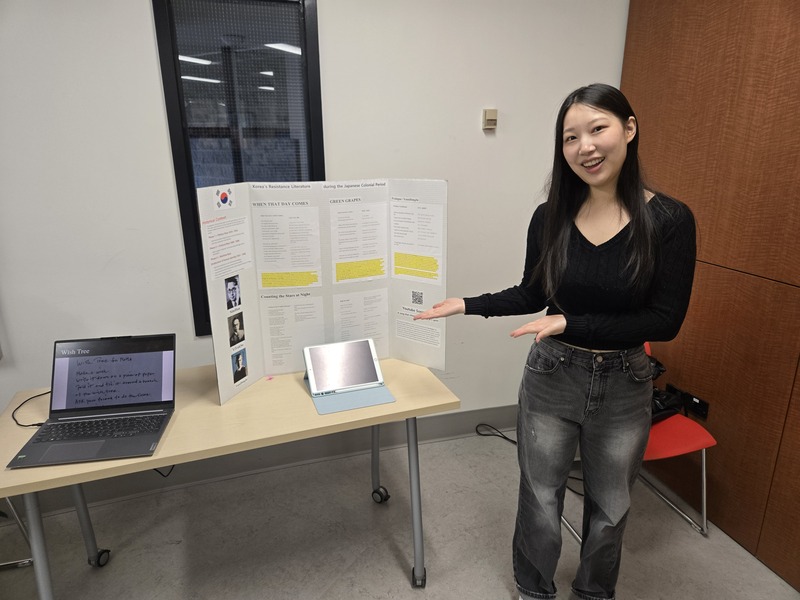
Then Yeonwoo Bae focused on “Korean Resistance Literature during the Colonial Period” under Japanese occupation from before WW1 in 1910 until 1945. These pieces that could not be published until long after their creation, sometimes even until after the tragic systematic deaths of their poets, Bae argues showcase how Koreans reclaimed a sense of identity and held onto hope through a violent colonial period. Bae’s dissections explored a variety of poems exhibiting utopian hopes for a better tomorrow. Through engaging with the exhibit, Bae “hopes that people recognize parts of Korean history and its impact on modern history and culture” both within Korea and the present wider, complex, global history.
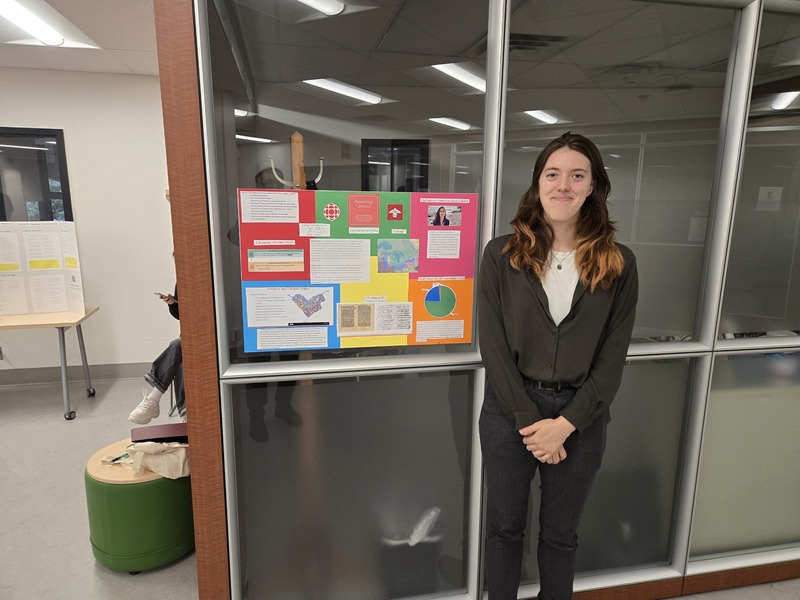
At the end of the exhibit, Faith Leroux sent us off with a final showcase poster of creative and utopian hopes present within the promising equal reach of the CBC Literary Prize contests between English and French communities in Canada, and expressing a utopian hope of extending the prize to include official submissions in Indigenous languages as well. Rachel Robb’s 2024 Palimpsest County poem exemplifies the reading strategies that this literature offers in response to Canada’s post-pandemic literary crisis. Leroux drew connections between the financial aid that the contest grants to artists, the future of literacy, and the hope offered by Indigenous modes of learning to sponsor wider conversations around reconciliation. The exhibit dissected linguistic statistics and qualities of the poem that encourage collective active hope from participation in the contest and dialogue surrounding submissions, winners, and the crown corporation itself. Leroux hopes that going forward, everyone considers approaching the contest as an opportunity to add voices and unique perspectives to the dialogue to address issues like the literary crisis and reconciliatory needs that are yet unresolved.