
Browse Items (10 total)
-
Sandy Hill Grocery Accessibility
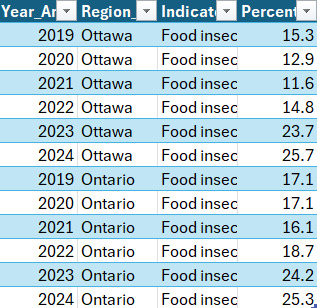
These maps critically analyze food assets available around the Sandy Hill area by considering the affordability and accessibility of the grocery stores outside of its boundaries, acknowledging that inside its boundaries, the only options are convenience stores with high price points and limited options in variety and diversity, as well as eat-in and take-out places, which are less sustainable for its residents.
-
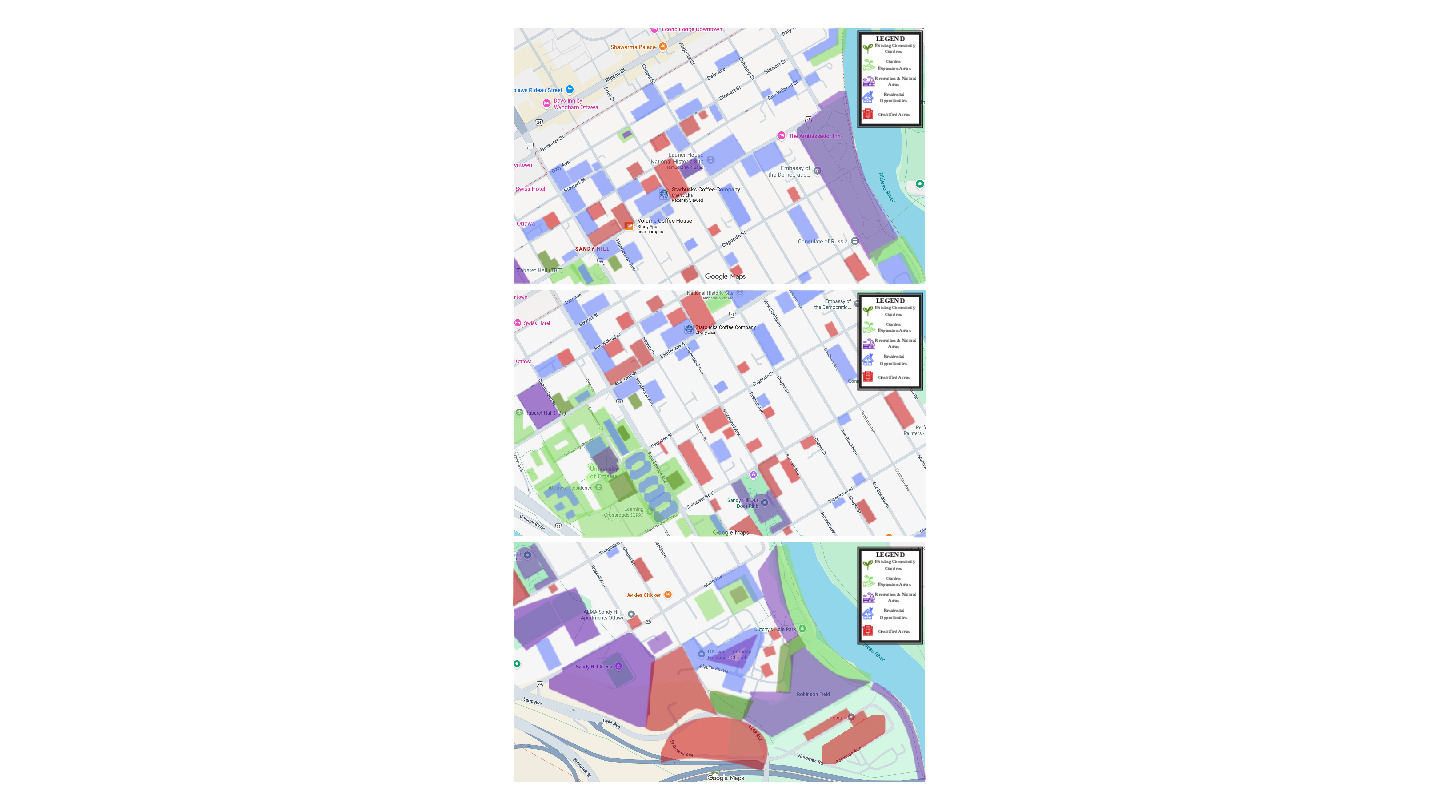
Potential Sites for New Sandy Hill Community Gardens
Introduction. Our group, consisting of Supreet Phangura and Jodie Choy mapped community gardens and landlord company-owned areas in Sandy Hill. The boundaries of our mapping were from Rideau Street to Mann Avenue, and then up to Range Road.
Community gardens are critical for our understanding of food assets in a few central ways. Firstly, community gardens can indicate socioeconomic status of an area through observation of infrastructure and how well-maintained it is. Secondly, the crops that a community garden produces can signify a gap in food assets as well as physical and monetary accessibility otherwise provided by food infrastructure in the area. Finally, the demographic of the community garden’s users can signify the level of food insecurity and need for mutual aid. In particular, an analysis on how socioeconomic factors shape what people think community gardens are for found that age, education, and annual household income had significant impact on how residents perceived benefits and purposes of community gardens. Annual household income was a strong indicator of whether a resident viewed gardening as a tool for physical health and increased produce intake, with higher-income individuals more likely to view community gardens as a way to increase physical activity. On the other hand, for lower-income individuals, community gardens were viewed as essential tools to obtain food while under financial pressure. Lower-income households were also found to be more likely to be recipients of produce, rather than active participants in the gardening process itself (Tackie et al., 2014).
Community gardens are an essential part of the story about how communities address food insecurity. Community gardens reveal the socioeconomics of food asset availability in Sandy Hill. In combination with this, the amount of landlord company-owned housing is also critical for the understanding of food assets because increases in landlord companies are heavily associated with gentrification. Gentrification tends to remove more affordable, smaller grocery stores by replacing them with high-end, chain grocery stores. It also has a tendency to bring about commercial development and a subsequent demographic shift. This leaves the neighbourhood at an overall lower affordability level, reflected prominently in the decrease of independent landlords at the expense of landlord companies.
A study performed a cross-sectional analysis on measures of gentrification and food access in Toronto found that 45% of all low-equity areas are unfavourable food environments (Menka et al., 2025). Moreover, all gentrification measures were significantly associated with food desert presence, meaning increases in gentrification were linked to lack of access to nutritious food (Menka et al., 2025).
Community Gardens and Landlord Companies in Sandy Hill: 2010 vs 2026 One of the main tensions that we found was how community garden usage seemed to indicate a lower socioeconomic status of the Sandy Hill area, despite obvious gentrification and decreased affordability of the area. Through analysing the individual factors of increase in community gardens and presence of landlord companies between 2010 and 2026, we seek to understand how socioeconomic status plays a part in telling the story of food asset availability in a community.
Community Gardens The Sandy Hill community garden scene in 2010 encompasses the Sandy Hill Community Garden, the Strathcona Park community garden, the Gathering Garden, the St. Joe’s Supper Table Community Garden, the Robinson Park community garden, and various community gardens run by programs on the uOttawa campus. In 2026, as pictured by the figure to the right, community gardens in Sandy Hill were limited to Sandy Hill Community Garden, Strathcona Heights Community Garden, St. Joe’s Supper Table Community Garden, Robinson Park community garden, and the same community gardens on the uOttawa campus.
Between 2010 and 2026, Gathering Garden was adjointed to Strathcona Community Garden. Notable differences include Strathcona Heights Community Garden, which was built in 2024 and seems to have replaced Strathcona Park community garden, but also features the expansion of new beds near 721 Chapel Crescent. In 2010, Strathcona Park community garden had 41 plots along 430 Wiggins Private, while in 2026, Strathcona Heights Community Garden has expanded to 3 locations: two benches at 300-310 Wiggins Private, one bench at Lori Heath Park, and two benches near 721 Chapel Crescent (McCallum, 2024). Both St. Joe’s Supper Table Community Garden and Robinson Park community garden were still running and recently active, and there seems to be a new community garden on the uOttawa campus in the form of Place des Francos-Ontariens Garden along Laurier Avenue.
Sandy Hill Community News interviewed a variety of Sandy Hill community gardens in 2020. By examining purported usage and reason for constructing a community garden, we can see that individuals tended to see them as a means to obtain food under financial pressure, consistent with findings that indicate use by those of lower socioeconomic status. Sandy Hill Community Garden originally opened around 2008 with an associated food bank which eventually disappeared, but was revived during COVID-19, indicating a very strong correlation to use for easing financial pressure.
Hildegarde Henderson from Strathcona Heights Community Garden noted that “when markets were reduced or closed, the community garden’s produce was very welcome in the neighbourhood” (Whitelaw, 2020). St. Joe’s Supper Table Community Garden is primarily used for providing food to Sandy Hill residents through its two food banks, community kitchen, sandwich service, and dinner service. St. Joe’s Supper Table Community Garden is also a prime example of how lower-income households were found to be more likely to be recipients of produce, rather than active participants in the gardening process itself (Tackie et al., 2014), since many recipients of this food are not participants in the garden.
Andrew Hall and Sue McKee mention that the University of Ottawa King Edward Community Garden had, in past years, had a garden for refugees, another for an organisation protecting battered women, and some space for two homeless people to use (Whitelaw, 2020), on top of general usage by students. The demographics of usage of Sandy Hill community gardens very clearly indicates a presence of low socioeconomic status individuals in the area, and the increase in community garden space between 2010 and 2026 indicates that this presence is only growing. In short, community gardens are an essential part of the story about food assets in Sandy Hill because they tell us where food insecurity lies, whether or not it is increasing, and what the community is doing to address it.
Landlord Companies. In 2010, the Sandy Hill housing market was mostly dominated by individual and family landlords, some local property owners, and owners of converted heritage homes. In short, it was largely characterised by decentralised ownership. In 2026, however, there has been a widespread consolidation into large landlord companies. On our walk, we found that properties were mainly owned by Sleepwell Property Management, Smart Living Properties, Paradigm Commercial, FRC Real Estate, CLV Group, and Osgoode Properties. Additionally, 2010 mainly had individual property owners, while 2026 has an increase in multi-property investors even aside from landlord companies.
There was also a large increase in the average price of a house, as noted by Agent in Ottawa Realtors, where the average house in 2010 was priced at $435, 406, and the average house in 2025 was priced at $559, 109. The kind of build dominating Sandy Hill has also seen various changes throughout the years. A study performed in 2010 regarding Sandy Hill being a cultural heritage landscape noted that in the early 1900s, Sandy Hill was largely dominated by single family residences mostly housing Ottawa’s manufacturing and mercantile elites, with some construction of middle housing in vacant lots.
Between 1922 - 1956, there was a trend of expansion of existing housing stock through new construction; the subdivision of existing single-family homes into multi-family homes, which mirrors multi-unit trends we see today; and the construction of apartment buildings. Overall, the housing market was beginning to shift to accommodate middle-income families rather than elites. In 2010, the study notes that because the Sandy Hill area was largely established by the mid-20th century, the existing housing stock had remained relatively unchanged since then. Many smaller, multi-family homes were owned or lived in by the student population in Ottawa.
In 2026, the housing in Sandy Hill consisted mostly of restored Edwardian homes, historic triplexes, student rentals, and modern mid-rise condos. There is now high demand for triplexes, updated heritage properties, and turnkey condos. Interestingly, across 2010 and 2026, there is a consistent prevalence of multi-unit houses being rented out to students. This story of accommodating elites, to middle-income homes, to a wide variety of modernised housing, follows a similar trail of food asset availability in the Sandy Hill area. As mentioned before, the affordability of the neighbourhood is not what mainly creates food deserts in Sandy Hill. Rather, it is the change in infrastructure itself. This makes sense, given that the most notable difference between housing in 2010 and 2026 is that middle-income housing was more prevalent and that heritage properties were beginning to see massive updates.
It’s likely that the shift towards converting Sandy Hill housing to be more modern and accommodate more people was part of a gentrification effort that ultimately changed food asset availability. These findings are particularly pertinent in relation to our findings about community gardens, which also highly point towards effects of individual socioeconomic status on food availability. Important to note is that, in 2009, the Ottawa Development Report showed that rental vacancy rates in Sandy Hill sat at 1.4% before shooting up to 2.4% in 2010, where the city average at the time across Canada was 1.6%. This means in 2010, there were more units for rent than needed. In 2025, rental vacancy rates sat at 3.3% as reported by Ottawa Lookout, meaning there was an increase in oversupply. However, realtor.ca found that approximately 80% of Sandy Hill consisted of renters. This is likely explained by the large demographic of students dominating Sandy Hill, which causes frequent turnover, but also creates a need for oversupply because of the fluctuating amount of students per year who may need housing. Rental vacancy is positively associated with gentrification due to trends where vacancy makes future redevelopment via gentrification. This points to a narrative about Sandy Hill food assets where there is overall disinvestment in infrastructure supporting residents, replaced with investments in infrastructure supporting the priorities of companies and larger landlords who invest in the area. Such a narrative is consistent with the dramatic increase in the noted use of community gardens in ways that indicate lower socioeconomic status and increased food insecurity, despite the fact that Sandy Hill as a neighbourhood is decreasing in affordability and increasing gentrification.
Recommendations. Community gardens mainly face issues regarding waitlists, plot distribution and equitable access, plot abandonment, stealing, community integration, visibility and awareness, and lack of resources. To address waitlist problems, we recommend implementing a “use it or lose it” policy wherein inactivity for a certain period of time triggers reassignment. For plot distribution and equitable access, we recommend partnering with local groups like tenant associations and newcomer services to ensure inclusive access to plots. Putting requirements for a basic participation, like minimum maintenance expectations, could help mitigate plot abandonment issues, and stealing could be addressed through fencing, construction of natural barriers to wall off gardens, and signage. Community integration could be aided by having crops that are used in multicultural recipes, so all demographics in the Sandy Hill community could have crops they can make use of. Additionally, Sandy Hill could organise community days that offer food made from gardens to the Sandy Hill community to bring in new volunteers and foster relationship-building with and between community members. Visibility and awareness, which is a main issue we encountered on our initial walk, can be addressed using awareness campaigns such as posters in public spaces.
Community gardens could also contact related organisations to send out email newsletters, and put up signage with QR codes to give more information on the community garden and indicate how to join. Lack of resources such as volunteers tending to the garden and storage space can be helped by integrating gardening into CSL placements at the University of Ottawa. This has already been implemented with some of the community gardens on the campus, such as the King Edward community garden, but can be extended to non-campus community gardens as well. Finally, our general recommendations include implementing rules and regulations around food distribution, such as who has access to gardens, and who can harvest. -
Map of Sandy Hill’s Active Rental
Our group mapped apartments and rental properties in Sandy Hill. This topic is important for understanding food assets because it maps physical distance between people and food sources, as well as the financial status of people who live in rental properties and how much money they have to spend on food.
Sources for our findings include real estate agents (collect information on housing for the purpose of selling, investing, and advising others), and Statistics Canada.
The average household income in Sandy Hill before taxes is $87,400. The median household income before taxes is $62,400. (CMHC, 2020)
There is a large student population in Sandy Hill, which likely contributes to the lower average income in the neighbourhood as opposed to the Ottawa average. Students tend to live on the west side of the neighbourhood, closer to the University of Ottawa campus where household income is generally lower (John Castle, 2023). Additionally, Sandy Hill has a slightly higher than average rent for single-person households compared to the Ottawa average. Sandy Hill has also had rapid growth in population since 2017, with unemployment rates being higher than the national average (John Castle, 2023). Vacancy rates rose during the pandemic but have since recovered (CMHC, 2020). According to residents, housing is a major point of complaint, as rent prices have been high in recent years (areavibes.com via Statistics Canada).
According to a study done focusing on student living in Ottawa and Ontario "The average rent paid by students surveyed is $926.8, with 95% (n= 310) identifying rent prices as a primary challenge. Students in Ontario face a higher average rent ($935.4) compared to those in Quebec ($830.1). Financially, 25% (n= 106) of respondents rely solely on employment income. A student earning the minimum wage in Ottawa ($17.20/h) would need to work 54 hours per month just to cover the average rent cost, excluding tuition, food and transportation costs."STUDENT HOUSING CAUCUS REPORT
A large number of apartment buildings in Sandy Hill are on the north side of the neighbourhood, close to Rideau Street. It is difficult to tell if a property is owned or rented during a walkthrough of the neighbourhood. For example, often historic buildings are converted and/or renovated into multiple rentable units, but that it is impossible to tell just by looking at them.
The interactive Google Map, below, shows some of the rentals and single family homes we marked. This map is not complete as we did a pedestrian survey of the neighborhood. We will be updating this map at a later time. -
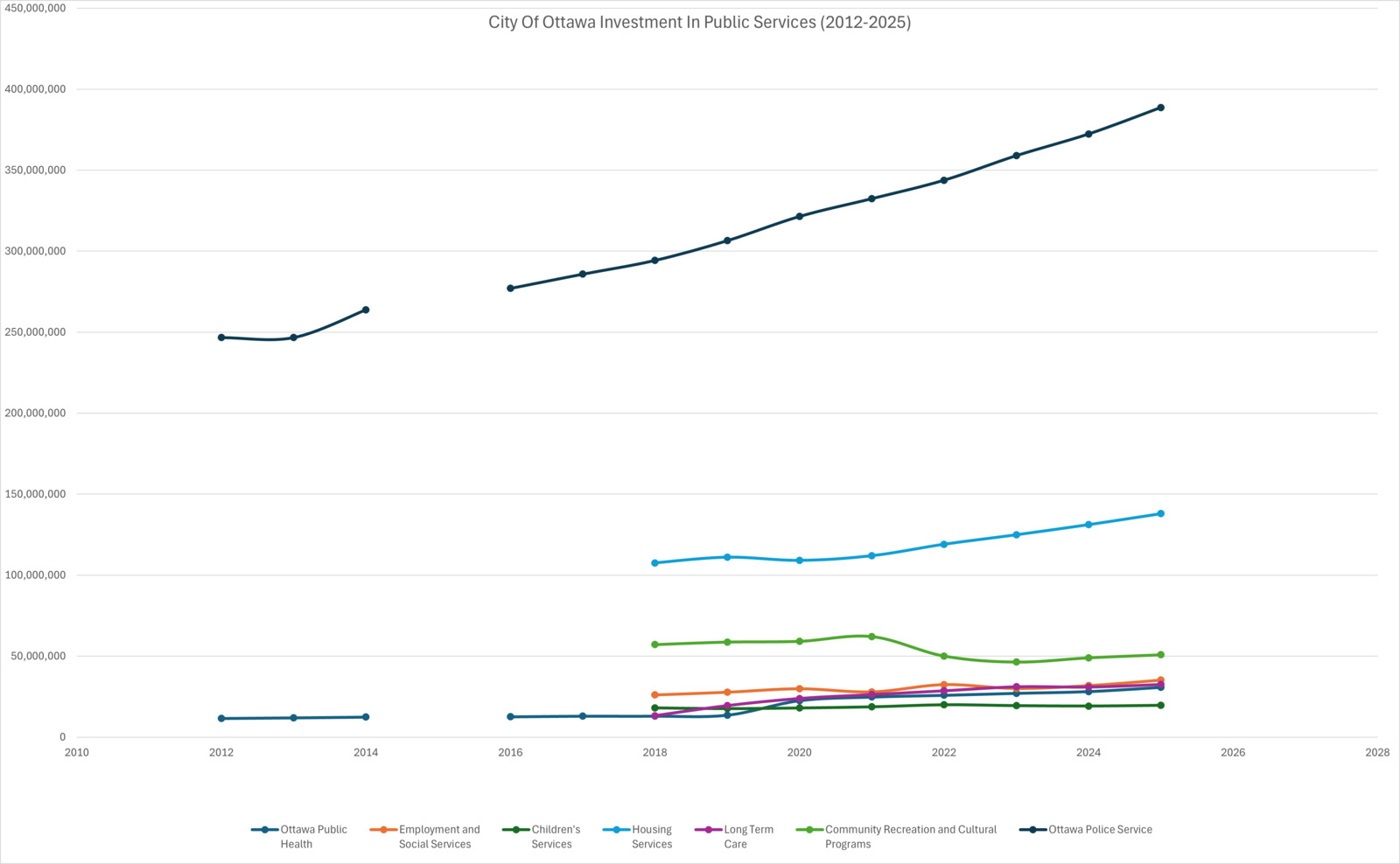
Graphs of City of Ottawa Public Investment
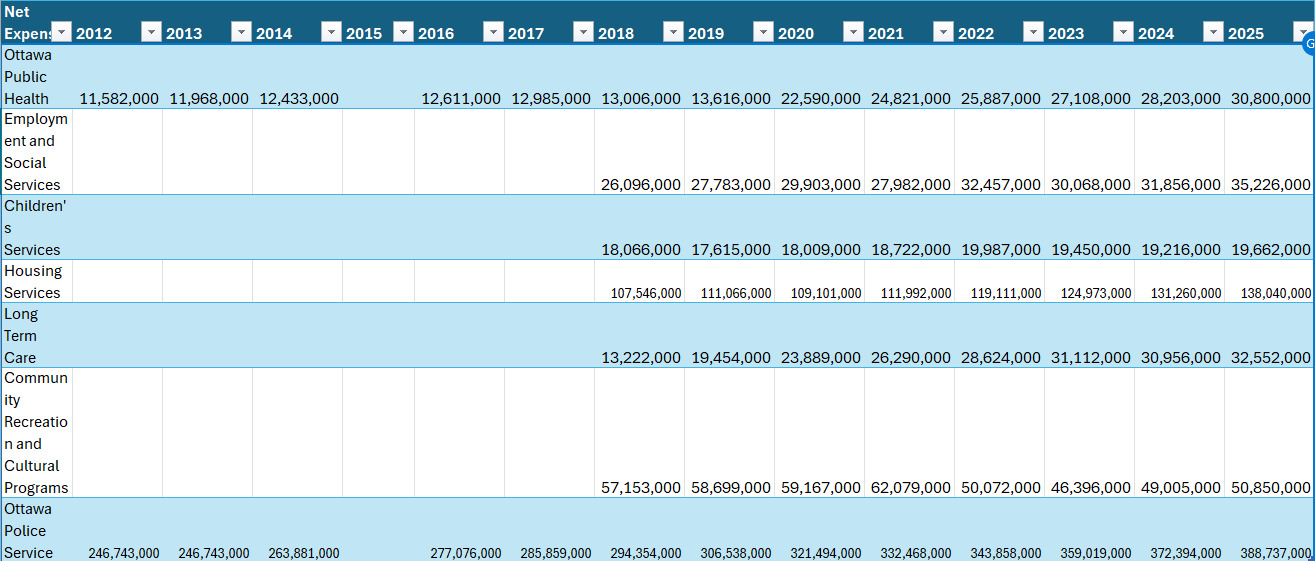
These two graphs are from data gathered from the City of Ottawa Operating Budgets from 2012-2025, minus 2015. -
Food Vendors in Sandy Hill
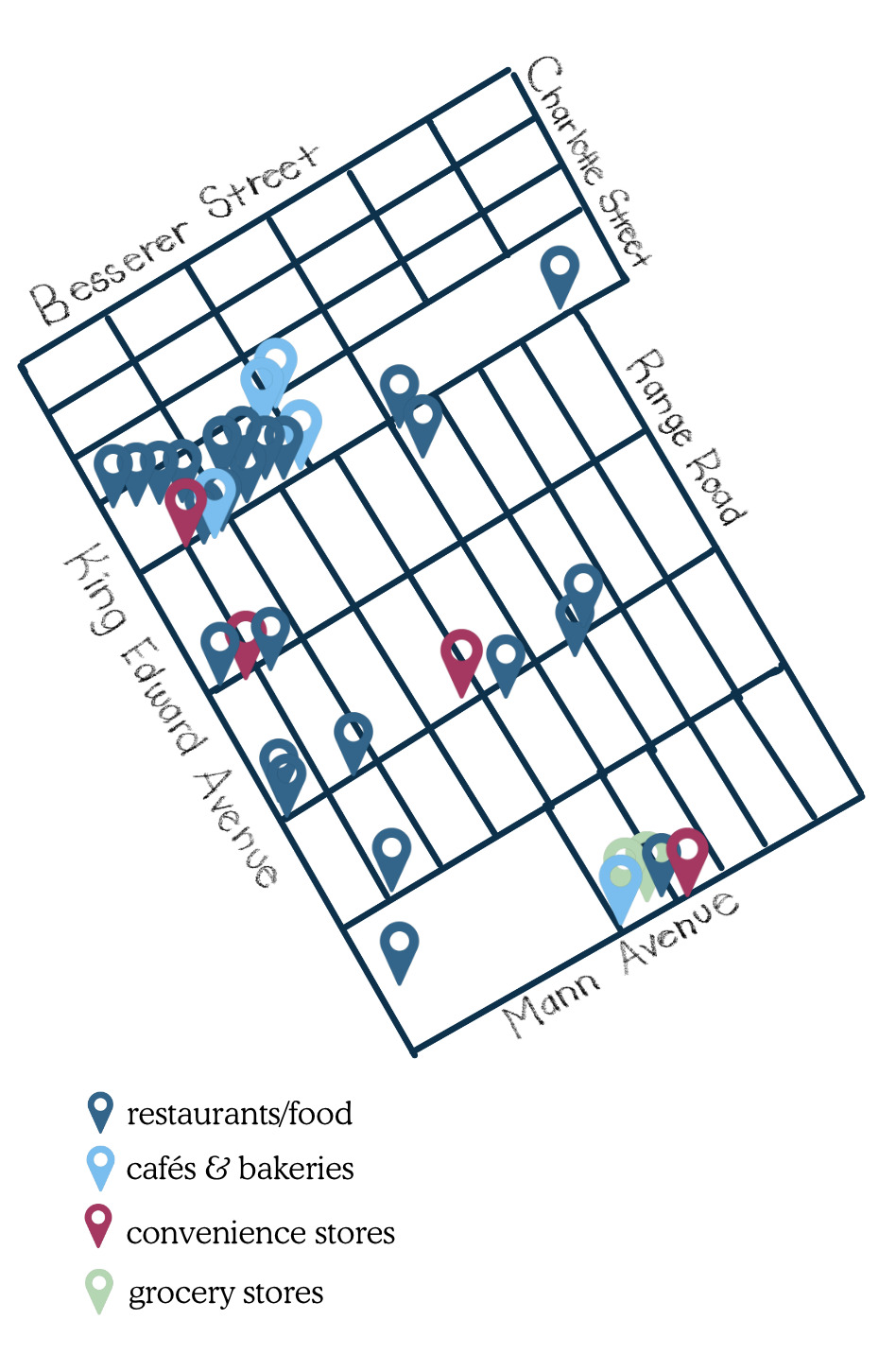
Our group mapped food vendors (e.g, restaurants, convenience stores, grocery vendors, coffee shops, etc.) in Sandy Hill. We examined each location’s general affordability, the food’s or vendor’s cultural origins, and whether there are food preference availability.
Boundaries of our mapping were (North to South) Besserer Street to Mann Avenue, and (West to East) King Edward Avenue to the Rideau River. Understanding what food options exist in the area help to create a picture of Sandy Hill’s livability and discover areas for potential improvement (more diverse food options, healthier options, cheaper options, etc.).
-----As of 2026, Sandy Hill (within the boundaries specified previously) has 43 food vendors. 31 of these vendors, we classified as sit-down or take-out restaurants/food, and pubs and eateries, and 6 vendors we classified as coffee houses, bakeries, or beverage shops. 4 food vendors were convenience stores and the 2 were grocery stores.
Most of the food vendors were clustered close to the University, with a high frequency on Laurier Avenue. The two grocery vendors operated on Mann avenue, allowing residents of the neighbourhood living nearby the opportunities to purchase basic food necessities without having to travel to Rideau street and beyond for grocery items.
Sandy Hill has many food vendors selling different cuisines including Indian, Mediterranean, Thai, Japanese, Korean, Mexican, Guyanaese and Caribbean, North African, and French Gastronomy.
Affordability fluctuated with most of the affordable food stores operating close to the University. Restaurants closer to Range Road and Strathcona Park had a dramatic increase in price compared to the rest of the food vendors. More often than not, food vendors had at least a few vegan, vegetarian, or halal options available. Most places also allowed for customization and substitutions.(See Food in Sandy Hill Comparison - 2010 to 2026 table). Compared to 2010, there are more food options that are more diverse, and tend to be similar in price/accessibility as before. There are a few spots that have closed and are now empty store fronts or no longer sell food, but many former residential only spots now have food options. While we do not have price comparisons for 2010, we can surmise from the similar options and vendors that are still present that the price increases are likely in line with inflation. We have mostly found that while brands or names have changed, convenience stores have stayed convenience stores, pubs have stayed pubs, and so on and so forth. Please refer to the table for further details on what has changed, stayed the same and to compare further.
Mapping food vendors in Sandy Hill is essential for understanding food availability in the community and addressing food insecurity, particularly focusing on affordability and dietary accessibility. Our map highlights an overall increase of accessible vendors in the neighbourhood, including more accessible options and a wider range of affordable options in comparison to 2010. It presents the options available to the residents of Sandy Hill, where they can eat depending on their food preferences and restrictions, and the affordability of said vendors.
Our project highlights the gaps in food access in Sandy Hill. This includes areas with fewer vendors, areas of limited affordability, and lack of transparency with dietary options. For example, many vendors don’t state dietary accommodations on their menus or websites. It also shows the concentration of vendors on Laurier Street compared to the lack of options in east Sandy Hill. -
-
-
1912 Historical Fire Insurance Maps of Sandy Hill
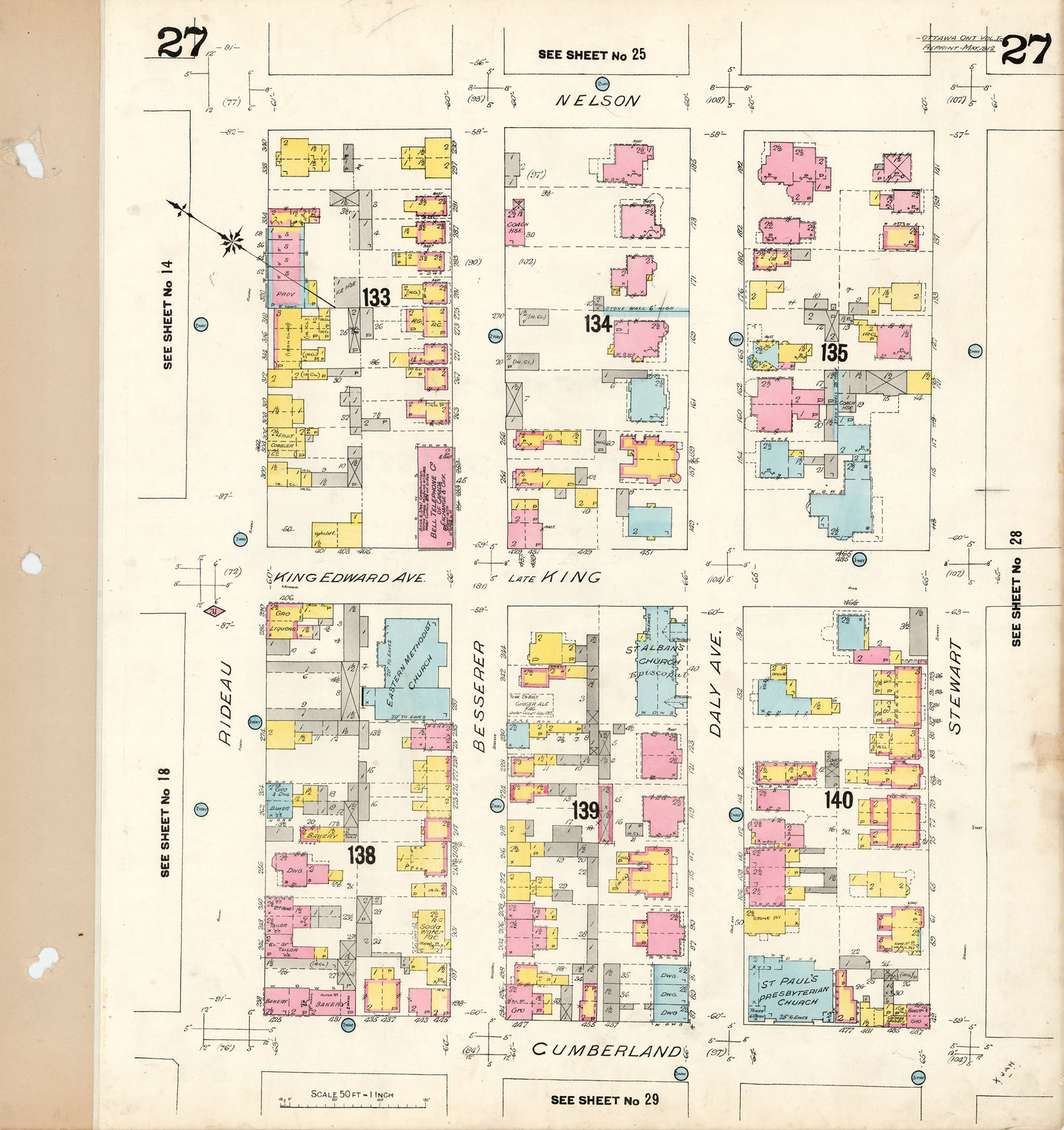
These images document Sandy Hill. By comparing these to the previous map collections, you can see how the neighborhood has changed. By clicking on an image and enlarging it, you can see where there were grocers , bakers, Chinese laundry, churches and schools. -
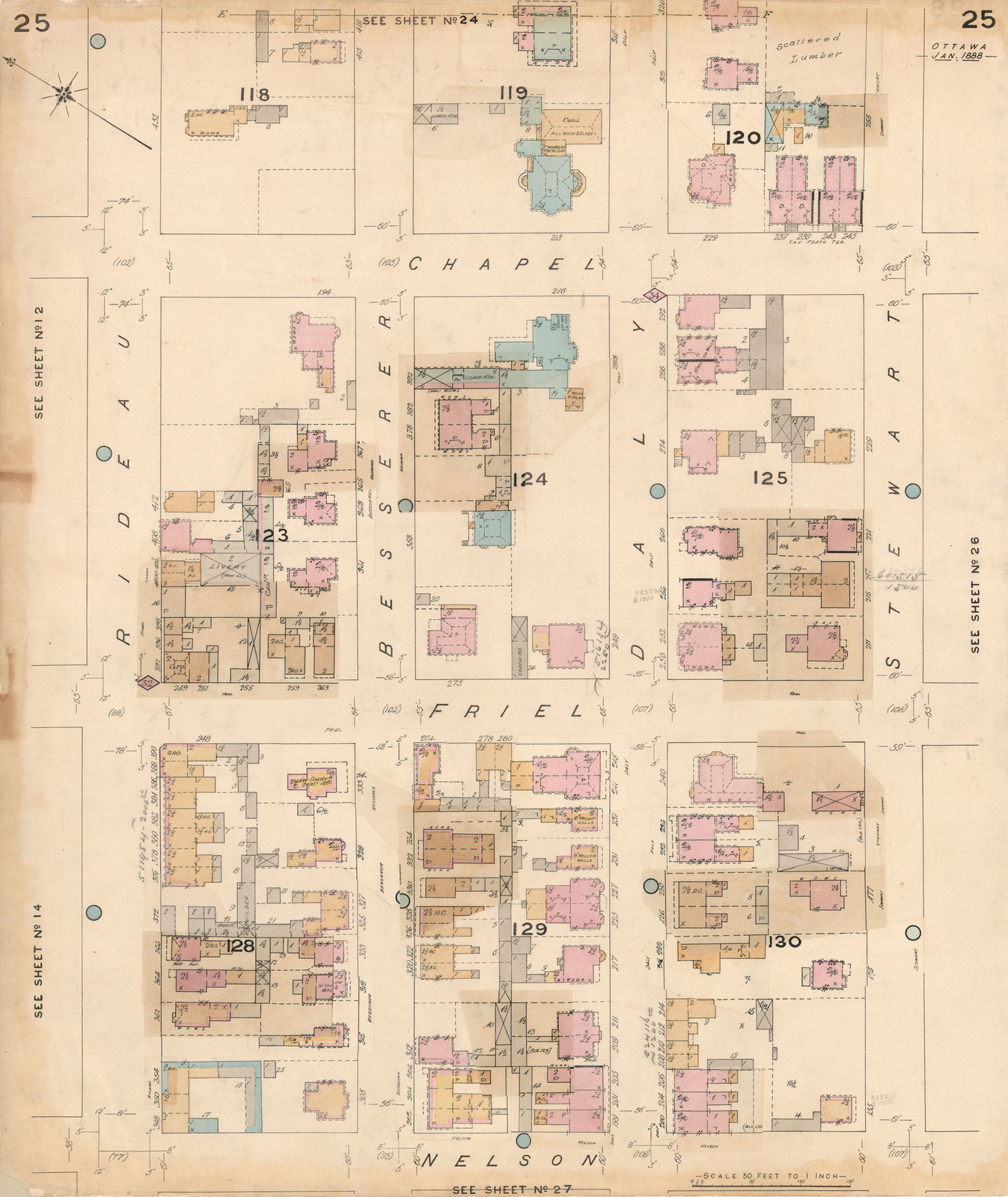
1901 Historical Fire Insurance Map Of Sandy Hill
These images document Sandy Hill. It serves as a baseline to see how the neighborhood has changed. By clicking on an image and enlarging it, you can see where there were grocers (GRO), as well as other businesses from livery stables, coal sheds, freight yards to hotels.