
Browse Items (96 total)
-
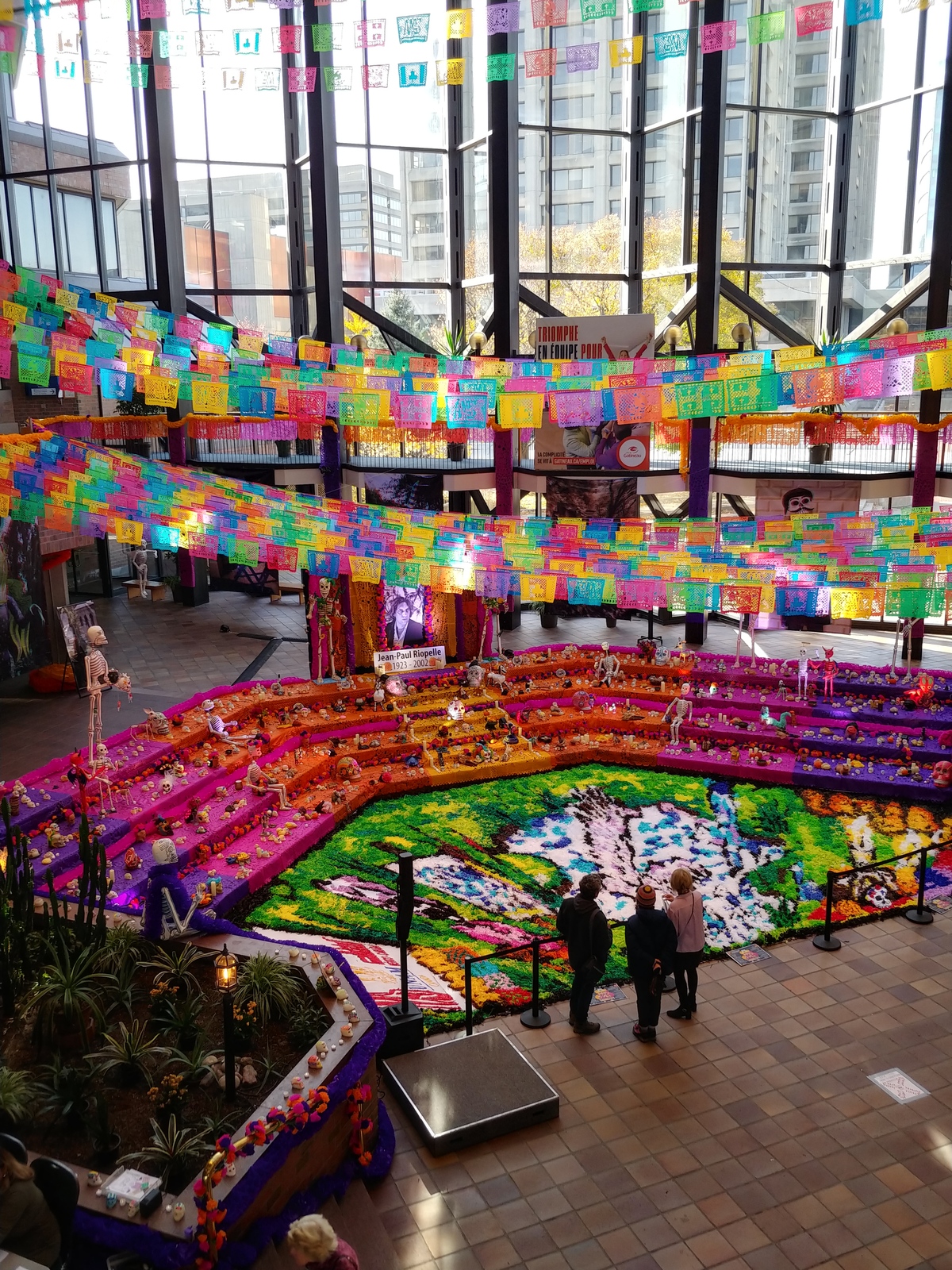
Day of the Dead altar commemorating Québec artist Jean Paul Riopelle at Maison du Citoyen
This image was taken by student Noémie Burrs while attending a Day of the Dead celebration at UNAM-Canada in Gatineau Quebec. The image features vibrant colours, patterns and textures surrounding an alter dedicated to late canadian artist, Jean Paul Riopelle. He is known internationally for pioneering "mosaic" style abstract paintings in the 1950s. -
Latin Hub Canada
Latin Hub Canada is a non-profit organization that operates in Ottawa. Their mission is to foster the growth of local artists by being the leading platform for international Hispanic and Latin artists, while providing a safe space for them to connect with Canadian audiences. Latin Hub Canada is a local club where Latin artists are able to perform and connect with a Canadian audience on stage, in a way that creates cultural exchange. They are located in Gatineau at 94, rue du Patrimoine.
They were founded by a Cuban-born pianist named Miguel de Armas, and, as of 2023, they are a non-profit organization based in Ottawa, Ontario. They organize activities and soirées showcasing Latin and Hispanic artists in Canada, while helping them gain visibility and opportunities.
They host multiple events such as the Ottawa Latin Jazz Conference, which explores the dynamics of jazz music and includes art exhibits, workshops, and discussions. The Latin Jazz Conference has diverse music and promotes unity.They also host the Fiesta Cubana Fest, which explores Cuban culture, dance, and literary work, with top salsa bands, authentic Cuban cuisine, and cocktails, offering a multitude of flavours. They have 4,307 attendees, 42 activities, 27 bands, and 184 artists.
-
Latin American Soldiers Committee in Canada
The Latin American Soldiers Committee (LASC) is a non-profit organization based in Ottawa. Their mission is to recover names and stories of Latin American soldiers who have served in the Canadian military. Founded in 2022, they have published remembrance books in honour of the veterans and their families.
Their goal is to inspire future generations by telling each other stories. To educate young people and inspire individuals entering the army. They hold ceremonies and events for Latin American Heritage Month, recognizing all the soldiers and those who have made an impact on Canadian history, for example, Major General Michel St-Louis. All while celebrating Latin American culture and heritage.
They advocate not only for the Latin American veterans but also for the communities in which many of those Latin American soldiers were not recognized or documented throughout Canadian history. Collecting the records allowed the group to show its historical and cultural impact by preserving its work.
-
Holas: The Humanitarian Organization of Latin American students
The Humanitarian Organization of American Students (Holas) is a non-profit organization based in Ottawa, specifically at Carleton University, which allows them to have a greater reach and collaborate with different organizations in Latin America and the Caribbean. Their mission is to provide humanitarian aid in Latin America through food, shelter, clothing, and education. They want to eradicate food insecurity in Latin America while also raising awareness of these issues. They aim to reduce poverty and inequality. The club was motivated and driven by a commitment to social responsibility, helping communities back home.
A non-profit founded in 2007 by students in Ottawa. They have helped with humanitarian development in Latin America and in the Caribbean. They have raised 50,000 in development projects. There are about 200 members in HOLA who are actively participating and volunteering.
On their website, there are many pictures of Latin American and Caribbean dance and celebrations featuring traditional costumes. They are partnered with an NGO that allows others to donate to them. They have fundraisers in which they teach free salsa classes with cultural dance groups and folklore. They also host Spanish and Portuguese lessons free of charge for students to learn, practice, and improve their skills. To maintain the group, they meet once a week to discuss upcoming events, allowing students to network.
-
Jamaican Ottawa Community Association
The mission of the Jamaican Ottawa Community Association is to support and empower Jamaican Ottawa-Gatineau residents by creating a community in which all can participate and be involved. They provide services to their members, such as support for elders, resources/information for newcomers, and cultural and educational programs.
The Jamaican Ottawa Community Association was founded in the early 1960s by Carleton University students, and was later federally incorporated in the late 1970s. Also known as the J(O)CA, they are a non-profit organization that aims to support and engage residents in community issues and projects, while also being a pillar of the Jamaican community through its various activities, ranging from celebrations to awareness-raising. This association is currently under the presidency of Claudine Mitchell, who originates from St. Thomas, Jamaica.
The J(O)CA is known for hosting a “JAMDAY” yearly, to celebrate the independence of Jamaica, typically in the first or second week of August. There, you will find good food, music, and a community coming together to celebrate their roots and freedom.
You can sign up to be a member directly on their website, and follow events from their Facebook and Instagram pages.
-
Canadá Habla Español (Ottawa Chapter)
Canada Habla Español (CANHE) is a Canadian-based organization that operates in Manitoba, Saskatchewan, and Ontario - Ottawa, that encourages the preservation and promotion of the Spanish language. Their mission, here, in Ottawa, is to help expand access to Spanish-language education, while also celebrating the identity and traditions of Spanish speakers of the region. They actively support the development of Spanish-speaking communities across Canada and the preservation of the Spanish language.
It was founded by Ericka Aguilera, an active member and advocate of various Canadian-Hispanic communities, who was born in Mexico. With her are her co-founders, Luz Madroñera and Carolina Testa, from Colombia and Argentina respectfully.
CANHE regularly hosts celebratory and educational events across its seven different chapters, including their yearly Spanish Language Day celebration in April, where you will find a panoply of lectures, panels, and musical numbers to celebrate the Spanish language: all are welcome! They debuted this celebration in Ottawa last year at the Embassy of Spain in Canada, and it will henceforth be celebrated in Ottawa yearly.
They also host a “youngpreneur” program, which aims to provide students with alternative educational paths while helping them connect with the Spanish language and Hispanic heritage. These workshops, conferences, and events allow students to learn from different individuals in their community and develop key skills.
Follow their events and updates on the CANHE website and on their social media pages!
-

Conversation with Carlos Zapata
This interview tells the story of Carlos Zapata, who immigrated to Canada from Santiago de Cali, Colombia, on the Pacific Coast. Carlos migrated to Montreal in pursuit of higher education at Dawson College and later at Concordia University. After completing his bachelor’s degree, he accepted a job at the University of Ottawa because of the opportunities, possibilities, and quality of life the city of Ottawa offered. While Carlos has found a rich and fulfilling life in Ottawa, he still celebrates his culture in myriad ways, including participating in holidays such as Petronio Álvarez and Christmas. Food is also a significant factor in how Carlos stays connected. His culture. He highlighted some of his favourite foods from back home, Santiago de Cali, such as chontaduro, cholado, sancocho, el aplastado, and salchipapa. Finally, Carlos emphasizes his love for salsa music, which he still listens to today to reconnect with his roots.
Having lived in Canada for most of his adult life, Carlos emphasizes the disconnect he feels from his culture. Simple practices, such as cooking one’s favourite dish, become nearly impossible due to the lack of accessibility to ingredients needed to recreate meals from his hometown on the Pacific Coast. Now, through his work as a specialist in ‘Partnerships and Community Engagement’ in Community Service Learning (CSL) programming at the University of Ottawa, Carlos uses his personal experince as a guiding light in his endeavours to create unity among Latin American communities through storytelling. Community is a central value for Carlos, after growing up in what he describes as a “densely populated, rich ecosystem full of local shops, restaurants and pubs”. From Carlos’ perspective, it is important for Latin Americans to support each other, form reciprocal, trust-based relationships, and take up space. -
Barbados (Ottawa) Association Inc.
The Barbados (Ottawa) Association (BOA) is a non-profit organization that was founded in 1966, making it the oldest Barbadian association in all of Canada! Their mission entails working closely with similar organizations to help their members find their place in Canada’s changing society, while having a space where they can maintain a close relationship with Barbados. This year, they will be celebrating their 60th anniversary.
It was founded on the same day that the nation of Barbados obtained its independence from the United Kingdom by six Barbadians who wanted to create a space for Barbadian immigrants. This space would help Barbadian immigrants adapt to life in Canada while also sharing their heritage with the Ottawa community. The current president of the BOA is Jacquie Belgrave-Dixon.
The BOA has since organized many cultural, educational, and recreational activities. They host yearly Independence Receptions and Galas in Ottawa, to celebrate the anniversaries of Barbados’ independence and of becoming a Parliamentary Republic. Additionally, they often encourage their members to volunteer in community events in Ottawa, as seen in events like the yearly Ottawa Race Weekend and Ottawa Black Film Festival. Volunteers represent Barbados and support fellow Caribbean and Black communities. They also regularly host recreational activities, such as bowling nights, trivia nights, and “Promoting Healthy Lifestyles” seminars throughout the year.
To see their upcoming events and get updates on the organization, you can reach the Barbados Ottawa Association by email or follow them on their social media pages linked above -
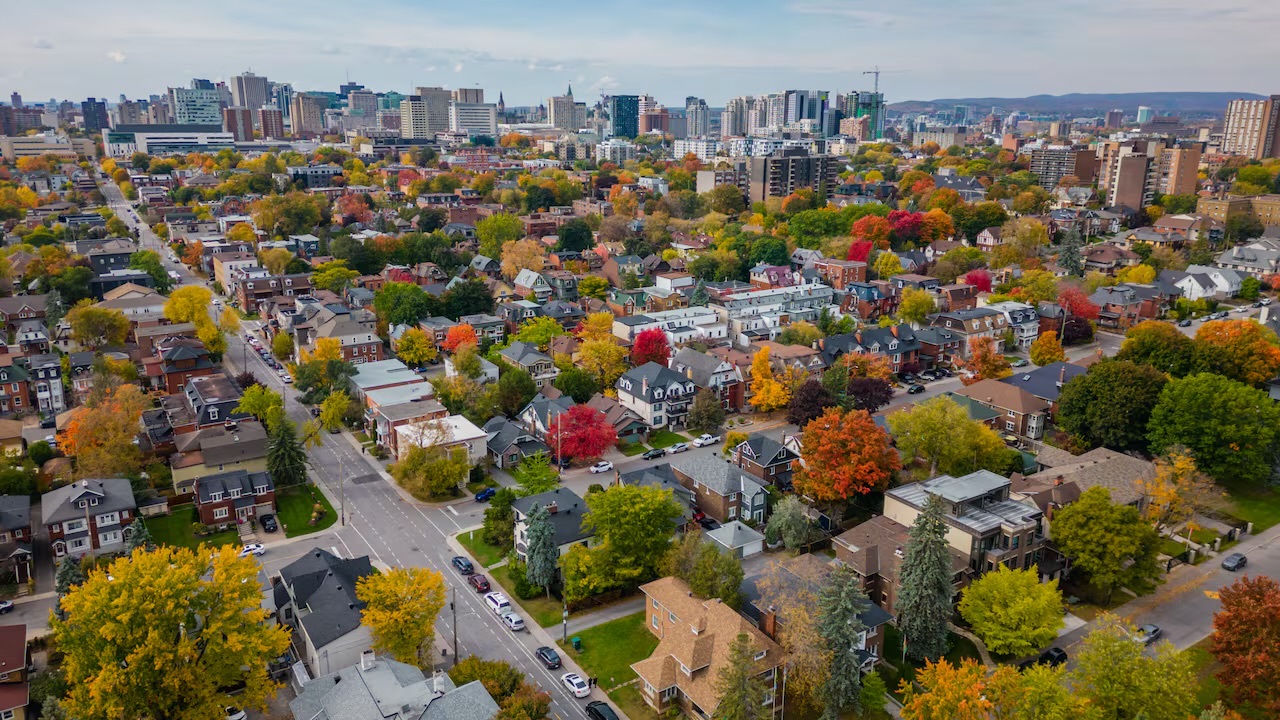
Map of Sandy Hill’s Active Rental
Our group mapped apartments and rental properties in Sandy Hill. This topic is important for understanding food assets because it maps physical distance between people and food sources, as well as the financial status of people who live in rental properties and how much money they have to spend on food.
Sources for our findings include real estate agents (collect information on housing for the purpose of selling, investing, and advising others), and Statistics Canada.
The average household income in Sandy Hill before taxes is $87,400. The median household income before taxes is $62,400. (CMHC, 2020)
There is a large student population in Sandy Hill, which likely contributes to the lower average income in the neighbourhood as opposed to the Ottawa average. Students tend to live on the west side of the neighbourhood, closer to the University of Ottawa campus where household income is generally lower (John Castle, 2023). Additionally, Sandy Hill has a slightly higher than average rent for single-person households compared to the Ottawa average. Sandy Hill has also had rapid growth in population since 2017, with unemployment rates being higher than the national average (John Castle, 2023). Vacancy rates rose during the pandemic but have since recovered (CMHC, 2020). According to residents, housing is a major point of complaint, as rent prices have been high in recent years (areavibes.com via Statistics Canada).
According to a study done focusing on student living in Ottawa and Ontario "The average rent paid by students surveyed is $926.8, with 95% (n= 310) identifying rent prices as a primary challenge. Students in Ontario face a higher average rent ($935.4) compared to those in Quebec ($830.1). Financially, 25% (n= 106) of respondents rely solely on employment income. A student earning the minimum wage in Ottawa ($17.20/h) would need to work 54 hours per month just to cover the average rent cost, excluding tuition, food and transportation costs."STUDENT HOUSING CAUCUS REPORT
A large number of apartment buildings in Sandy Hill are on the north side of the neighbourhood, close to Rideau Street. It is difficult to tell if a property is owned or rented during a walkthrough of the neighbourhood. For example, often historic buildings are converted and/or renovated into multiple rentable units, but that it is impossible to tell just by looking at them.
The interactive Google Map, below, shows some of the rentals and single family homes we marked. This map is not complete as we did a pedestrian survey of the neighborhood. We will be updating this map at a later time. -
-
-
Sandy Hill Grocery Accessibility
These maps critically analyze food assets available around the Sandy Hill area by considering the affordability and accessibility of the grocery stores outside of its boundaries, acknowledging that inside its boundaries, the only options are convenience stores with high price points and limited options in variety and diversity, as well as eat-in and take-out places, which are less sustainable for its residents.
-
Potential Sites for New Sandy Hill Community Gardens
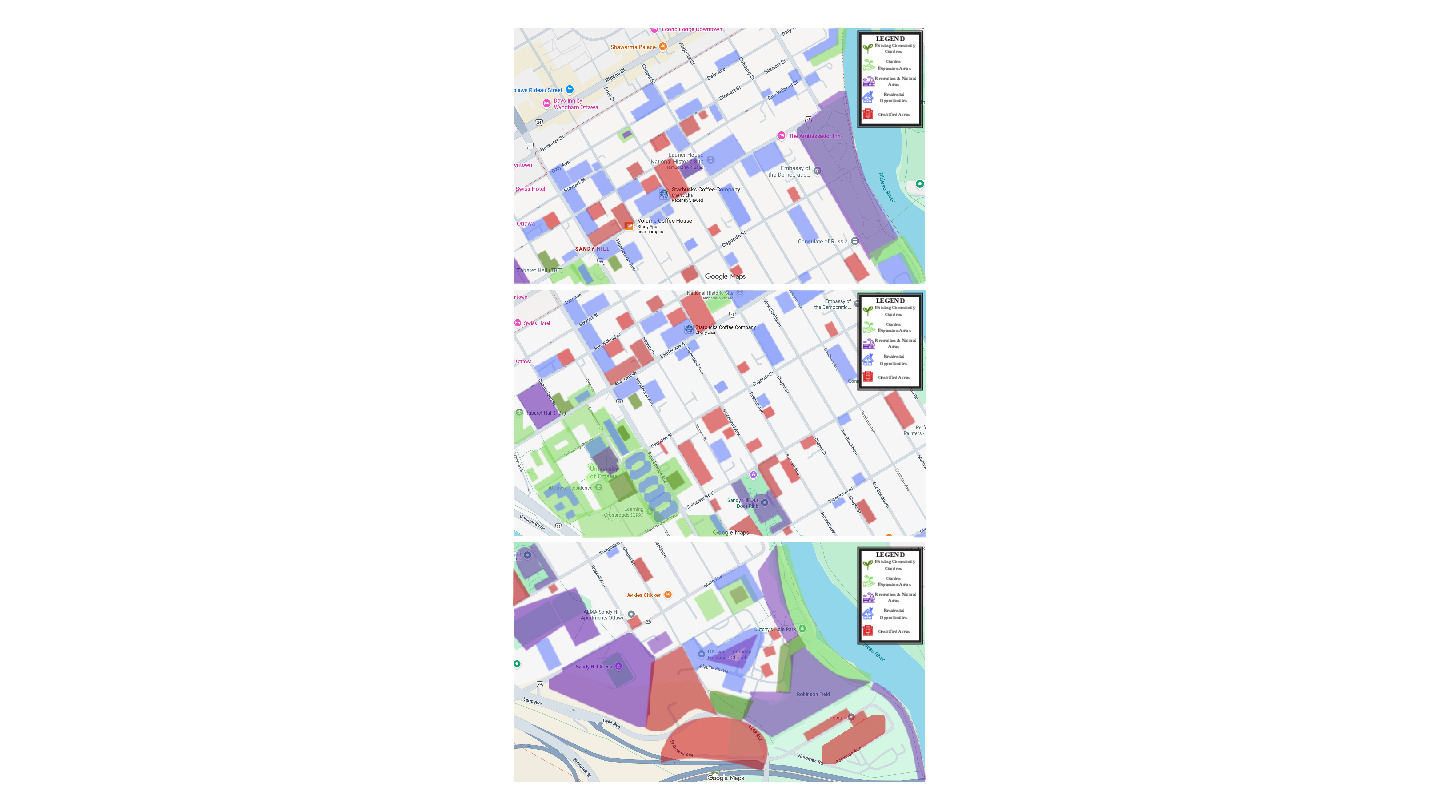
Introduction. Our group, consisting of Supreet Phangura and Jodie Choy mapped community gardens and landlord company-owned areas in Sandy Hill. The boundaries of our mapping were from Rideau Street to Mann Avenue, and then up to Range Road.
Community gardens are critical for our understanding of food assets in a few central ways. Firstly, community gardens can indicate socioeconomic status of an area through observation of infrastructure and how well-maintained it is. Secondly, the crops that a community garden produces can signify a gap in food assets as well as physical and monetary accessibility otherwise provided by food infrastructure in the area. Finally, the demographic of the community garden’s users can signify the level of food insecurity and need for mutual aid. In particular, an analysis on how socioeconomic factors shape what people think community gardens are for found that age, education, and annual household income had significant impact on how residents perceived benefits and purposes of community gardens. Annual household income was a strong indicator of whether a resident viewed gardening as a tool for physical health and increased produce intake, with higher-income individuals more likely to view community gardens as a way to increase physical activity. On the other hand, for lower-income individuals, community gardens were viewed as essential tools to obtain food while under financial pressure. Lower-income households were also found to be more likely to be recipients of produce, rather than active participants in the gardening process itself (Tackie et al., 2014).
Community gardens are an essential part of the story about how communities address food insecurity. Community gardens reveal the socioeconomics of food asset availability in Sandy Hill. In combination with this, the amount of landlord company-owned housing is also critical for the understanding of food assets because increases in landlord companies are heavily associated with gentrification. Gentrification tends to remove more affordable, smaller grocery stores by replacing them with high-end, chain grocery stores. It also has a tendency to bring about commercial development and a subsequent demographic shift. This leaves the neighbourhood at an overall lower affordability level, reflected prominently in the decrease of independent landlords at the expense of landlord companies.
A study performed a cross-sectional analysis on measures of gentrification and food access in Toronto found that 45% of all low-equity areas are unfavourable food environments (Menka et al., 2025). Moreover, all gentrification measures were significantly associated with food desert presence, meaning increases in gentrification were linked to lack of access to nutritious food (Menka et al., 2025).
Community Gardens and Landlord Companies in Sandy Hill: 2010 vs 2026 One of the main tensions that we found was how community garden usage seemed to indicate a lower socioeconomic status of the Sandy Hill area, despite obvious gentrification and decreased affordability of the area. Through analysing the individual factors of increase in community gardens and presence of landlord companies between 2010 and 2026, we seek to understand how socioeconomic status plays a part in telling the story of food asset availability in a community.
Community Gardens The Sandy Hill community garden scene in 2010 encompasses the Sandy Hill Community Garden, the Strathcona Park community garden, the Gathering Garden, the St. Joe’s Supper Table Community Garden, the Robinson Park community garden, and various community gardens run by programs on the uOttawa campus. In 2026, as pictured by the figure to the right, community gardens in Sandy Hill were limited to Sandy Hill Community Garden, Strathcona Heights Community Garden, St. Joe’s Supper Table Community Garden, Robinson Park community garden, and the same community gardens on the uOttawa campus.
Between 2010 and 2026, Gathering Garden was adjointed to Strathcona Community Garden. Notable differences include Strathcona Heights Community Garden, which was built in 2024 and seems to have replaced Strathcona Park community garden, but also features the expansion of new beds near 721 Chapel Crescent. In 2010, Strathcona Park community garden had 41 plots along 430 Wiggins Private, while in 2026, Strathcona Heights Community Garden has expanded to 3 locations: two benches at 300-310 Wiggins Private, one bench at Lori Heath Park, and two benches near 721 Chapel Crescent (McCallum, 2024). Both St. Joe’s Supper Table Community Garden and Robinson Park community garden were still running and recently active, and there seems to be a new community garden on the uOttawa campus in the form of Place des Francos-Ontariens Garden along Laurier Avenue.
Sandy Hill Community News interviewed a variety of Sandy Hill community gardens in 2020. By examining purported usage and reason for constructing a community garden, we can see that individuals tended to see them as a means to obtain food under financial pressure, consistent with findings that indicate use by those of lower socioeconomic status. Sandy Hill Community Garden originally opened around 2008 with an associated food bank which eventually disappeared, but was revived during COVID-19, indicating a very strong correlation to use for easing financial pressure.
Hildegarde Henderson from Strathcona Heights Community Garden noted that “when markets were reduced or closed, the community garden’s produce was very welcome in the neighbourhood” (Whitelaw, 2020). St. Joe’s Supper Table Community Garden is primarily used for providing food to Sandy Hill residents through its two food banks, community kitchen, sandwich service, and dinner service. St. Joe’s Supper Table Community Garden is also a prime example of how lower-income households were found to be more likely to be recipients of produce, rather than active participants in the gardening process itself (Tackie et al., 2014), since many recipients of this food are not participants in the garden.
Andrew Hall and Sue McKee mention that the University of Ottawa King Edward Community Garden had, in past years, had a garden for refugees, another for an organisation protecting battered women, and some space for two homeless people to use (Whitelaw, 2020), on top of general usage by students. The demographics of usage of Sandy Hill community gardens very clearly indicates a presence of low socioeconomic status individuals in the area, and the increase in community garden space between 2010 and 2026 indicates that this presence is only growing. In short, community gardens are an essential part of the story about food assets in Sandy Hill because they tell us where food insecurity lies, whether or not it is increasing, and what the community is doing to address it.
Landlord Companies. In 2010, the Sandy Hill housing market was mostly dominated by individual and family landlords, some local property owners, and owners of converted heritage homes. In short, it was largely characterised by decentralised ownership. In 2026, however, there has been a widespread consolidation into large landlord companies. On our walk, we found that properties were mainly owned by Sleepwell Property Management, Smart Living Properties, Paradigm Commercial, FRC Real Estate, CLV Group, and Osgoode Properties. Additionally, 2010 mainly had individual property owners, while 2026 has an increase in multi-property investors even aside from landlord companies.
There was also a large increase in the average price of a house, as noted by Agent in Ottawa Realtors, where the average house in 2010 was priced at $435, 406, and the average house in 2025 was priced at $559, 109. The kind of build dominating Sandy Hill has also seen various changes throughout the years. A study performed in 2010 regarding Sandy Hill being a cultural heritage landscape noted that in the early 1900s, Sandy Hill was largely dominated by single family residences mostly housing Ottawa’s manufacturing and mercantile elites, with some construction of middle housing in vacant lots.
Between 1922 - 1956, there was a trend of expansion of existing housing stock through new construction; the subdivision of existing single-family homes into multi-family homes, which mirrors multi-unit trends we see today; and the construction of apartment buildings. Overall, the housing market was beginning to shift to accommodate middle-income families rather than elites. In 2010, the study notes that because the Sandy Hill area was largely established by the mid-20th century, the existing housing stock had remained relatively unchanged since then. Many smaller, multi-family homes were owned or lived in by the student population in Ottawa.
In 2026, the housing in Sandy Hill consisted mostly of restored Edwardian homes, historic triplexes, student rentals, and modern mid-rise condos. There is now high demand for triplexes, updated heritage properties, and turnkey condos. Interestingly, across 2010 and 2026, there is a consistent prevalence of multi-unit houses being rented out to students. This story of accommodating elites, to middle-income homes, to a wide variety of modernised housing, follows a similar trail of food asset availability in the Sandy Hill area. As mentioned before, the affordability of the neighbourhood is not what mainly creates food deserts in Sandy Hill. Rather, it is the change in infrastructure itself. This makes sense, given that the most notable difference between housing in 2010 and 2026 is that middle-income housing was more prevalent and that heritage properties were beginning to see massive updates.
It’s likely that the shift towards converting Sandy Hill housing to be more modern and accommodate more people was part of a gentrification effort that ultimately changed food asset availability. These findings are particularly pertinent in relation to our findings about community gardens, which also highly point towards effects of individual socioeconomic status on food availability. Important to note is that, in 2009, the Ottawa Development Report showed that rental vacancy rates in Sandy Hill sat at 1.4% before shooting up to 2.4% in 2010, where the city average at the time across Canada was 1.6%. This means in 2010, there were more units for rent than needed. In 2025, rental vacancy rates sat at 3.3% as reported by Ottawa Lookout, meaning there was an increase in oversupply. However, realtor.ca found that approximately 80% of Sandy Hill consisted of renters. This is likely explained by the large demographic of students dominating Sandy Hill, which causes frequent turnover, but also creates a need for oversupply because of the fluctuating amount of students per year who may need housing. Rental vacancy is positively associated with gentrification due to trends where vacancy makes future redevelopment via gentrification. This points to a narrative about Sandy Hill food assets where there is overall disinvestment in infrastructure supporting residents, replaced with investments in infrastructure supporting the priorities of companies and larger landlords who invest in the area. Such a narrative is consistent with the dramatic increase in the noted use of community gardens in ways that indicate lower socioeconomic status and increased food insecurity, despite the fact that Sandy Hill as a neighbourhood is decreasing in affordability and increasing gentrification.
Recommendations. Community gardens mainly face issues regarding waitlists, plot distribution and equitable access, plot abandonment, stealing, community integration, visibility and awareness, and lack of resources. To address waitlist problems, we recommend implementing a “use it or lose it” policy wherein inactivity for a certain period of time triggers reassignment. For plot distribution and equitable access, we recommend partnering with local groups like tenant associations and newcomer services to ensure inclusive access to plots. Putting requirements for a basic participation, like minimum maintenance expectations, could help mitigate plot abandonment issues, and stealing could be addressed through fencing, construction of natural barriers to wall off gardens, and signage. Community integration could be aided by having crops that are used in multicultural recipes, so all demographics in the Sandy Hill community could have crops they can make use of. Additionally, Sandy Hill could organise community days that offer food made from gardens to the Sandy Hill community to bring in new volunteers and foster relationship-building with and between community members. Visibility and awareness, which is a main issue we encountered on our initial walk, can be addressed using awareness campaigns such as posters in public spaces.
Community gardens could also contact related organisations to send out email newsletters, and put up signage with QR codes to give more information on the community garden and indicate how to join. Lack of resources such as volunteers tending to the garden and storage space can be helped by integrating gardening into CSL placements at the University of Ottawa. This has already been implemented with some of the community gardens on the campus, such as the King Edward community garden, but can be extended to non-campus community gardens as well. Finally, our general recommendations include implementing rules and regulations around food distribution, such as who has access to gardens, and who can harvest. -
Food Vendors in Sandy Hill
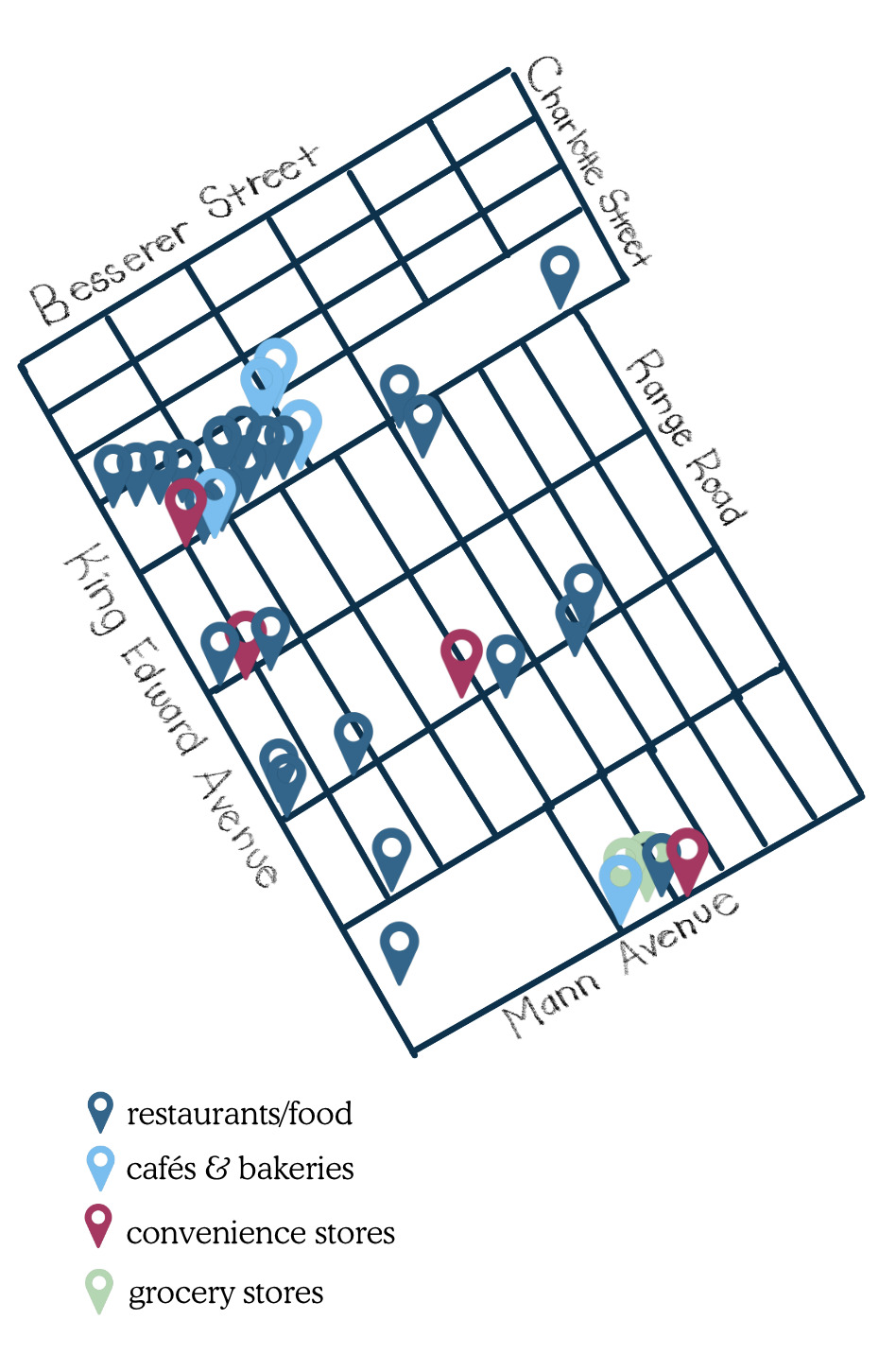
Our group mapped food vendors (e.g, restaurants, convenience stores, grocery vendors, coffee shops, etc.) in Sandy Hill. We examined each location’s general affordability, the food’s or vendor’s cultural origins, and whether there are food preference availability.
Boundaries of our mapping were (North to South) Besserer Street to Mann Avenue, and (West to East) King Edward Avenue to the Rideau River. Understanding what food options exist in the area help to create a picture of Sandy Hill’s livability and discover areas for potential improvement (more diverse food options, healthier options, cheaper options, etc.).
-----As of 2026, Sandy Hill (within the boundaries specified previously) has 43 food vendors. 31 of these vendors, we classified as sit-down or take-out restaurants/food, and pubs and eateries, and 6 vendors we classified as coffee houses, bakeries, or beverage shops. 4 food vendors were convenience stores and the 2 were grocery stores.
Most of the food vendors were clustered close to the University, with a high frequency on Laurier Avenue. The two grocery vendors operated on Mann avenue, allowing residents of the neighbourhood living nearby the opportunities to purchase basic food necessities without having to travel to Rideau street and beyond for grocery items.
Sandy Hill has many food vendors selling different cuisines including Indian, Mediterranean, Thai, Japanese, Korean, Mexican, Guyanaese and Caribbean, North African, and French Gastronomy.
Affordability fluctuated with most of the affordable food stores operating close to the University. Restaurants closer to Range Road and Strathcona Park had a dramatic increase in price compared to the rest of the food vendors. More often than not, food vendors had at least a few vegan, vegetarian, or halal options available. Most places also allowed for customization and substitutions.(See Food in Sandy Hill Comparison - 2010 to 2026 table). Compared to 2010, there are more food options that are more diverse, and tend to be similar in price/accessibility as before. There are a few spots that have closed and are now empty store fronts or no longer sell food, but many former residential only spots now have food options. While we do not have price comparisons for 2010, we can surmise from the similar options and vendors that are still present that the price increases are likely in line with inflation. We have mostly found that while brands or names have changed, convenience stores have stayed convenience stores, pubs have stayed pubs, and so on and so forth. Please refer to the table for further details on what has changed, stayed the same and to compare further.
Mapping food vendors in Sandy Hill is essential for understanding food availability in the community and addressing food insecurity, particularly focusing on affordability and dietary accessibility. Our map highlights an overall increase of accessible vendors in the neighbourhood, including more accessible options and a wider range of affordable options in comparison to 2010. It presents the options available to the residents of Sandy Hill, where they can eat depending on their food preferences and restrictions, and the affordability of said vendors.
Our project highlights the gaps in food access in Sandy Hill. This includes areas with fewer vendors, areas of limited affordability, and lack of transparency with dietary options. For example, many vendors don’t state dietary accommodations on their menus or websites. It also shows the concentration of vendors on Laurier Street compared to the lack of options in east Sandy Hill. -
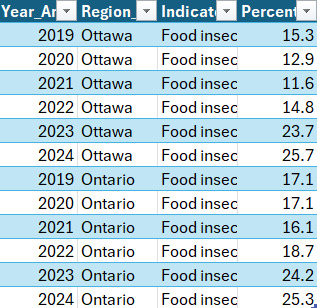
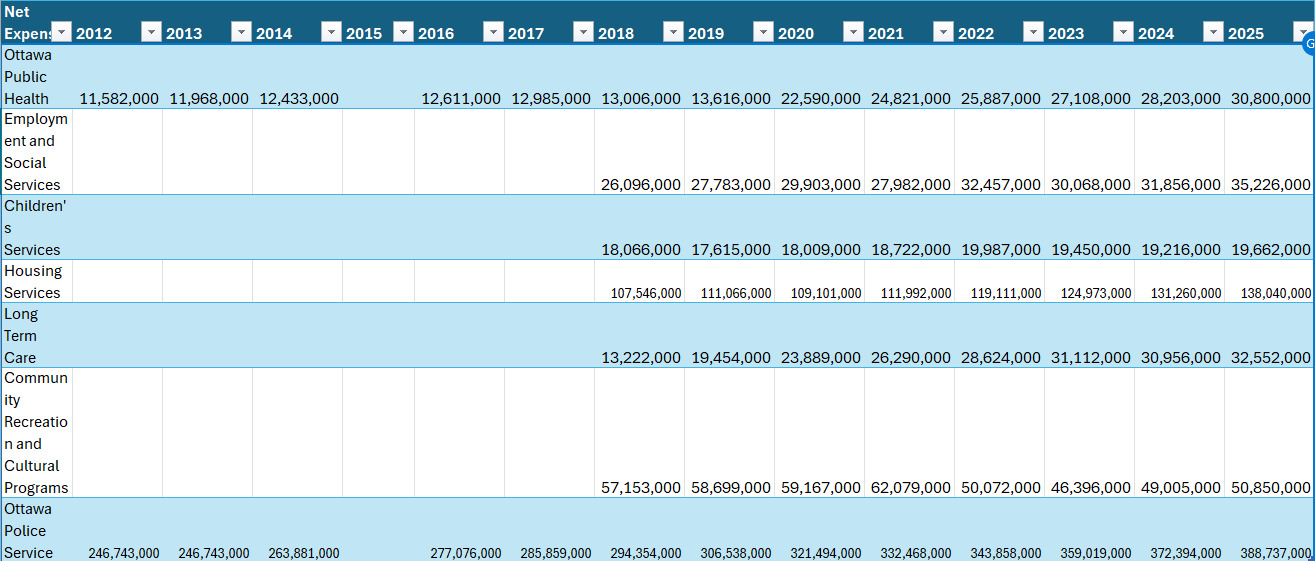
Graphs of City of Ottawa Public Investment
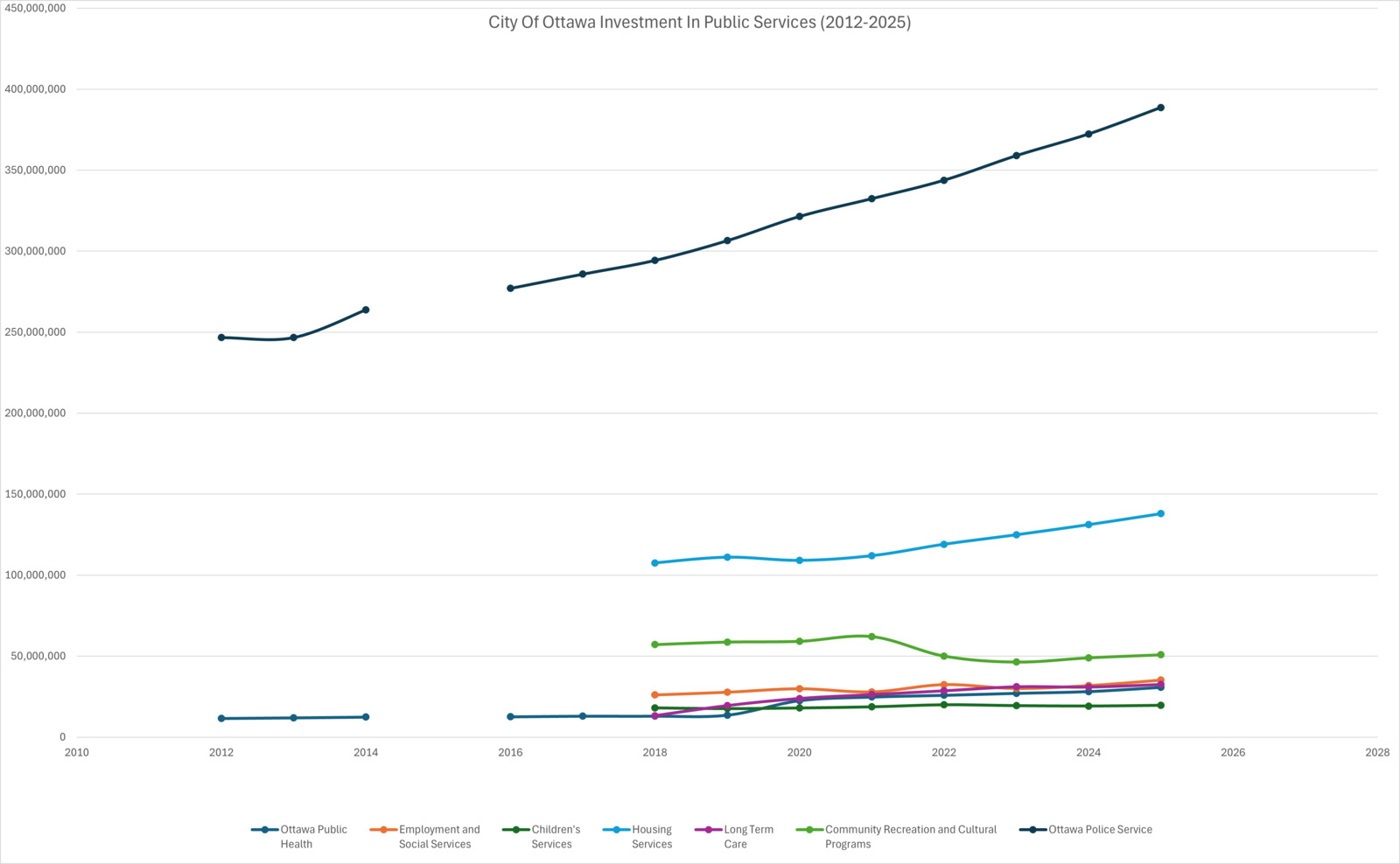
These two graphs are from data gathered from the City of Ottawa Operating Budgets from 2012-2025, minus 2015. -
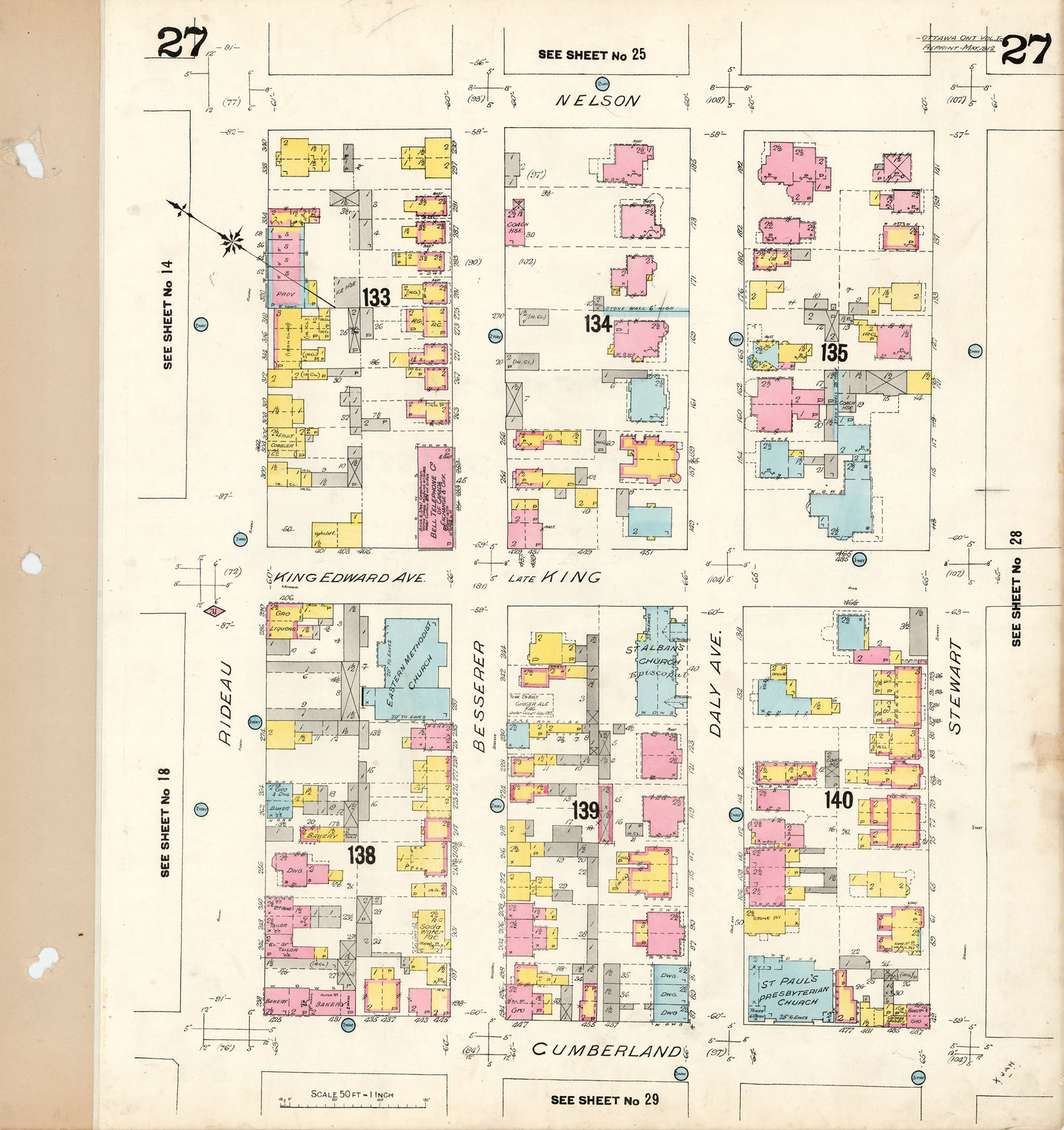
1912 Historical Fire Insurance Maps of Sandy Hill
These images document Sandy Hill. By comparing these to the previous map collections, you can see how the neighborhood has changed. By clicking on an image and enlarging it, you can see where there were grocers , bakers, Chinese laundry, churches and schools. -
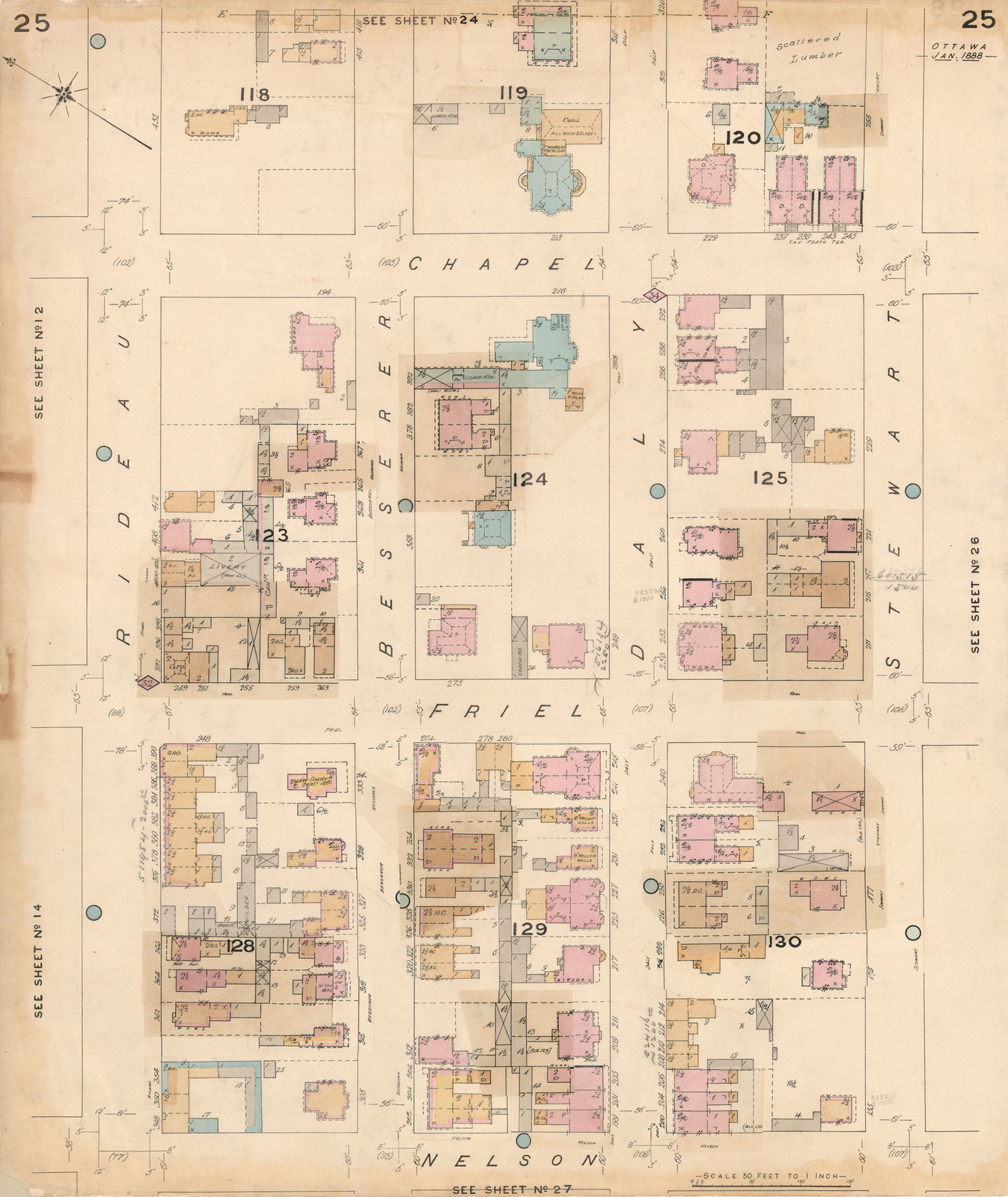
1901 Historical Fire Insurance Map Of Sandy Hill
These images document Sandy Hill. It serves as a baseline to see how the neighborhood has changed. By clicking on an image and enlarging it, you can see where there were grocers (GRO), as well as other businesses from livery stables, coal sheds, freight yards to hotels. -
Conversation with Vera Cotter
This Interview features Vera Cotter and her journey from Trinidad and Tobago to Canada. Born in 1955, Vera spent her early years in Trinidad’s capital, Port of Spain. She then moved at the age of five to Princes Town, where she would spend the rest of her childhood and teenage years until moving abroad to the United States for University. When describing her upbringing, Vera explained that she grew up in a large, multi-generational household and neighbourhood. Education was very important in her family and within her community; you could attend either French or English school. Vera’s family chose the English system and, in turn, expected their children to attend English universities after finishing secondary school, particularly the University of Cambridge. Family is vital to Vera’s culture and has played a central role in how she ended up in the West years ago and how she continues to live today. She articulated that she was only able to go to the United States at all because of her aunt, who was already studying there. She describes this, stating, "our culture, you have to live with family, like you can't just go as a student to a strange land." She later moved to Canada and began attending pharmacy school at the University of Toronto. As she described her time in Toronto, she laughed and explained that she was a bit of a rebel within her family. While studying, she was still required to live with her family and, being in her early twenties, felt a strong need for independence that ultimately led her to drop out of university at the time she described this, stating,“being stuck with relatives, and I had a few more relatives in Toronto. And I just found living with, they became my parents. And it was like too much, too many parents. And we were allowed back then to work like 20 hours a week as a student in Canada. So, I hung out with a crowd that my family did not approve of, it was like, not good. So, there was a lot of pressure. There's school and there's the friends I hang out with, and I ended up moving back home for two years and then realized that's when I just dropped out of school and like I would just rebelled.”At this time, Vera moved back to Trinidad for two years. However, she returned to Ontario after meeting her now-husband. They married at the age of twenty-two and moved to her husband's hometown, Belleville, Ontario, where she worked for a bank for the rest of her career and raised her family. When Vera and her husband moved to BelleVille, they were among the only three “Brown or ethnic families” in town. She described a conversation she had with her mother-in-law about this topic, stating,“it's so funny because I remember once my mother-in-law said to me at a restaurant, she says, “you know, every time we walk into the room, everyone looks at you,” and, I kind of like, felt like it was because I was different, right? Like there's only white people, let's just, okay? There's only white, Caucasian people. And so, I said to my husband, I said, well, you know what? Maybe they look at me because they find me attractive. But I think her culture also is, you know, they're probably looking at me because I'm different. I don't know that for sure, but that's how I took it.”Vera shared many details about the dynamics at play in BelleVille and within her blended family throughout the interview. Today, she’s seen a significant change in BelleVille's population, but she still finds it difficult to celebrate her culture outside specific family traditions. Vera later moved to Ottawa after retiring to be closer to her daughter and grandchildren. She currently still lives in Ottawa, working part-time in banking and remains closely connected to her family, particularly her daughter and granddaughter, both of whom are extremely important to her. Vera reflected on her life and said, "I'm in Ottawa and I've made a new life over the past 12 years, so it all worked out. I was very lucky. We started working really young in our generation, so I was lucky enough to retire, they called it “Age Plus Service,” and you can retire like, I retired at 56, when the first grandchild came, so I could look after my grandchildren." -
Conversation with Claudia Martinez
Claudia Martinez is an immigrant from Colombia and has been living in Canada for over 20 years. She shares her story, touching on themes of cultural adaptation and community growth. She explains that through family reunification, she was able to bring relatives to Canada and has since seen growth in the Latin community, making cultural foods more accessible. Claudia shares the importance she places on family-focused celebrations such as Christmas and Thanksgiving. She also explains comparisons in social norms between Colombia and Canada. Moreover, she emphasizes the strong work ethic of Colombian immigrants and their commitment to family and societal contribution. Overall, she is grateful for the Anthroharvest website, which serves as a great platform to share diverse immigrant stories and can promote a better understanding among the public of the different situations that lead to immigration. -
Conversation with Maria
Maria is a Mexican immigrant studying Joint Honours in Political Science and History at the University of Ottawa. She first arrived in Victoria, British Columbia, as a boarding student, then moved to Ottawa for post-secondary education, and returned home in the summer to reconnect with her family and Mexican community. As a young adult, Maria looks forward to continuing her exploration and travelling the world, with the possibility of returning home afterward.Her decision to come to Canada was not her own; it was made by her parents, who saw Canada as a welcoming and open country for immigrants. None of her family members moved with her, except for her brother, who came one year after her arrival for a short time but left soon after because he was not enjoying his experience. This reality contextualizes her early experience of settlement, exhibiting the nuance and varied responses involved with being immersed in a new country and culture.Maria highlights that long-term integration has not always been easy for her and that this challenge persists long after one’s arrival in a new country. Maria mentioned that she has yet to find a Latin American community in Ottawa, stating she was unaware of its existence. She notes that Toronto, Vancouver, and Montreal are hubs for Latin American communities, with organized cultural celebrations and events. She articulated an uneven nature of immigrant integration across different cities and urban contexts.Maria still holds her cultural identity and the traditions she values very closely, as this helps her stay connected to her Mexican community. She expressed that a significant cultural holiday she celebrates is Semana Santa, a Catholic holy event popular in Mexico. She also appreciates foods such as Chilaquiles, a dish made with tortillas and tomato-chilli sauce, and she buys most of her ingredients at grocery stores like Loblaws and Food Basics. Her incorporation of Mexican culture into her Canadian life has helped Maria maintain her connection to home.Though Maria details her positive experience in Canada, she also describes her encounters with stereotypes and external perceptions of her identity. She highlighted the colourist and prejudiced assertions people have made, assuming she was not Mexican because of her appearance. Maria emphasized the microaggressions she has experienced through these stereotypes, being questioned for her Mexican identity because she did not fit the image often associated with Mexicans in Western society.Throughout her interview, Maria expressed optimism about the future and the new explorations and pathways it might hold for her. -
Conversation with Tatiana
This interview features Tatiana, a Colombian immigrant living in Canada. Tatiana is a Political Science student at the University of Ottawa. She immigrated from Tunja, northeast of Bogotá, to Canada at the age of 18, seeking new opportunities and to expand her knowledge of the world beyond her hometown. During our conversation, Tatiana opens up about the efforts she’s made to stay connected to her Colombian heritage and the struggles she's faced along the way. One of the main things Tatiana has found difficult to access in Ottawa is ingredients and fresh produce, as she enjoyed at home. Fresh fruit, in particular, holds a special place in her heart, as her family in Colombia owns a fruit farm and she has strong memories of always having delicious fruit at her table. She describes this experience, stating,“I'd say at least once a week. Like the thing I used to love about Colombian foods is like fruits. And my family, at least my mom's side, they have a whole farm to grow fruits. So my house always has them. And here the selection is so limited and it's so tasteless. And I find myself craving like a juice, a lemonade with coconut or with cherry, because we have lemonade at all (*******) times. Like it's good, like a good juice, And I found a store here in Byward that kind of sells juices, but it's like $12 for a glass, which I find it's overpriced.”She noted that when she’s feeling homesick or has a pull to reconnect with her culture, she tends to seek out restaurants that serve Colombian food. In general, Tatiana explained that she sees a few different Latin American businesses around Ottawa, particularly in the Byward Market. Outside of food, Tatiana describes the differences she has noticed between Canadian and Colombian culture during her interview. Particularly, Colombians' collectivism, which she feels is a core value of her culture. She articulated this, stating,“I feel as if Colombians think of their community first a lot of times before taking a decision that might impact somebody else than them. Out of respect, perhaps, consideration, or just costum, because that's how you're taught to be. And I kind of go by that because I don't find a reason as to why I should oppose. I think it's a nice thing to do. Like Canadians are, or I've noticed, they're more individual-driven. They want to do stuff for them first and then other people come later in consideration, which doesn't necessarily have to be something bad, but it's not something I want to assimilate into.”In part due to this community mentality, Tatiana also feels that Colombians are more spontaneous by nature. She explained that when at home, people often reach for more immediate plans, such as going for a walk or going to the store. With this in mind, she shared some of the downsides of this mentality, noting that she experienced significantly more peer pressure in Colombia, particularly regarding high-risk behaviour.Ultimately, Tatiana finds that the majority of her celebrations are community-driven. She finds herself seeking out her found family in Canada and loved ones in Colombia. She makes an effort to return to Colombia whenever she is off from school, and thus enjoys her culture firsthand fairly often while also establishing a new community in Ottawa. -
Conversation with Diego Martinez
Diego Martinez is a 22-year-old engineering undergraduate student studying at the University of Ottawa. Diego immigrated from Mexico City, Mexico, to Calgary when he was four years old because his father found a job in the oil and gas industry. Diego believes that his family’s decision to immigrate to Canada was a good choice because it is safer than Mexico. After graduating from high school, Diego moved from Calgary to Chelsea, QC, to live with his uncle and cousin and pursue his studies at the University of Ottawa. Diego describes Chelsea as having a small Latin American community. However, he found a larger community presence at uOttawa. Throughout the interview, Diego discusses the key aspects of his culture, namely language, celebrations, art, and family ties. He talks about how all aspects of his culture have family elements. For example, he mentions that Christmas is an important celebration in Mexico that gets the whole family together. Additionally, he talks about how the arts are used to connect the family.
Diego and his family make sure to keep the culture and heritage alive by speaking Spanish daily. Diego also has a friend who is learning Spanish at the time of this interview, and he takes time to explain how fun it is to speak with him and how much he’s enjoyed getting the chance to use his language outside of his home. He also discusses how his family in Canada makes sure to travel to Mexico to visit their relatives. When asked about his favourite Mexican food, Diego highlighted tortilla soup as his first choice. He enjoys making a variety of traditional foods weekly. He described tortilla soup as a comforting staple food from his childhood, often prepared by his uncle while he was growing up in Mexico.
One thing that Diego thinks is very important is travelling to countries in Latin America. He wants people to be curious when they travel by trying new foods or visiting different landmarks. Essentially, he wants people to really explore the culture as much as possible. He also mentions that an exchange is a great opportunity because you can learn the language and experience everyday life there.
Although Mexico has an amazing culture and is a great place to visit, Diego stresses that there are still issues like cartel violence and corruption that people should be aware of. However, like travelling anywhere in the world, there is always some level of risk. -
Conversation with Jorge Garcia
This interview shared the story of Jorge Garcia, a Salvadoran immigrant living in Canada. Jorge immigrated to Canada after fleeing the Civil War in El Salvador. Throughout this interview, he reflects on memories from his move to Ottawa, the ways he has seen the city transform, his broader experience engaging with Canadian culture as a Latin American man, and how he stays connected to his Salvadoran culture.
Upon his arrival in Canada, Jorge stated that he prioritized learning about and integrating into Canadian society. He noted that the longer he’s lived in Canada, the more he's come to understand its diversity, particularly between anglophone and francophone communities. Jorge speaks of his efforts to assimilate into Canadian society while not forgetting his roots, and discusses his perspective on Canada’s bilingualism and questions he has had about French culture in Canada, stating,“Personally, I try to keep myself merging in not forgetting my roots, even though I'm in Canada. I'm part of the Canadian society now. Now, I have learned a lot about the Canadian society. What's the French? What's the English side? Why is it so important for the French constitution when they say that this is a country that is bilingual? When in certain parts of Canada, that bilingualism doesn't apply.”Jorge considers his efforts to connect with and learn about the different communities in Canada to sit at the core of his belief system, and described how, as someone living in a predominantly French neighbourhood, he’s enjoyed getting the chance to learn about French Canadian culture and their language. Building on this, Jorge describes how he feels it is his responsibility and pleasure to work towards improving and contributing to Canadian society as a Canadian; his goal is to be there to support not only the Latin American communities in Canada but society at large.
Jorge celebrates his Salvadoran roots through maintaining connections to family. He also prepares and eats Salvadoran food, including rice and bean dishes, and ‘specialty foods' like pupusas, tamales, and cow tongue. Jorge explains that in previous decades it was hard to find ingredients for such dishes, but as Canada’s Latin American community grows, so does the market for such foods, and supply has risen to meet demand.
Another means with which he maintains his connection to his culture is through Latin American mass media, such as television, which is now accessible online. Jorge attends festivals and cultural events, such as the Latin American community festival in September, and he proudly notes that October is Canada’s designated Latin American Heritage Month.
Finally, Jorge concluded our interview, stating that many Latin American immigrants arrive in Canada after being forced to flee their home countries because of traumatic events such as warfare. He articulates this, stating, “Sometimes we deal with those demons when we come here, and we confront a different society.” With this knowledge, Jorge hopes that his story, as well as those preserved on Anthroharvest, will provide insight and education to Canadians, Latin American immigrants, and those considering immigrating to Canada, helping them adapt to life in Canada. -

Conversation with Tamara Toledo from the Latin American Canadian Arts Project (LACAP)
We interviewed a representative-Tamara Toledo-- of the Latin American Canadian Arts Project or LACAP. Their mission showcased a good example of support for the community, by the community. Tamara's passion was infectious: “Because my background is in the arts, that sort of has been my focus with that activist intention of changing how art is understood, accepted, and the narratives that are a part of the Canadian dialogue.”
LACAP is a Toronto-based organization that helps contemporary Latin American artists who are living in Canada connect to resources, such as help with exhibitions and research. They also provide public programming. LACAP frequently works with Toronto's institutions, such as Ontario College of Art & Design University (OCAD) and York University, providing lectures and seminars about Latin American artists and the history of Latin American art. LACAP’s two founders are Tamara Toledo and Rodrigo Barreda, who is in operations management. Toledo’s background in Art history and curation allows her to understand the artists' needs on a deeper level and provides mentorship for up-and-coming Latin artists. Having attended OCAD herself, she first-hand encountered the issues that many fellow artists were experiencing, allowing her to work directly with the University's programming to create a more inclusive curriculum.LACAP only has two paid employees; everyone else is contracted, depending on project funding. In 2025, they had 3 paid staff who received payroll thanks to an additional grant they received. In general, the organization relies heavily on a fluctuating number of volunteers, meaning that lots of people are constantly coming and going.
LACAP is always looking for helping hands--you can apply on their website if you are interested in getting involved with the Latin arts community.One of LACAP’s main initiatives is Sur Gallery, located right on Toronto's Waterfront. The gallery is a dedicated space used to present contemporary Latin American and LatinX art. This venue and its programming focus on the dialogue between artists, scholars, and communities while encouraging collaboration across borders and artistic disciplines: “Initiatives are aimed to socially innovate, critically engage, lending itself to opportunities of national relevance to begin to develop global networks of exchange.” (LACAP, 2026) Toledo saw the lack of Latin American representation in the art scene of Toronto and understood the issues many Latin artists were experiencing throughout the art community. This left her and her partner to create LACAP to allow the artists to build a strong foundation in their craft to succeed in the Canadian art world. One of her favourite projects is at the Sur Gallery. She visited four Canadian cities and interviewed 15 Latin American artists for the exhibit. Toledo and her team curated a series of video interviews, forming video portraits of Latin American artists across the country, providing a platform for the artists' voices and experiences.
One of the ways you can support this organization is by donating. In this context, dollars go toward promoting Latin American art in different ways, such as by inviting classes to visit their galleries, by providing resources to artists for seminar-style workshops, or by supplying art tools to beneficiaries in the community. These donations can be made by cheque or via their website: https://lacap.ca/support-lacap/donate/. You can also visit their most recent project, Sur Gallery, by appointment only (for now), situated at 100-39 Queens Quay East in Toronto, Ontario.
The work that the organization does is incredibly important as it acts as one of the only support bodies for the Latin American art community in Canada. LACAP strives to employ a mainly grassroots approach, as explained by Tamara in our interview: “(...)20 years ago there was a lack of representation, visibility, of the Latin American diaspora in galleries and institutions, and so for me the motivation was to change that and to create that change and it had to be done from a grassroots place.”
The gallery plans for the long term; The Covid epidemic required them to shift gears and create alternative plans to showcase their artists. Currently, LACAP is undergoing structural and organizational changes, in order to continue to serve their community as best as they can by responding to constantly changing needs.