
Browse Items (60 total)
Sort by:
-
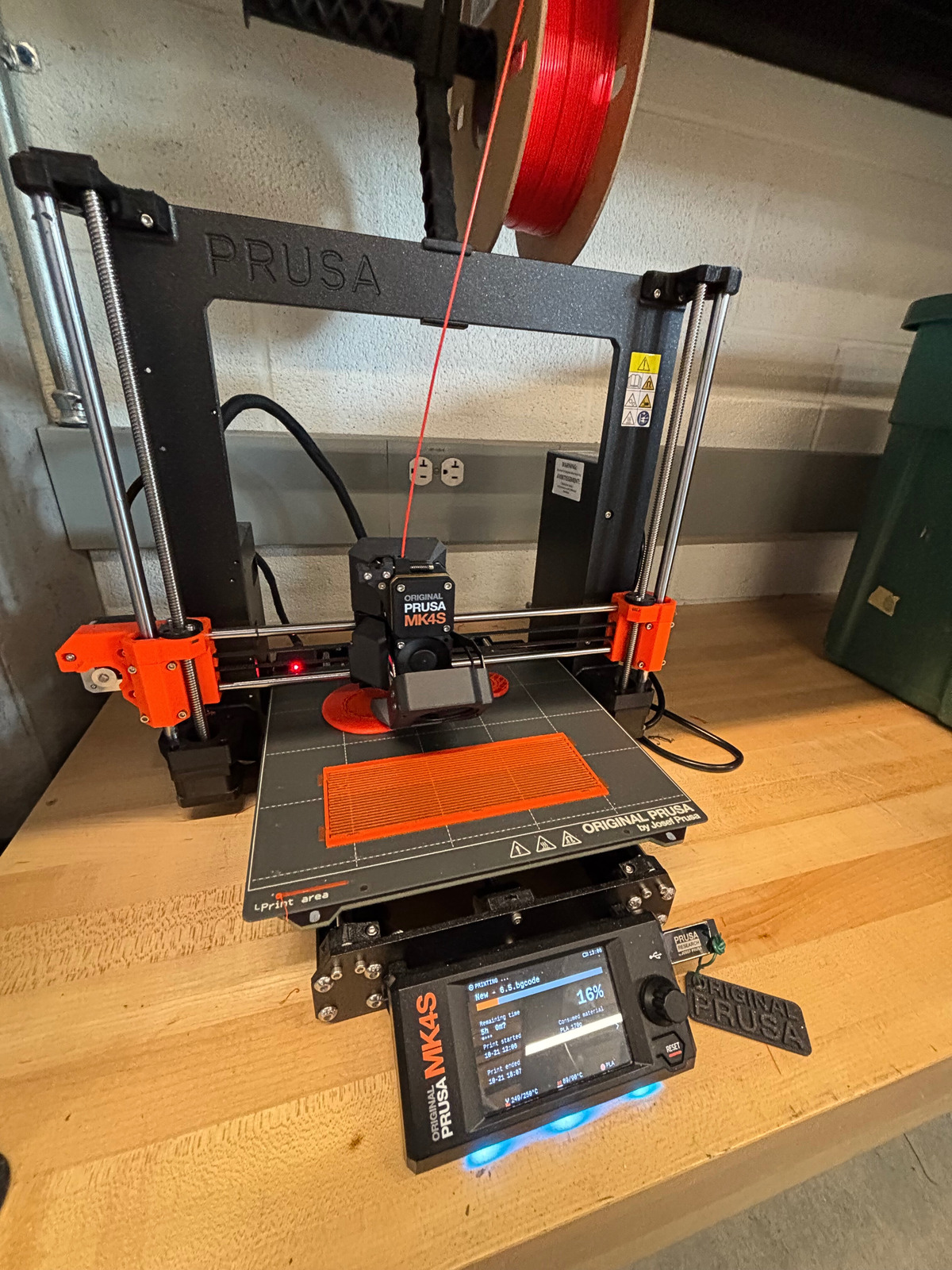
Original Prusa MK4S HF0.4 nozzle
3D printing machines can be found in the STEM building in MakerSpace since 2017. This space is a part of Centre of Entrepreneurship and Engineering Design (CEED) and is a crucial aspect of the engineering faculty . Back in 2017, the only printers available were the UltiMakers released in 2013. In Summer 2025, CEED acquired two Prusa MK4S in MakerSpace. This place is available to all students and staff members of uOttawa. It is useful to engineering students for many of their classes, but it is also used for personal projects by other faculties. In prior years, access to the printing machines was free. As of Fall 2025, costs of ten dollars are included in tuition fees of engineering programs. For other members of the community, a few options are offered; it is free on Sundays, they can buy a day pass for 5$ or pay 25$ for a semester with unlimited use. Since 2017, Richard L'Abbé Makerspace and its 3D printers have been part of the culture, but the Prusa MK4S are truly unique to the current culture now in 2025 and have changed how things work in general. -
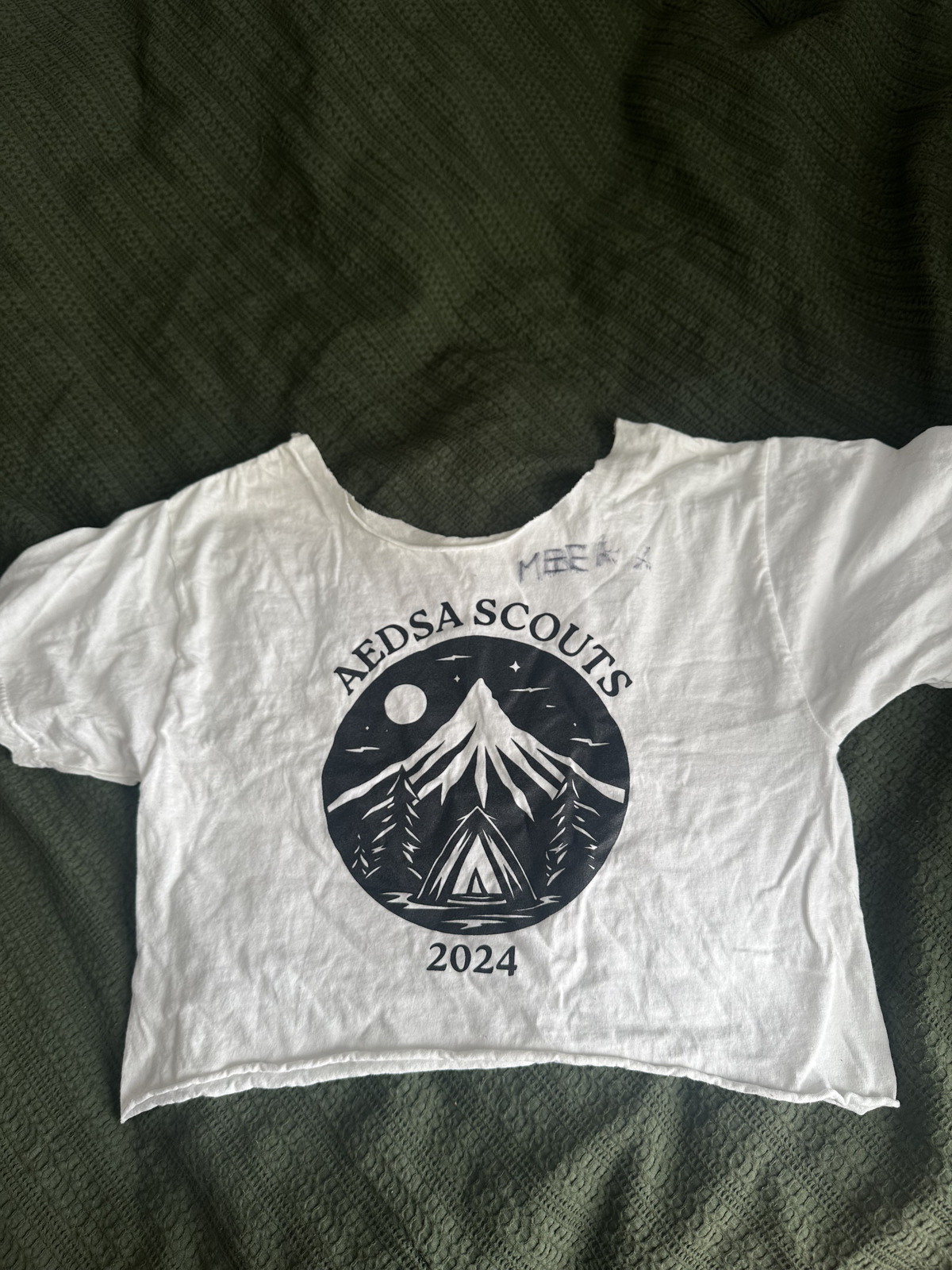
101er Frosh T-Shirt - AÉDSA
A short-sleeved cotton T-shirt produced for the 2024 101 Week (frosh week) Kits at the University of Ottawa’s Faculty of Social Sciences. Purchased in order to attend all the 101 week events created to facilitate community and visibility among new students. -
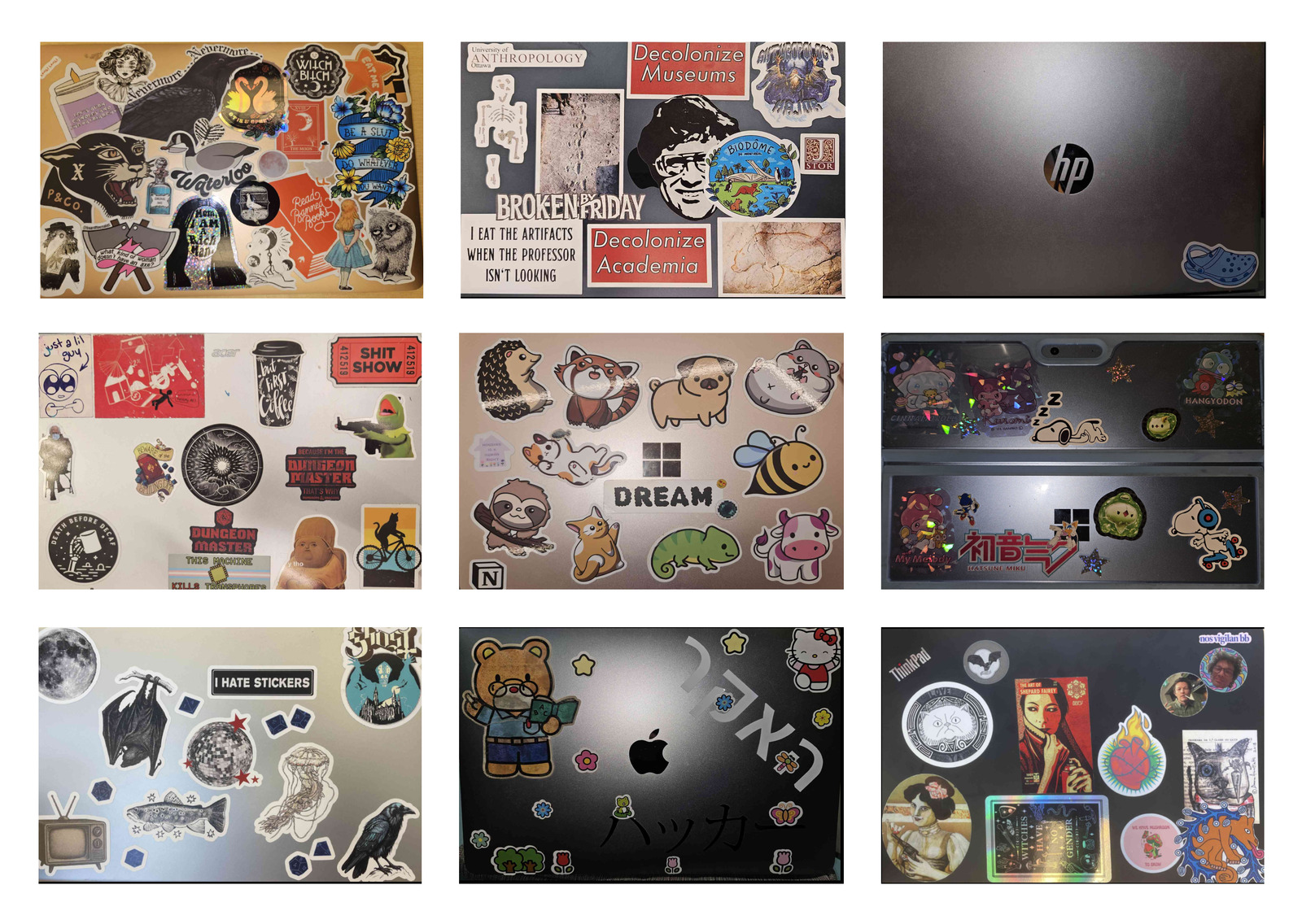
Laptop Stickers
A sticker is an image that is sealed between plastic or vinyl, and some sort of adhesive so it sticks (hence the name stickers). These stickers are then placed on laptops, notebooks, or water bottles, as a form of non-verbal communication between students. Usually, these objects are used to convey information to other people in their "groups," for example people who enjoy sports might use a sticker with their favourite team's logo to convey to other sports fans that they too like sports. These stickers can be bought online or homemade. Homemade stickers are usually made using parchment paper, tape, and whatever image one would want to make into a sticker, much like commercial stickers, yet way more personal to the user, as there is the connection of making it. Many people opt to leave their laptops blank. -

Tim Hortons Coffee Cup
Coffee is a hot, dark and bitter drink that contains coffee beans and caffeine. This beverage powered by caffeine fuels countless students through long lectures, study sessions, and general daily routines. This drink has become a powerful staple of campus culture. It is used by thousands of uOttawa students as a tool to combat fatigue, enhance focus, and improve mood to help students navigate academic life and complete tasks such as studying, homework, and assignments. Coffee is particularly valued during periods of high stress, such as exam seasons. Coffee is also consumed by students out of academic contexts because of the appealing taste.
Coffee can be purchased at several locations on the uOttawa campus, and many more locations in the surrounding area. On campus, some popular locations include Tim Hortons (145 Jean-Jacques-Lussier Pvt), Second Cup Coffee (65 University Pvt), and Starbucks (55 Laurier Ave E). Because of the high demand for coffee by the student body, these locations are open every day of the business week, and even regularly employ students.
-
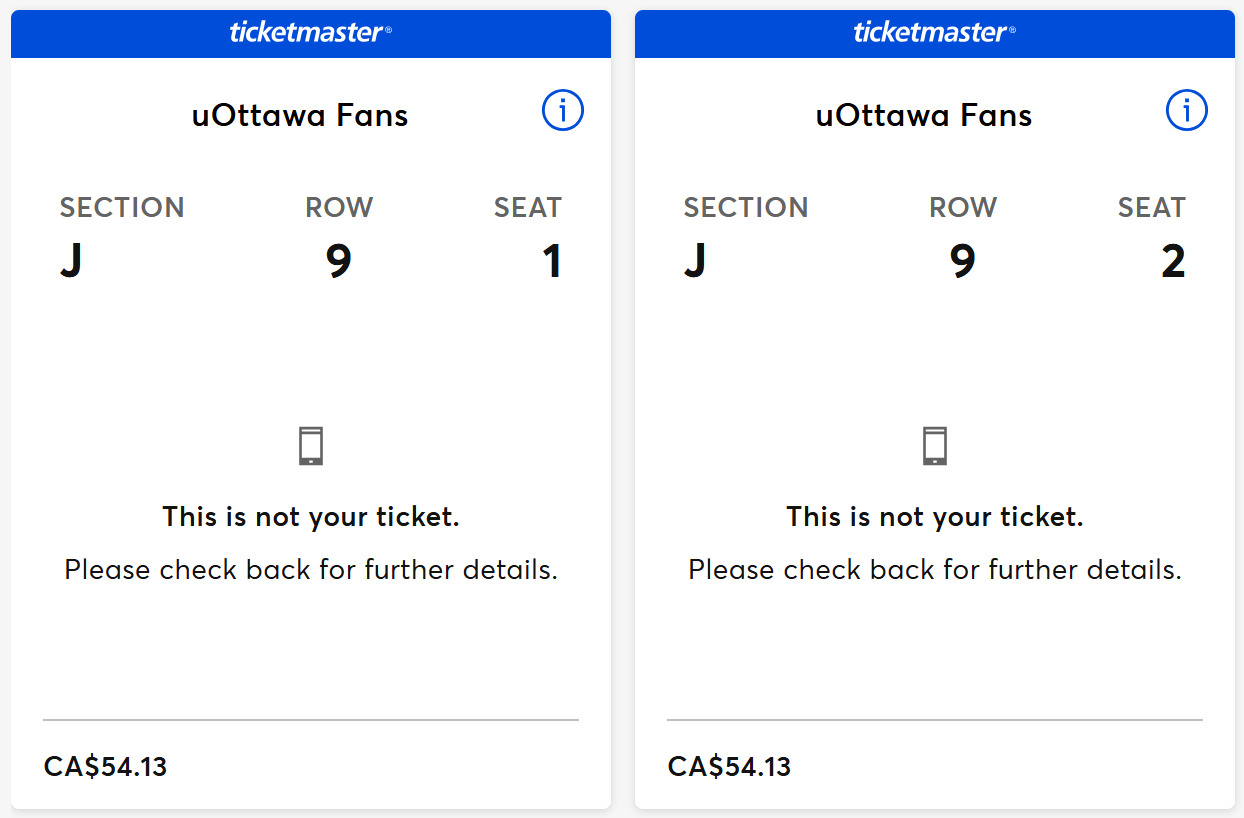
Panda Games Tickets
The Panda Games are an annual event in which the University of Ottawa plays a high-stakes game of American Football against Carleton University. There has been a long standing rivalry between the two universities, resulting in these tickets becoming a hot commodity. Typically, sides are chosen for each team’s university to sit at, and these sides are displayed as the tickets are purchased. It was also common for the audience of the winning university to bypass their safety restraints and go onto the playing field, known as “storming the field.” -
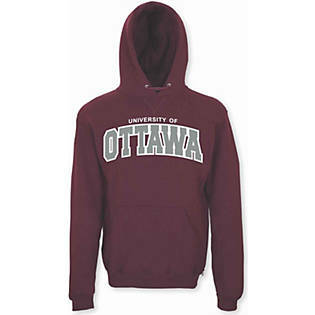
University of Ottawa Hoodie
Why would you wear one of these? Why do students at almost every university, everywhere in the world buy hooded sweatshirts with emblems emblazoned on them? This particular artifact was purchased by an incoming freshman at the University of Ottawa in 2021. They wore it the first time when they entered the university in a freshman orientation, and the second and last time, when they graduated in 2025. The student kept this hoodie as a testimony to hard work and eventual success. -

Conversation with Emmanuelle
I interviewed Emmanuelle, a close friend of mine since high school. She is half Nicaraguan and half Canadian, born in Canada and currently living in Gatineau. Emmanuelle comes to Ottawa for her studies and attends the University of Ottawa. Although she grew up in Canada, she stays closely connected to her Latin American roots through her family, Nicaraguan food, cultural festivals, and visits to Nicaragua. She also has many friends from across Latin America, where she recognizes shared values and experiences. Emmanuelle embraces a blend of both cultures in her daily life, balancing Canadian experiences with her Nicaraguan heritage. -
Conversation with Taryn Ayton
This interview with Taryn Ayton by Adrian Machado is a part of a project for anthropological studies in the Caribbean and Latin America. Taryn is a 21-year-old Jamaican Canadian university student living in the GTA area (Richmond Hill). She is a long-time friend of the interviewer and provides a unique perspective on Carribean identity. The interview covers various aspects of her heritage and identity, such as celebrations, traditional foods, and values. Taryn hopes that her contribution to this project will enrich Canadians’ knowledge of Caribbean stories and bring members of the Latin/ Caribbean community together. -
Conversation with Mr. Alberto Camacho-Magallanes
Alberto Camacho-Mallaganes was born in Morelia, Michoacán, Mexico which is a city located approximately three hours northwest of Mexico City. At the age of three, the interviewee moved to California but frequently traveled back and forth between Mexico and the United States. Later the interviewee relocated to Ottawa for a PhD after receiving to participate in a research lab that was aligning with their academic interest. -
Conversation with Carlos Gnecco
Carlos Gnecco is a Colombian student studying International Development at the University of Ottawa. Inspired by Colombia's challenges, he developed a passion for social equity and sustainable development at an early age. After completing high school in Columbia, he set out to expand his understanding of global development issues through international education. Carlos is studying international development and globalization at the University of Ottawa through a multidisciplinary approach. His coursework encompasses sustainability, economic policy, and social justice, enabling him to analyze global issues critically. His active participation in student groups, advocating for marginalized populations and drawing attention to international problems, is a testament to his commitment. He has been involved in projects that promote environmental and community sustainability, demonstrating his commitment to creating positive change. Carlos aims to leverage his experiences and education to drive policy change and make a meaningful impact in Colombia and beyond, emphasizing the importance of global cooperation. -
Conversation with Luis Abanto Rojas
Luis Abanto left his home country in 1985 when he was 17 from Peru and lived in France for six years as a refugee. Due to corruption and ongoing conflicts in his country, he moved for a better life. During his time at university, he met a Canadian girlfriend, which eventually led him to move to Kitchener-Waterloo, Canada, where he lived for two years. Motivated by his connection to the French language, Abanto chose to move to Ottawa to pursue his master's degree. His experiences across different countries have shaped his academic and personal journey. He feels like Ottawa is not big when it comes to the Latin population compared to Toronto. When came to Ottawa he lived in Vanier for 13 years. He enjoyed spending time with Portuguese who lived in his neighborhood. -
Conversation with Alice Cordeiro Silva Veras
Alice Cordeiro Silva Veras is from Brazil and currently lives in Ottawa. She moved to Canada at the age of 9 with her mother and younger sister. Having been here for over 10 years, she is now a permanent resident. Alice enjoys celebrating her culture and is passionate about sharing its diversity beyond well-known events like Carnival. She also values community voices and recommends that more members contribute to online platforms to celebrate and reflect the richness of Latin American and Caribbean cultures in Ottawa. Her insights reveal a desire for deeper cultural representation and recognition in public community projects. -
Conversation with Gabo P.
Gabo, a Mexican immigrant who arrived in Ottawa at the age of 13, recounts his journey and the vibrant cultural tapestry he has embraced. His father’s employment with the Mexican Embassy facilitated their relocation to Ottawa, where Gabo has grown up immersed in a diverse society. Despite the distance, he maintains a strong connection to his roots by visiting Mexico City regularly and sharing his cultural heritage with his children. Gabo emphasizes the significance of celebrating Mexican Independence Day and the importance of honouring the traditions of the Day of the Dead within his family. He also highlights the traditional foods that continue to evoke a sense of belonging and foster his Mexican identity. -
Conversation with Natalia Proano Gallegos
Natalia is a nineteen-year-old student originally from Ecuador. She arrived in Canada when she was around twelve years old. Natalia first arrived in Winnipeg and then, later on, moved to Ottawa. Due to growing up in Ecuador, she feels very close to her Latin American culture. During this interview, Natalia will talk to us about the process of coming to Canada and telling us about her culture and identity. -
Conversation with Ivana by Linda Iganze
Ivana is a self-assured Peruvian woman who has preserved her brilliant heritage after emigrating to Montreal, Canada, at the tender age of nine. She later moved to Ottawa to pursue higher studies before finally settling into a thriving career in event management while continually reaffirming the traditions and cultural practices that constitute her heritage. Ivana now resides in Gatineau but remains intimately connected to her heritage through family gatherings, cherished culinary traditions, and continuous community participation. -
Conversation with Sandra Carranco
Sandra Carranco, a Bolivian immigrant with a PhD in physiotherapy, relocated to Ottawa from Mexico due to political instability in Bolivia. Encouraged by her brother-in-law, she sought safety and economic stability in Canada. Despite initial challenges like language barriers and professional setbacks, Sandra adapted and became an educational assistant. She is deeply committed to preserving Bolivian culture in Ottawa. Sandra co-founded a women’s group that plays Pasanaku and organizes cultural events, including Bolivia’s National Day and a Christmas celebration, emphasizing inclusivity. Sandra uses food as an essential vessel of her cultural heritage, seeks ingredients for traditional dishes, and passes cultural values to her children. Sandra’s story illustrates the resilience of Ottawa’s Latin American communities and her desire to change perceptions of Bolivia and Latin America. -
Conversation with Rafael
Rafael is a Mexican male in his mid-20s who engineers software apps with a team and enjoys playing video games casually in his free time. He has been enjoying a quiet life since moving to Ottawa. -
Conversation with Rommel Molina
Romel Molina is a Nicaraguan immigrant and political refugee who moved to Ottawa, Canada, in 1988 at the age of 13 to escape Nicaragua's communist regime. Initially eager to return home, Romel eventually embraced Canadian society. Although he and his family visited Nicaragua frequently until 2018, political instability has since prevented their return. In Canada, Romel found a sense of belonging within the broader Latin community, although he notes a divide between the Nicaraguan community and his own extended family due to political disagreements. Passionate about community involvement, Romel actively participates in events like Latin Fest, drawing inspiration from his parent's cultural engagement. He talks about the upcoming Tamale Festival on April 5th, celebrating Latin American culinary diversity. Romel is also dedicated to preserving his Nicaraguan culture within his family and instilling that into his children. Rommel reinforces through the interview the importance of family and work ethic to himself and his community. His story highlights the vital role of family and community within the Latin diaspora and how each cultural group contributes to Canada's rich diversity and evolving national identity. -
Conversation with Paolina Valdez
This project is an ethnographic interview conducted with Paolina, a fourth-year Sociology student at the University of Ottawa. Born and raised in the Dominican Republic, she shares her experiences of cultural adaptation, preservation, and connection as a member of Ottawa’s Latin American and Caribbean community. Through this interview, Paolina reflects on her heritage, the significance of food, music, and celebrations, and the challenges and opportunities of maintaining her Dominican identity while living abroad. -
Conversation with Saelle Pierre
Saelle Pierre is a twenty-three-year-old who profoundly values her Haitian heritage and strong family bonds. She immigrated to Canada in 2009, an experience that shaped her appreciation for both her roots and her new home. Raised in a close-knit household, she was taught resilience, unity, and the importance of cultural identity. For Saelle, family extends beyond blood ties, encompassing the broader Haitian community, with whom she shared traditions and fostered a sense of belonging. She is passionate about preserving her heritage and ensuring future generations remain connected to their culture while embracing new opportunities in Canada. -
Conversation with Ana Paneque Leivas
Born in Cuba, Ana has experienced a life shaped by movement, adaptation, and a deep connection to her roots. At age ten, she relocated to Sherbrooke, Quebec, before living in Calgary and Florida. Eventually, Ana immigrated to Canada for family reasons and ended up settling in Ottawa to pursue her studies. Despite being immersed in Western culture and having lived in multiple cities and countries, she remains strongly connected to her Cuban identity. -
Conversation with Jonathan Griffith
Jonathan Griffth is a twenty-year-old second-year Nursing student at the University of Ottawa. Jon is originally from Barbados. He came to Canada in 2013 with his parents and siblings. His mother was posted to Ottawa as a Diplomat. Jon was eight when he moved to Ottawa, so most of his life was spent in Canada. However, Jon made it a point to honour his country while living in Canada. He discussed that when he was in high school, and there were culture days or black history assemblies, he would ensure that his heritage was honoured, whether through food or general facts regarding Barbados. Although not mentioned within the podcast, Jon also told us that he wears a Barbados Flag Pin at his place of employment to honour his hometown. Near the end of the interview, Jonathan also takes a few minutes to reflect on his experience and offer any valuable advice. -
Conversation with Rafael Rodriguez
Rafael Rodriguez is a Dominican-Canadian from Santo Domingo who moved to Canada in 1999 after his grandmother’s passing to join his family. Now living in Ottawa, he actively fosters the Dominican community by organizing cultural events, including hosting this year’s Dominican Independence Day celebration, which features live music, performances, and dancing. He values community connections and has seen Ottawa’s Latin community grow over the years despite the absence of a sizeable Latin neighbourhood. Significant celebrations for him include Christmas, Dominican Independence Day, Dominican Mother’s Day, and community picnics. Passionate about music, food, dancing, and baseball, Rafael also works as a financial advisor, a career he pursued after taking various courses. A pivotal moment in his life was losing his 38-year-old sister to breast cancer in 2012, which led him to prioritize family and a meaningful career. His dedication to community and culture makes him a key figure in preserving Dominican heritage in Ottawa. -
Conversation with Arturo Ortega
Arturo is twenty-eight years old and born in Mexico City. He lived in Ixtapaluca, Mexico, before moving to Ottawa in August 2024. Arturo is taking his master's in bilingualism studies at the OLBI department. Arturo enjoys cooking Mexican food and attending Latin American events throughout the city to celebrate his heritage and feel closer to home. While he didn't move with any family, he is engaged to a Brazilian woman and enjoys spending time with her and her family. -
Conversation with Uribe Dominguez
Uribe Dominguez is a devoted leader in Ottawa’s Dominican community, and this interview details how he got where he is today. Born to a family of ten children in the Dominican Republic, Uribe started his life wanting to become a priest, so much so that he travelled to Canada to see Pope John-Paul II once he was an adult. Initially arriving on a short visa, Uribe saw Canada as a place full of opportunity for those willing to work for it and decided to stay. Eventually, he met his wife, and they had four children, raising them in Canada. Uribe takes great pride in the fact that his children are trilingual and speak English, French, and Spanish. Still a devout catholic, Uribe found that church was a valuable way to celebrate his community and soon represented Ottawa’s Dominican Canadians at functions all over Southern Ontario and Quebec. To this day, Uribe cherishes his community and wears Dominica’s colours proudly.