
Browse Items (96 total)
-

Conversation with Paolina Valdez
This project is an ethnographic interview conducted with Paolina, a fourth-year Sociology student at the University of Ottawa. Born and raised in the Dominican Republic, she shares her experiences of cultural adaptation, preservation, and connection as a member of Ottawa’s Latin American and Caribbean community. Through this interview, Paolina reflects on her heritage, the significance of food, music, and celebrations, and the challenges and opportunities of maintaining her Dominican identity while living abroad. -
Conversation with Rafael
Rafael is a Mexican male in his mid-20s who engineers software apps with a team and enjoys playing video games casually in his free time. He has been enjoying a quiet life since moving to Ottawa. -
Conversation with Rafael Rodriguez
Rafael Rodriguez is a Dominican-Canadian from Santo Domingo who moved to Canada in 1999 after his grandmother’s passing to join his family. Now living in Ottawa, he actively fosters the Dominican community by organizing cultural events, including hosting this year’s Dominican Independence Day celebration, which features live music, performances, and dancing. He values community connections and has seen Ottawa’s Latin community grow over the years despite the absence of a sizeable Latin neighbourhood. Significant celebrations for him include Christmas, Dominican Independence Day, Dominican Mother’s Day, and community picnics. Passionate about music, food, dancing, and baseball, Rafael also works as a financial advisor, a career he pursued after taking various courses. A pivotal moment in his life was losing his 38-year-old sister to breast cancer in 2012, which led him to prioritize family and a meaningful career. His dedication to community and culture makes him a key figure in preserving Dominican heritage in Ottawa. -
Conversation with Rommel Molina
Romel Molina is a Nicaraguan immigrant and political refugee who moved to Ottawa, Canada, in 1988 at the age of 13 to escape Nicaragua's communist regime. Initially eager to return home, Romel eventually embraced Canadian society. Although he and his family visited Nicaragua frequently until 2018, political instability has since prevented their return. In Canada, Romel found a sense of belonging within the broader Latin community, although he notes a divide between the Nicaraguan community and his own extended family due to political disagreements. Passionate about community involvement, Romel actively participates in events like Latin Fest, drawing inspiration from his parent's cultural engagement. He talks about the upcoming Tamale Festival on April 5th, celebrating Latin American culinary diversity. Romel is also dedicated to preserving his Nicaraguan culture within his family and instilling that into his children. Rommel reinforces through the interview the importance of family and work ethic to himself and his community. His story highlights the vital role of family and community within the Latin diaspora and how each cultural group contributes to Canada's rich diversity and evolving national identity. -
Conversation with Saelle Pierre
Saelle Pierre is a twenty-three-year-old who profoundly values her Haitian heritage and strong family bonds. She immigrated to Canada in 2009, an experience that shaped her appreciation for both her roots and her new home. Raised in a close-knit household, she was taught resilience, unity, and the importance of cultural identity. For Saelle, family extends beyond blood ties, encompassing the broader Haitian community, with whom she shared traditions and fostered a sense of belonging. She is passionate about preserving her heritage and ensuring future generations remain connected to their culture while embracing new opportunities in Canada. -
Conversation with Sandra Carranco
Sandra Carranco, a Bolivian immigrant with a PhD in physiotherapy, relocated to Ottawa from Mexico due to political instability in Bolivia. Encouraged by her brother-in-law, she sought safety and economic stability in Canada. Despite initial challenges like language barriers and professional setbacks, Sandra adapted and became an educational assistant. She is deeply committed to preserving Bolivian culture in Ottawa. Sandra co-founded a women’s group that plays Pasanaku and organizes cultural events, including Bolivia’s National Day and a Christmas celebration, emphasizing inclusivity. Sandra uses food as an essential vessel of her cultural heritage, seeks ingredients for traditional dishes, and passes cultural values to her children. Sandra’s story illustrates the resilience of Ottawa’s Latin American communities and her desire to change perceptions of Bolivia and Latin America. -
Conversation with Shameena
This interview features Shameena, who migrated from Guyana to Toronto, Canada, at the age of Sixteen with her family. She explained that her father decided to bring them to Toronto because he saw Canada as offering his family better opportunities, education, health care, food, and a higher standard of living. Shameena explained that, luckily, Guyana is one of the few predominantly English-speaking places in the Caribbean, which made coming to Toronto easier, as she and her younger siblings were already proficient in the city's main language. Shameena speaks lovingly about her home in Toronto, where she has established a strong community not only of Guyanese people but also of people of the same religion, and she deeply appreciates the way she can engage with religion locally. Beyond her faith, Shameena describes the primary focus of Guyanese culture to be food and family. Extended family relations are weighted similarly to close relations, as everyone is included in traditions and events. Even without specific social events, families still gather regularly. Food strengthens their cultural roots. Despite immigration from Guyana to Toronto, she continues to uphold her culinary practices and familiar dishes. There are also specialized markets where Guyanese can purchase food for cultural dishes. Given that Toronto is a large and diverse city, Shameena states that Guyanese feel welcome there.Shameena explained that she sees similarities between Guyana and Toronto in that both are immensely diverse places. She enjoys being part of a global community and, although there are differences between her life in Guyana and Canada, she remains deeply connected to her community and family. -

Conversation with Tamara Toledo from the Latin American Canadian Arts Project (LACAP)
We interviewed a representative-Tamara Toledo-- of the Latin American Canadian Arts Project or LACAP. Their mission showcased a good example of support for the community, by the community. Tamara's passion was infectious: “Because my background is in the arts, that sort of has been my focus with that activist intention of changing how art is understood, accepted, and the narratives that are a part of the Canadian dialogue.”
LACAP is a Toronto-based organization that helps contemporary Latin American artists who are living in Canada connect to resources, such as help with exhibitions and research. They also provide public programming. LACAP frequently works with Toronto's institutions, such as Ontario College of Art & Design University (OCAD) and York University, providing lectures and seminars about Latin American artists and the history of Latin American art. LACAP’s two founders are Tamara Toledo and Rodrigo Barreda, who is in operations management. Toledo’s background in Art history and curation allows her to understand the artists' needs on a deeper level and provides mentorship for up-and-coming Latin artists. Having attended OCAD herself, she first-hand encountered the issues that many fellow artists were experiencing, allowing her to work directly with the University's programming to create a more inclusive curriculum.LACAP only has two paid employees; everyone else is contracted, depending on project funding. In 2025, they had 3 paid staff who received payroll thanks to an additional grant they received. In general, the organization relies heavily on a fluctuating number of volunteers, meaning that lots of people are constantly coming and going.
LACAP is always looking for helping hands--you can apply on their website if you are interested in getting involved with the Latin arts community.One of LACAP’s main initiatives is Sur Gallery, located right on Toronto's Waterfront. The gallery is a dedicated space used to present contemporary Latin American and LatinX art. This venue and its programming focus on the dialogue between artists, scholars, and communities while encouraging collaboration across borders and artistic disciplines: “Initiatives are aimed to socially innovate, critically engage, lending itself to opportunities of national relevance to begin to develop global networks of exchange.” (LACAP, 2026) Toledo saw the lack of Latin American representation in the art scene of Toronto and understood the issues many Latin artists were experiencing throughout the art community. This left her and her partner to create LACAP to allow the artists to build a strong foundation in their craft to succeed in the Canadian art world. One of her favourite projects is at the Sur Gallery. She visited four Canadian cities and interviewed 15 Latin American artists for the exhibit. Toledo and her team curated a series of video interviews, forming video portraits of Latin American artists across the country, providing a platform for the artists' voices and experiences.
One of the ways you can support this organization is by donating. In this context, dollars go toward promoting Latin American art in different ways, such as by inviting classes to visit their galleries, by providing resources to artists for seminar-style workshops, or by supplying art tools to beneficiaries in the community. These donations can be made by cheque or via their website: https://lacap.ca/support-lacap/donate/. You can also visit their most recent project, Sur Gallery, by appointment only (for now), situated at 100-39 Queens Quay East in Toronto, Ontario.
The work that the organization does is incredibly important as it acts as one of the only support bodies for the Latin American art community in Canada. LACAP strives to employ a mainly grassroots approach, as explained by Tamara in our interview: “(...)20 years ago there was a lack of representation, visibility, of the Latin American diaspora in galleries and institutions, and so for me the motivation was to change that and to create that change and it had to be done from a grassroots place.”
The gallery plans for the long term; The Covid epidemic required them to shift gears and create alternative plans to showcase their artists. Currently, LACAP is undergoing structural and organizational changes, in order to continue to serve their community as best as they can by responding to constantly changing needs. -
Conversation with Taryn Ayton
This interview with Taryn Ayton by Adrian Machado is a part of a project for anthropological studies in the Caribbean and Latin America. Taryn is a 21-year-old Jamaican Canadian university student living in the GTA area (Richmond Hill). She is a long-time friend of the interviewer and provides a unique perspective on Carribean identity. The interview covers various aspects of her heritage and identity, such as celebrations, traditional foods, and values. Taryn hopes that her contribution to this project will enrich Canadians’ knowledge of Caribbean stories and bring members of the Latin/ Caribbean community together. -
Conversation with Tatiana
This interview features Tatiana, a Colombian immigrant living in Canada. Tatiana is a Political Science student at the University of Ottawa. She immigrated from Tunja, northeast of Bogotá, to Canada at the age of 18, seeking new opportunities and to expand her knowledge of the world beyond her hometown. During our conversation, Tatiana opens up about the efforts she’s made to stay connected to her Colombian heritage and the struggles she's faced along the way. One of the main things Tatiana has found difficult to access in Ottawa is ingredients and fresh produce, as she enjoyed at home. Fresh fruit, in particular, holds a special place in her heart, as her family in Colombia owns a fruit farm and she has strong memories of always having delicious fruit at her table. She describes this experience, stating,“I'd say at least once a week. Like the thing I used to love about Colombian foods is like fruits. And my family, at least my mom's side, they have a whole farm to grow fruits. So my house always has them. And here the selection is so limited and it's so tasteless. And I find myself craving like a juice, a lemonade with coconut or with cherry, because we have lemonade at all (*******) times. Like it's good, like a good juice, And I found a store here in Byward that kind of sells juices, but it's like $12 for a glass, which I find it's overpriced.”She noted that when she’s feeling homesick or has a pull to reconnect with her culture, she tends to seek out restaurants that serve Colombian food. In general, Tatiana explained that she sees a few different Latin American businesses around Ottawa, particularly in the Byward Market. Outside of food, Tatiana describes the differences she has noticed between Canadian and Colombian culture during her interview. Particularly, Colombians' collectivism, which she feels is a core value of her culture. She articulated this, stating,“I feel as if Colombians think of their community first a lot of times before taking a decision that might impact somebody else than them. Out of respect, perhaps, consideration, or just costum, because that's how you're taught to be. And I kind of go by that because I don't find a reason as to why I should oppose. I think it's a nice thing to do. Like Canadians are, or I've noticed, they're more individual-driven. They want to do stuff for them first and then other people come later in consideration, which doesn't necessarily have to be something bad, but it's not something I want to assimilate into.”In part due to this community mentality, Tatiana also feels that Colombians are more spontaneous by nature. She explained that when at home, people often reach for more immediate plans, such as going for a walk or going to the store. With this in mind, she shared some of the downsides of this mentality, noting that she experienced significantly more peer pressure in Colombia, particularly regarding high-risk behaviour.Ultimately, Tatiana finds that the majority of her celebrations are community-driven. She finds herself seeking out her found family in Canada and loved ones in Colombia. She makes an effort to return to Colombia whenever she is off from school, and thus enjoys her culture firsthand fairly often while also establishing a new community in Ottawa. -
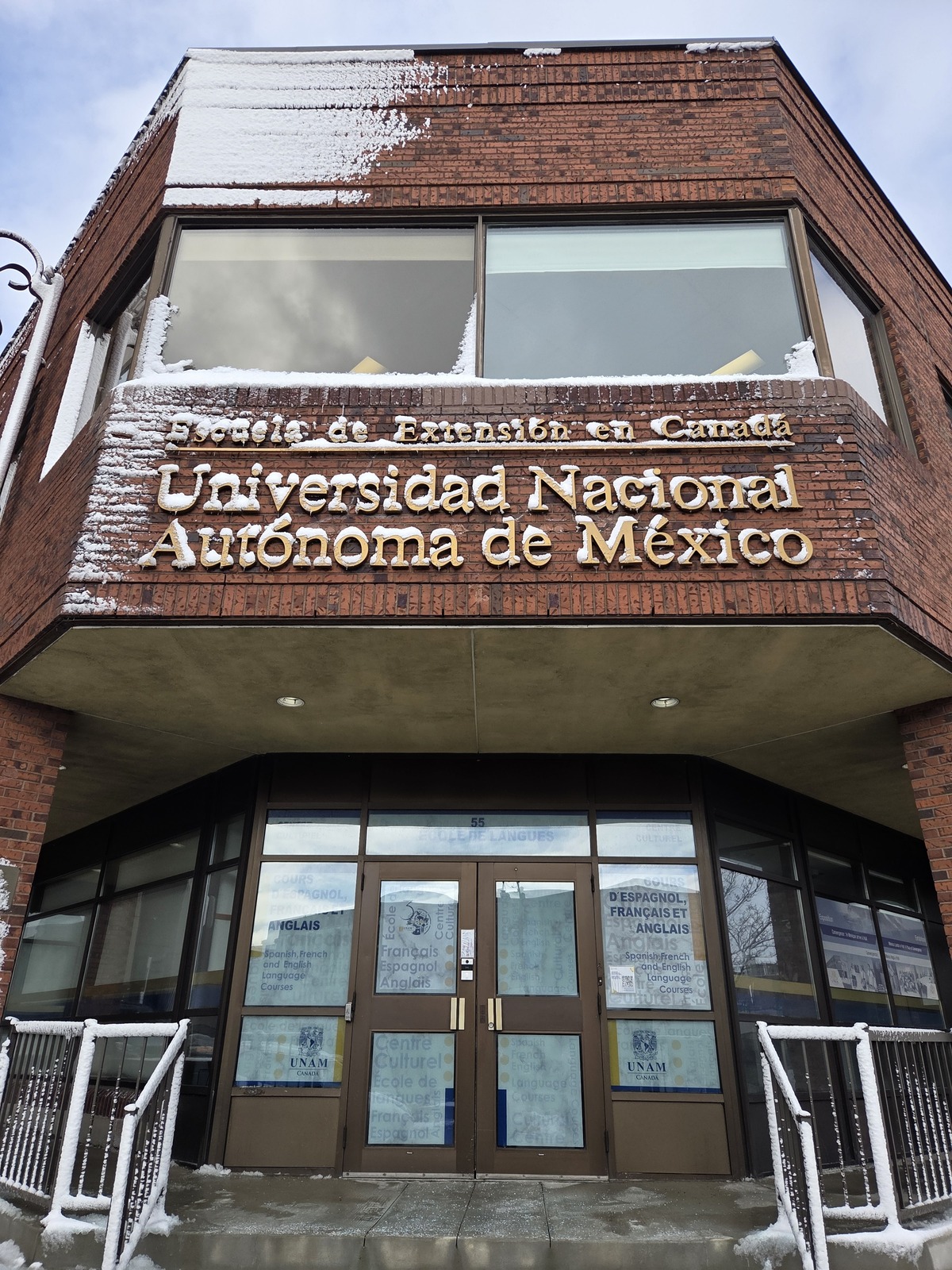
Conversation with UNAM-Canada
The organization we interviewed for this project is UNAM-Canada, an extension of the Universidad Nacional Autónoma de México (UNAM), Mexico’s largest and oldest public University. UNAM has thirteen international offices located in multiple countries, such as the United States, France, Germany, Spain, China, Chile, and, more recently, the United Kingdom. Founded in 1995, UNAM-Canada serves as the university’s international office in Canada. Located in downtown Hull, in Gatineau, this extension currently employs eighteen staff members. As part of this project, we interviewed Alex Méndez, the Academic Affairs Chief Executive at UNAM-Canada, and Brenda Colín, the Administrative Lead at UNAM-Canada.
The UNAM-Canada primarily offers language courses in Spanish, French and English, as well as courses on Mexican and Latin American culture, welcoming more than 800 students each year (Unam Canadá 2019). Most of the students enrolled in Spanish courses come from the region and generally fall into two main categories. The first group consists mostly of retirees who enjoy traveling to Latin America and would like to improve their Spanish skills. The second group includes government employees or professionals who require Spanish for specific purposes and therefore will take classes with UNAM-Canada. When it comes to English and French courses, most participants are international students from UNAM in Mexico. In fact, twice a year, during the summer and winter semesters, the school holds a program called PUMA+. Through this program, Mexican students spend three weeks in Canada developing their English and French skills. In addition, UNAM-Canada is one of only two accredited institutions in Canada authorized to offer the SIELE examination, which provides an internationally recognized certification of Spanish language proficiency (Unam Canadá 2026). As a result, UNAM-Canada has established itself as one of the most important language learning institutions in the National Capital region, especially regarding the teaching and the certification of the Spanish language.
Furthermore, another important aspect of UNAM-Canada is its connection to the broader UNAM network, widely recognized as a hub for research and innovation across multiple disciplines (TV UNAM 2017). Indeed, during the interview, it was pointed out that UNAM is involved in a wide range of scientific and academic fields. As Brenda Colín explained, UNAM has developed many important contributions that not everyone knows about: it has its own satellite. It also has two research vessels. By sharing these achievements through its Canadian programs, UNAM-Canada helps bring greater visibility to the global impact of Mexican and Latin American research. This is not only beneficial for raising awareness among local Canadian communities, but also for highlighting the key role that Latin American institutions like UNAM has in developing knowledge on a global scale.
In addition to promoting the Spanish language, as well as Mexican and Latin American culture, UNAM-Canada’s mandate is to build academic bridges between Canada and Mexico and to further strengthen UNAM’s presence abroad. One clear example of this would be the many Mexican students who come to Canada to conduct research at universities such as the University of Ottawa, Concordia University, and McGill University. These academic exchanges are actively supported by UNAM-Canada, which has been collaborating with regional universities to develop and expand such opportunities over time. UNAM-Canada also serves as an important venue for conferences, round tables, book and film presentations, symposiums, as well as painting and photography exhibitions, in addition to concerts and theatre performances. The institution has classrooms, a specialized library focused on Mexican and Latin-American books, a cafeteria and a multipurpose room that functions as both an auditorium and art gallery (Unam Canadá 2019). Moreover, UNAM-Canada is widely recognized for organizing the Day of the Dead celebration in collaboration with the Embassy of Mexico and the City of Gatineau. Every year, the institution installs an altar, either in the school’s multipurpose room or at Gatineau’s city hall and hosts a variety of cultural activities related to the celebration, bringing together members of the regional community.
We decided to interview UNAM-Canada because of its importance in promoting Mexican and Latin American culture in the National Capital Region. Although this university mainly focuses on language courses and Mexican and Latin American cultural activities, its impact goes beyond the academic sphere. Indeed, the organization actively contributes to strengthening the sense of community in the region by offering activities that encourage relationships between students and citizens. Whether through language courses, a variety of cultural events, or by facilitating academic exchanges between Mexico and Canada, UNAM-Canada fosters intercultural understanding and builds connections between local and international communities. Thus, the university’s participation and the digital archiving of the interview would help make the general public more aware of the important role of this organization in promoting UNAM and Mexico, as well as in strengthening intercultural bonds.
If you would like to learn more about UNAM-Canada, we encourage you to visit their website: https://canada.unam.mx/fr/accueil/
If you would like to learn more about UNAM, we invite you to watch this video: https://youtu.be/8VGgHcOO8TM?si=04-1UyCAJ5kYl0dZ
Bibliography:
Unam Canadá. 2019. “Histoire - Unam Canadá.” Last modified November 12. https://canada.unam.mx/fr/histoire/.
Unam Canadá. 2026. “Service International D’Évaluation De La Langue Espagnole (SIELE) - Unam Canadá.” Last modified February 23. https://canada.unam.mx/fr/service-international-devaluation-de-la-langue-espagnole/.
TV UNAM. 2017, December 6. “UNAM La Universidad De La Nación - Video Institucional.” Video, 4 min., 43 sec. https://www.youtube.com/watch?v=8VGgHcOO8TM. -
Conversation with Uribe Dominguez
Uribe Dominguez is a devoted leader in Ottawa’s Dominican community, and this interview details how he got where he is today. Born to a family of ten children in the Dominican Republic, Uribe started his life wanting to become a priest, so much so that he travelled to Canada to see Pope John-Paul II once he was an adult. Initially arriving on a short visa, Uribe saw Canada as a place full of opportunity for those willing to work for it and decided to stay. Eventually, he met his wife, and they had four children, raising them in Canada. Uribe takes great pride in the fact that his children are trilingual and speak English, French, and Spanish. Still a devout catholic, Uribe found that church was a valuable way to celebrate his community and soon represented Ottawa’s Dominican Canadians at functions all over Southern Ontario and Quebec. To this day, Uribe cherishes his community and wears Dominica’s colours proudly. -
Conversation with Vera Cotter
This Interview features Vera Cotter and her journey from Trinidad and Tobago to Canada. Born in 1955, Vera spent her early years in Trinidad’s capital, Port of Spain. She then moved at the age of five to Princes Town, where she would spend the rest of her childhood and teenage years until moving abroad to the United States for University. When describing her upbringing, Vera explained that she grew up in a large, multi-generational household and neighbourhood. Education was very important in her family and within her community; you could attend either French or English school. Vera’s family chose the English system and, in turn, expected their children to attend English universities after finishing secondary school, particularly the University of Cambridge. Family is vital to Vera’s culture and has played a central role in how she ended up in the West years ago and how she continues to live today. She articulated that she was only able to go to the United States at all because of her aunt, who was already studying there. She describes this, stating, "our culture, you have to live with family, like you can't just go as a student to a strange land." She later moved to Canada and began attending pharmacy school at the University of Toronto. As she described her time in Toronto, she laughed and explained that she was a bit of a rebel within her family. While studying, she was still required to live with her family and, being in her early twenties, felt a strong need for independence that ultimately led her to drop out of university at the time she described this, stating,“being stuck with relatives, and I had a few more relatives in Toronto. And I just found living with, they became my parents. And it was like too much, too many parents. And we were allowed back then to work like 20 hours a week as a student in Canada. So, I hung out with a crowd that my family did not approve of, it was like, not good. So, there was a lot of pressure. There's school and there's the friends I hang out with, and I ended up moving back home for two years and then realized that's when I just dropped out of school and like I would just rebelled.”At this time, Vera moved back to Trinidad for two years. However, she returned to Ontario after meeting her now-husband. They married at the age of twenty-two and moved to her husband's hometown, Belleville, Ontario, where she worked for a bank for the rest of her career and raised her family. When Vera and her husband moved to BelleVille, they were among the only three “Brown or ethnic families” in town. She described a conversation she had with her mother-in-law about this topic, stating,“it's so funny because I remember once my mother-in-law said to me at a restaurant, she says, “you know, every time we walk into the room, everyone looks at you,” and, I kind of like, felt like it was because I was different, right? Like there's only white people, let's just, okay? There's only white, Caucasian people. And so, I said to my husband, I said, well, you know what? Maybe they look at me because they find me attractive. But I think her culture also is, you know, they're probably looking at me because I'm different. I don't know that for sure, but that's how I took it.”Vera shared many details about the dynamics at play in BelleVille and within her blended family throughout the interview. Today, she’s seen a significant change in BelleVille's population, but she still finds it difficult to celebrate her culture outside specific family traditions. Vera later moved to Ottawa after retiring to be closer to her daughter and grandchildren. She currently still lives in Ottawa, working part-time in banking and remains closely connected to her family, particularly her daughter and granddaughter, both of whom are extremely important to her. Vera reflected on her life and said, "I'm in Ottawa and I've made a new life over the past 12 years, so it all worked out. I was very lucky. We started working really young in our generation, so I was lucky enough to retire, they called it “Age Plus Service,” and you can retire like, I retired at 56, when the first grandchild came, so I could look after my grandchildren." -
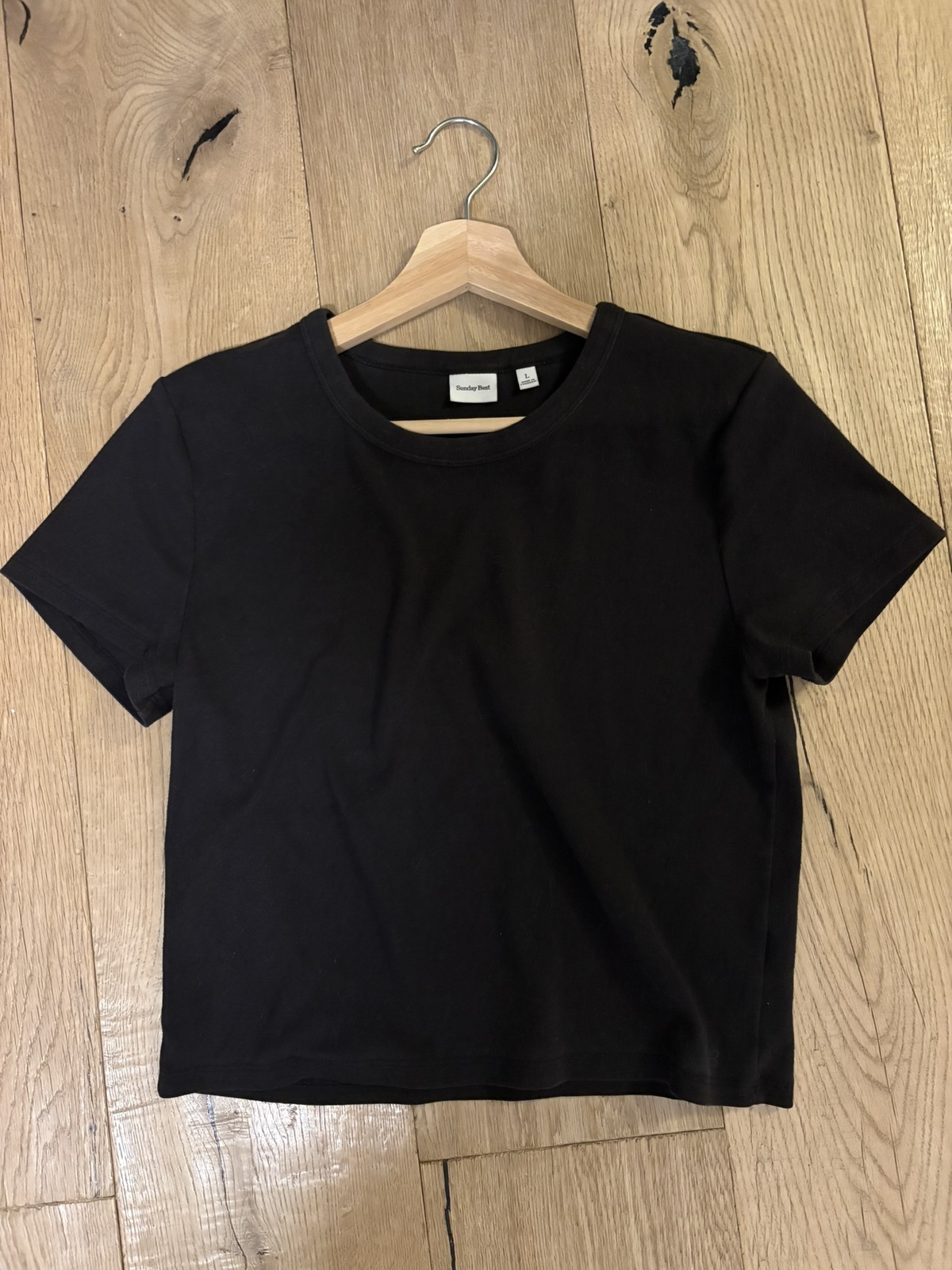
Cropped Black T-Shirt
This black t-shirt can be found amongst all ages, genders, and lifestyle groups found at the University of Ottawa in 2025. This object is so particular because it crosses barriers allowing diverse groups of people to relate and ease themselves with common fashions. -
-
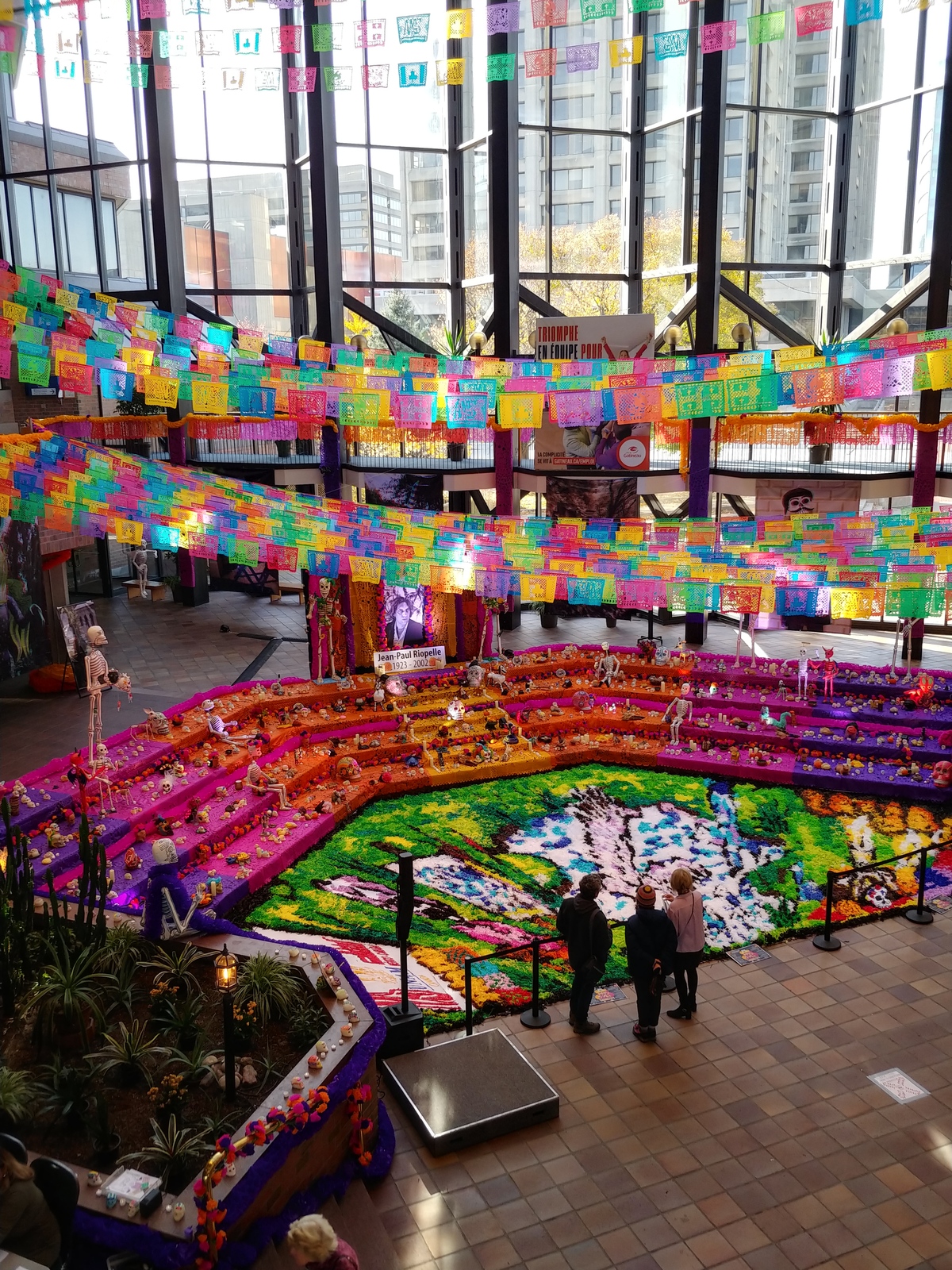
Day of the Dead altar commemorating Québec artist Jean Paul Riopelle at Maison du Citoyen
This image was taken by student Noémie Burrs while attending a Day of the Dead celebration at UNAM-Canada in Gatineau Quebec. The image features vibrant colours, patterns and textures surrounding an alter dedicated to late canadian artist, Jean Paul Riopelle. He is known internationally for pioneering "mosaic" style abstract paintings in the 1950s. -
-
Food Vendors in Sandy Hill
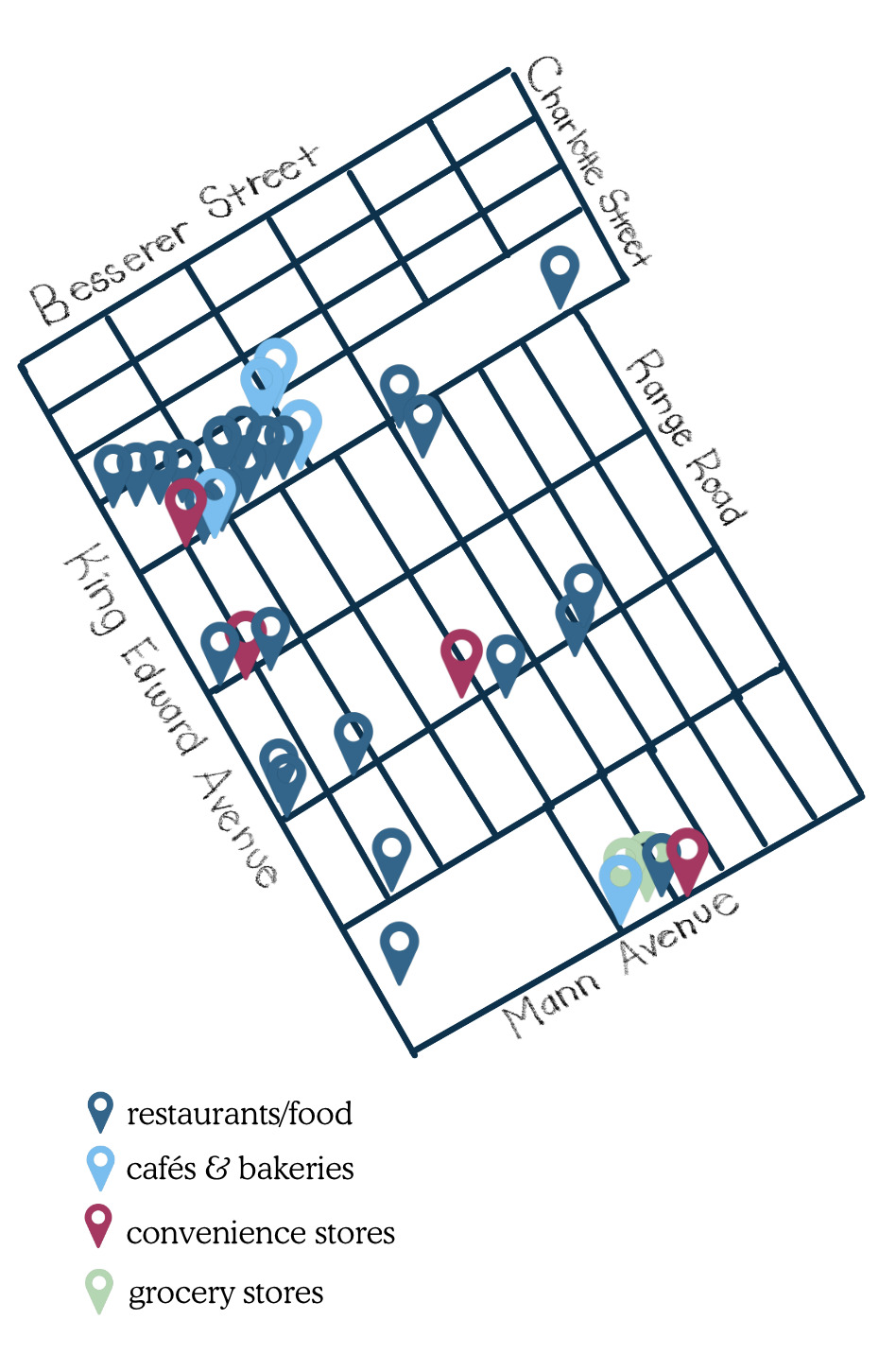
Our group mapped food vendors (e.g, restaurants, convenience stores, grocery vendors, coffee shops, etc.) in Sandy Hill. We examined each location’s general affordability, the food’s or vendor’s cultural origins, and whether there are food preference availability.
Boundaries of our mapping were (North to South) Besserer Street to Mann Avenue, and (West to East) King Edward Avenue to the Rideau River. Understanding what food options exist in the area help to create a picture of Sandy Hill’s livability and discover areas for potential improvement (more diverse food options, healthier options, cheaper options, etc.).
-----As of 2026, Sandy Hill (within the boundaries specified previously) has 43 food vendors. 31 of these vendors, we classified as sit-down or take-out restaurants/food, and pubs and eateries, and 6 vendors we classified as coffee houses, bakeries, or beverage shops. 4 food vendors were convenience stores and the 2 were grocery stores.
Most of the food vendors were clustered close to the University, with a high frequency on Laurier Avenue. The two grocery vendors operated on Mann avenue, allowing residents of the neighbourhood living nearby the opportunities to purchase basic food necessities without having to travel to Rideau street and beyond for grocery items.
Sandy Hill has many food vendors selling different cuisines including Indian, Mediterranean, Thai, Japanese, Korean, Mexican, Guyanaese and Caribbean, North African, and French Gastronomy.
Affordability fluctuated with most of the affordable food stores operating close to the University. Restaurants closer to Range Road and Strathcona Park had a dramatic increase in price compared to the rest of the food vendors. More often than not, food vendors had at least a few vegan, vegetarian, or halal options available. Most places also allowed for customization and substitutions.(See Food in Sandy Hill Comparison - 2010 to 2026 table). Compared to 2010, there are more food options that are more diverse, and tend to be similar in price/accessibility as before. There are a few spots that have closed and are now empty store fronts or no longer sell food, but many former residential only spots now have food options. While we do not have price comparisons for 2010, we can surmise from the similar options and vendors that are still present that the price increases are likely in line with inflation. We have mostly found that while brands or names have changed, convenience stores have stayed convenience stores, pubs have stayed pubs, and so on and so forth. Please refer to the table for further details on what has changed, stayed the same and to compare further.
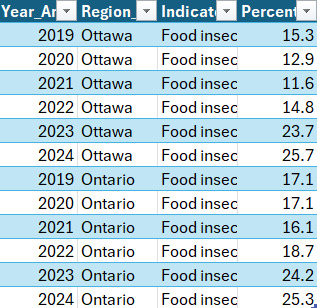
Mapping food vendors in Sandy Hill is essential for understanding food availability in the community and addressing food insecurity, particularly focusing on affordability and dietary accessibility. Our map highlights an overall increase of accessible vendors in the neighbourhood, including more accessible options and a wider range of affordable options in comparison to 2010. It presents the options available to the residents of Sandy Hill, where they can eat depending on their food preferences and restrictions, and the affordability of said vendors.
Our project highlights the gaps in food access in Sandy Hill. This includes areas with fewer vendors, areas of limited affordability, and lack of transparency with dietary options. For example, many vendors don’t state dietary accommodations on their menus or websites. It also shows the concentration of vendors on Laurier Street compared to the lack of options in east Sandy Hill. -
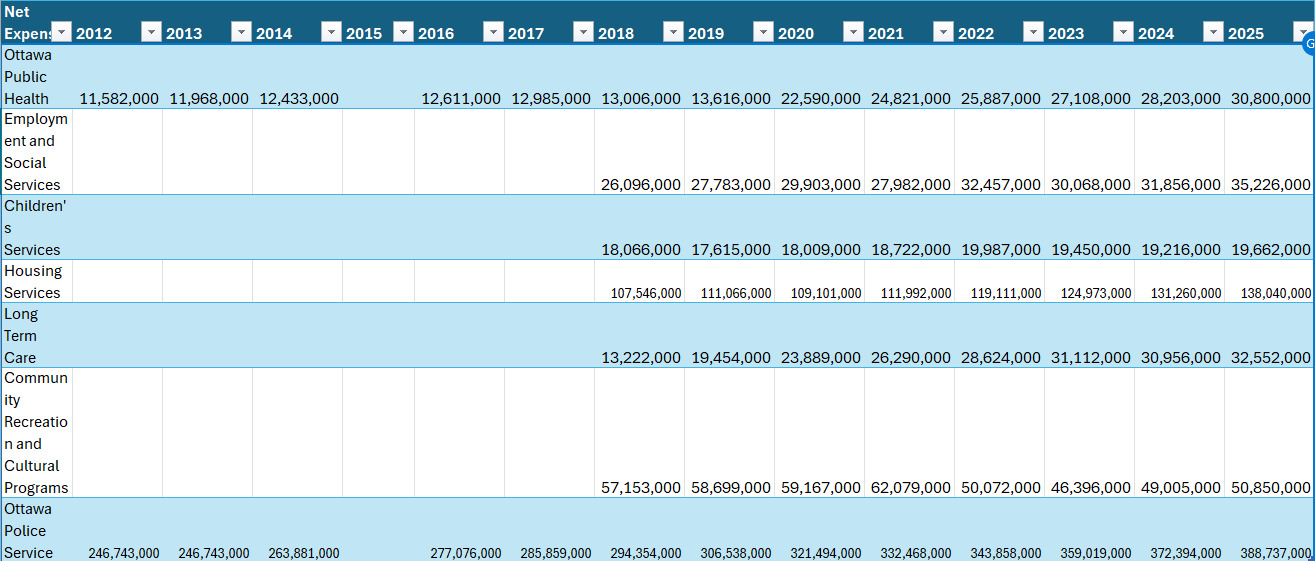
Graphs of City of Ottawa Public Investment
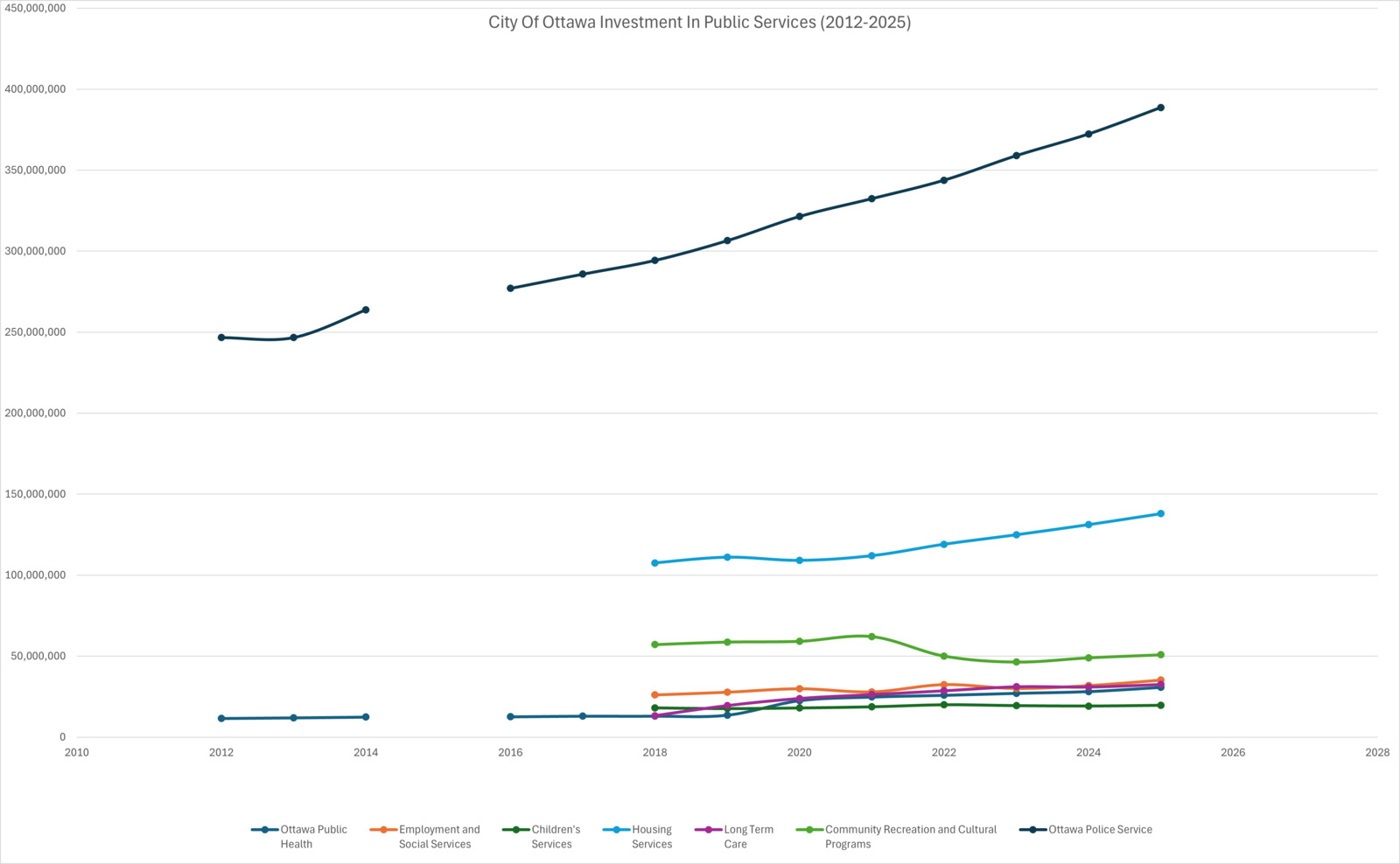
These two graphs are from data gathered from the City of Ottawa Operating Budgets from 2012-2025, minus 2015. -

Hilroy 1 Subject Notebook
Hilroy Lined Notebooks offer students an opportunity to study away from their electronics and write notes, complete assignments and study by hand. While manually writing notes and coursework is no longer the mainstream method in University, many efficient studying and note taking techniques can only be done with pen and paper! Returning to old methods never fails and many students choose to create a hybrid study plan using both devices and handwritten notes. Hilroy Notebooks are the go-to for students offered in many colors and sizes perfect for any class! -
Laptop Stickers
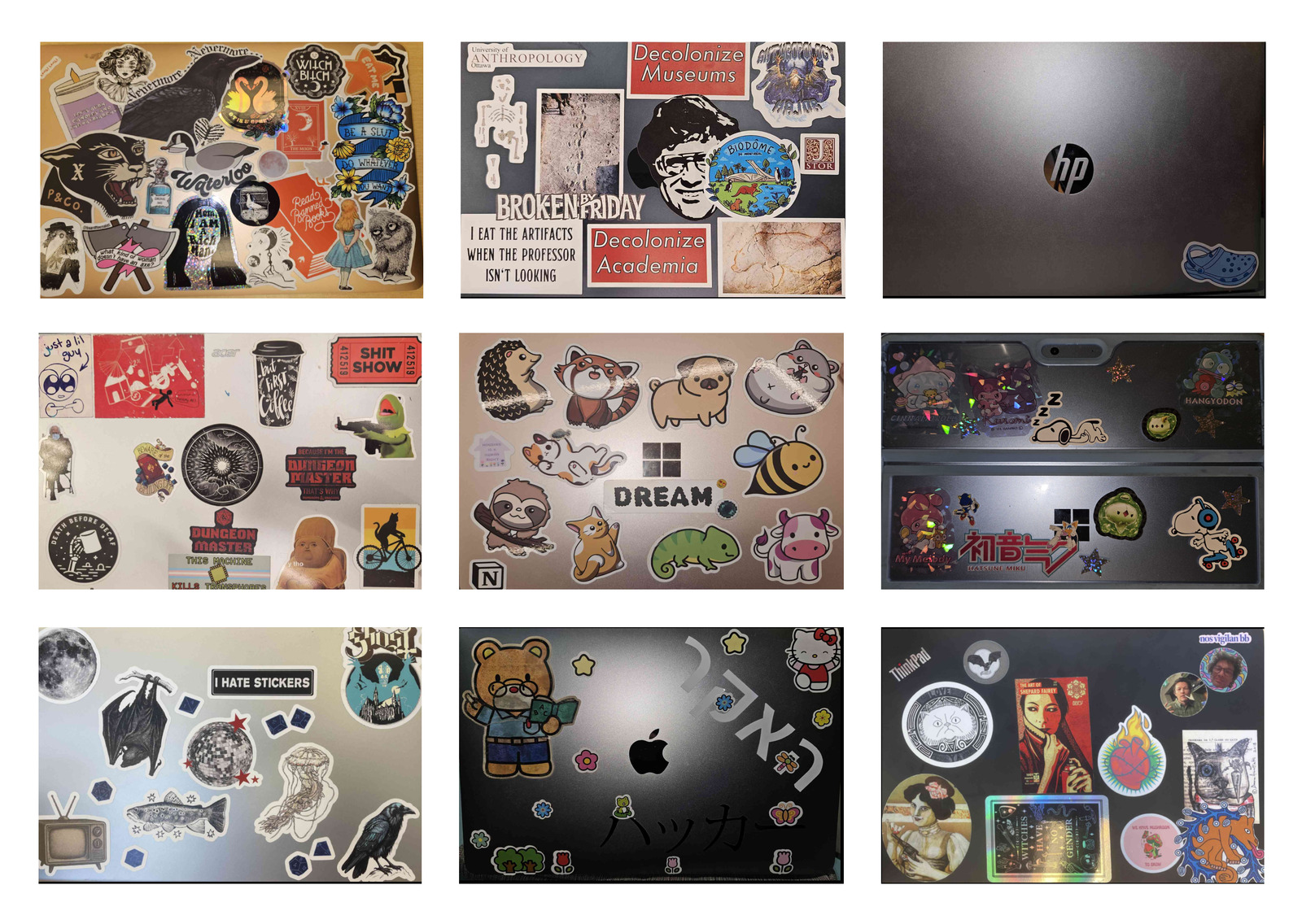
A sticker is an image that is sealed between plastic or vinyl, and some sort of adhesive so it sticks (hence the name stickers). These stickers are then placed on laptops, notebooks, or water bottles, as a form of non-verbal communication between students. Usually, these objects are used to convey information to other people in their "groups," for example people who enjoy sports might use a sticker with their favourite team's logo to convey to other sports fans that they too like sports. These stickers can be bought online or homemade. Homemade stickers are usually made using parchment paper, tape, and whatever image one would want to make into a sticker, much like commercial stickers, yet way more personal to the user, as there is the connection of making it. Many people opt to leave their laptops blank. -
Levi’s Blue Jeans
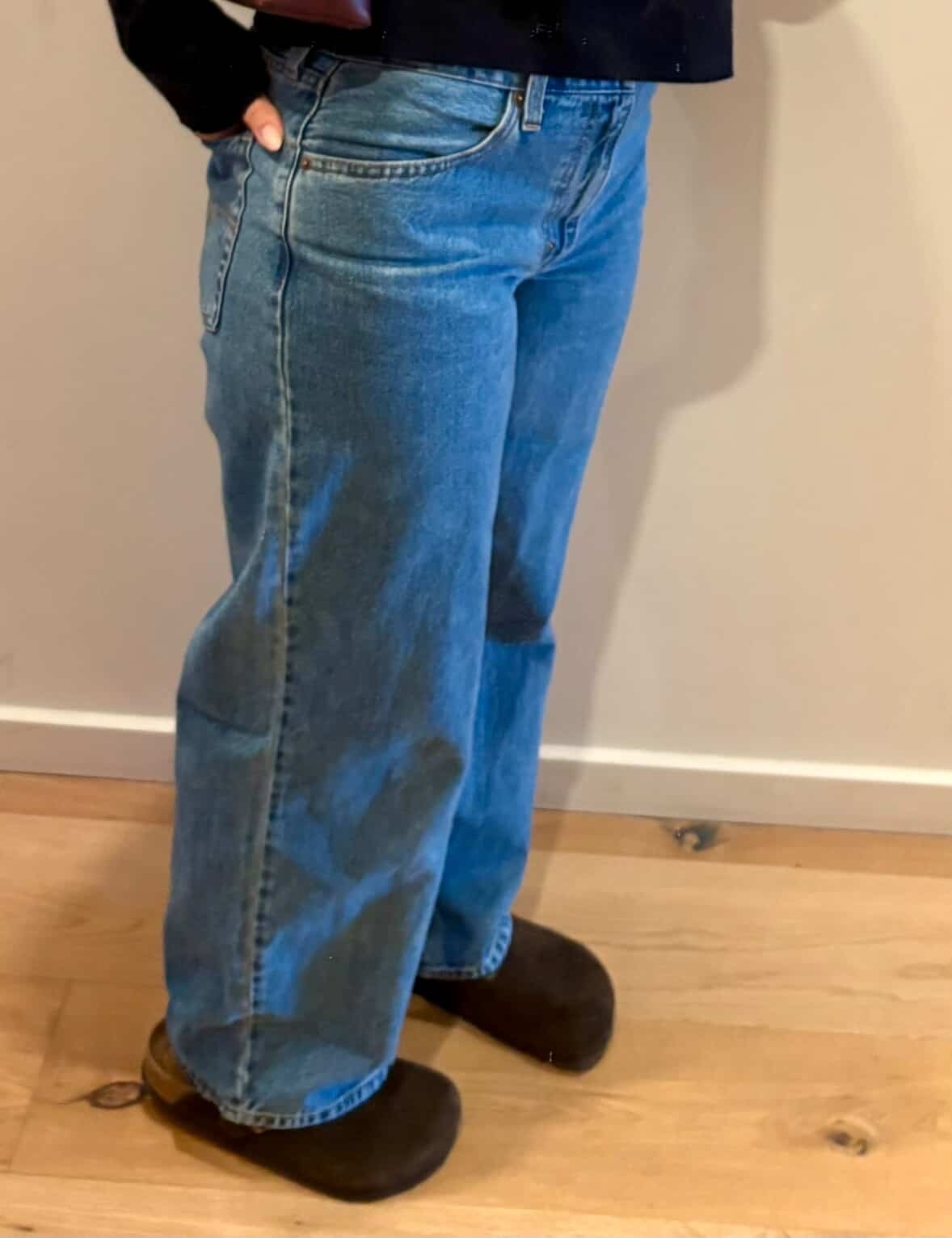
An invention for the American worker became the uniform of progress. Worn by miners, cowboys, rebels, rock stars, presidents, and everyday men and women, these functional pieces were the clothes people not only worked in—they lived their lives in, too. - Levi's description of their product
The gen z uniform, what university of ottawa students tend to wear to go anywhere, class, clubs, shopping, etc.
-
Map of Sandy Hill’s Active Rental
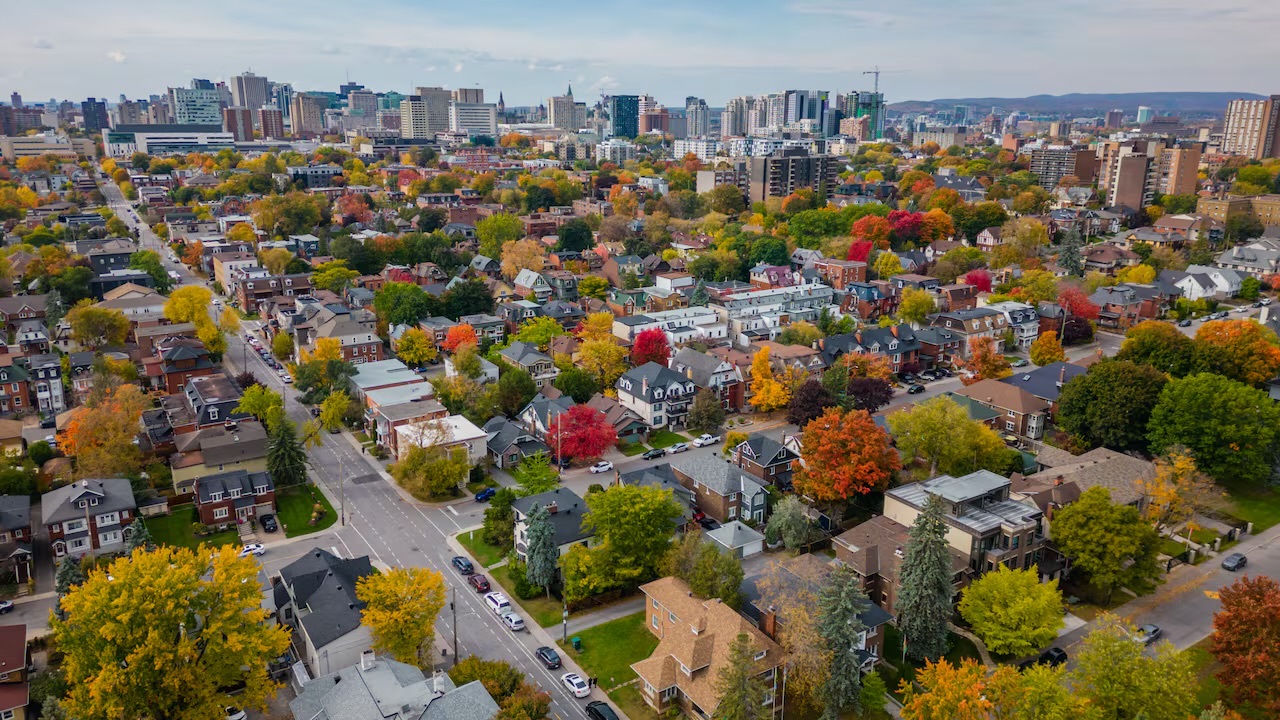
Our group mapped apartments and rental properties in Sandy Hill. This topic is important for understanding food assets because it maps physical distance between people and food sources, as well as the financial status of people who live in rental properties and how much money they have to spend on food.
Sources for our findings include real estate agents (collect information on housing for the purpose of selling, investing, and advising others), and Statistics Canada.
The average household income in Sandy Hill before taxes is $87,400. The median household income before taxes is $62,400. (CMHC, 2020)
There is a large student population in Sandy Hill, which likely contributes to the lower average income in the neighbourhood as opposed to the Ottawa average. Students tend to live on the west side of the neighbourhood, closer to the University of Ottawa campus where household income is generally lower (John Castle, 2023). Additionally, Sandy Hill has a slightly higher than average rent for single-person households compared to the Ottawa average. Sandy Hill has also had rapid growth in population since 2017, with unemployment rates being higher than the national average (John Castle, 2023). Vacancy rates rose during the pandemic but have since recovered (CMHC, 2020). According to residents, housing is a major point of complaint, as rent prices have been high in recent years (areavibes.com via Statistics Canada).
According to a study done focusing on student living in Ottawa and Ontario "The average rent paid by students surveyed is $926.8, with 95% (n= 310) identifying rent prices as a primary challenge. Students in Ontario face a higher average rent ($935.4) compared to those in Quebec ($830.1). Financially, 25% (n= 106) of respondents rely solely on employment income. A student earning the minimum wage in Ottawa ($17.20/h) would need to work 54 hours per month just to cover the average rent cost, excluding tuition, food and transportation costs."STUDENT HOUSING CAUCUS REPORT
A large number of apartment buildings in Sandy Hill are on the north side of the neighbourhood, close to Rideau Street. It is difficult to tell if a property is owned or rented during a walkthrough of the neighbourhood. For example, often historic buildings are converted and/or renovated into multiple rentable units, but that it is impossible to tell just by looking at them.
The interactive Google Map, below, shows some of the rentals and single family homes we marked. This map is not complete as we did a pedestrian survey of the neighborhood. We will be updating this map at a later time. -
O-FRANGO
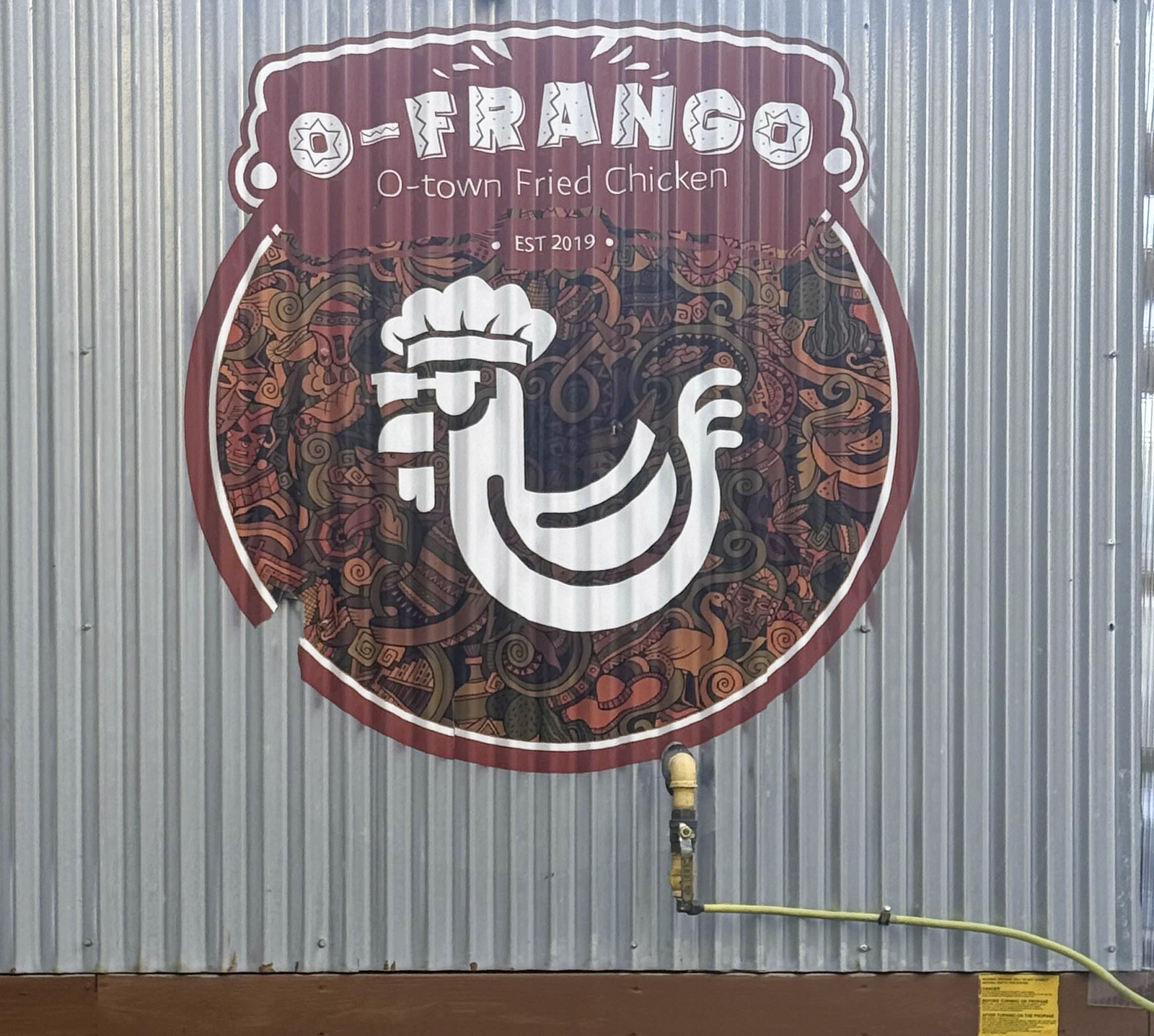
O-Frango is an affordable food truck near the University of Ottawa campus that has become a go-to dining spot for many students after class. Their fried chicken and fries served with a variety of sauces are a big hit among students. It perfectly reflects the daily life and food culture of uOttawa students in 2025. Outside their food truck, there's a plastic canopy and tables where students can eat their fried chicken right away or share it with friends. Not only that, but their lunch boxes and food carts all feature their own logo—a chicken wearing a chef's hat—along with the date they opened and their slogan: “O-town Fried Chicken.” -
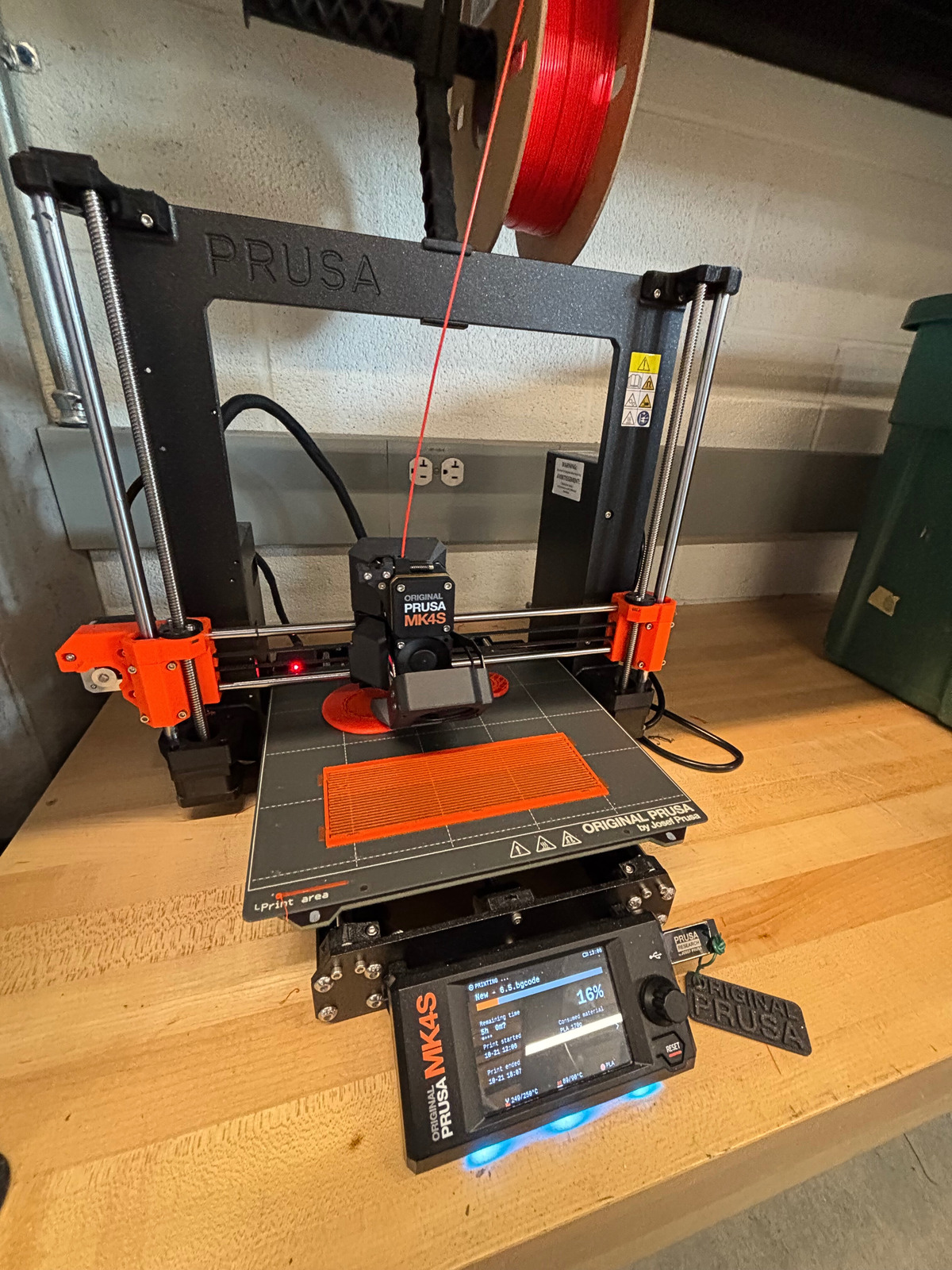
Original Prusa MK4S HF0.4 nozzle
3D printing machines can be found in the STEM building in MakerSpace since 2017. This space is a part of Centre of Entrepreneurship and Engineering Design (CEED) and is a crucial aspect of the engineering faculty . Back in 2017, the only printers available were the UltiMakers released in 2013. In Summer 2025, CEED acquired two Prusa MK4S in MakerSpace. This place is available to all students and staff members of uOttawa. It is useful to engineering students for many of their classes, but it is also used for personal projects by other faculties. In prior years, access to the printing machines was free. As of Fall 2025, costs of ten dollars are included in tuition fees of engineering programs. For other members of the community, a few options are offered; it is free on Sundays, they can buy a day pass for 5$ or pay 25$ for a semester with unlimited use. Since 2017, Richard L'Abbé Makerspace and its 3D printers have been part of the culture, but the Prusa MK4S are truly unique to the current culture now in 2025 and have changed how things work in general.