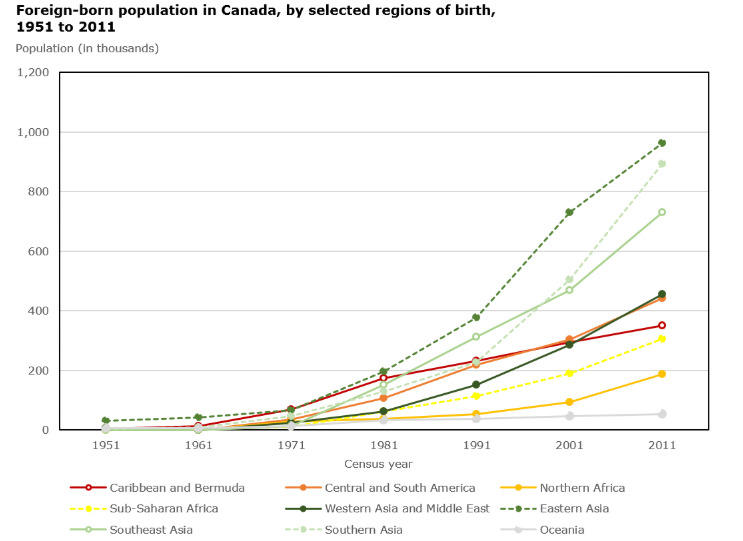
This is a chart taken from Statistics Canada, that indicates the foreign-born population (immigrants living in Canada) in Canada. As one could see from the chart, immigration generally increased, but for the purposes of this tab, the Caribbean numbers are important. Immigration from that region increased from 4400 in 1951, to 294100 in 2001. The increase in immigration from the Caribbean also means an increase in Black workers,including in the medical field. There is a reason behind the change in numbers, stands Canada's racist immigration policies. The country had restrictions toward people of African Descent, and people from "undesirable" parts of Europe, for example Italy, Poland and Ukraine. The labour shortage after the Second World War forced many countries, including Canada, to reshape their immigration policies, which they did. However for Canada, the attitudes towards those from the Caribbean and those from Europe were very different, and it took longer to lift the restriction from the regions where a large percentage of the population is Black.
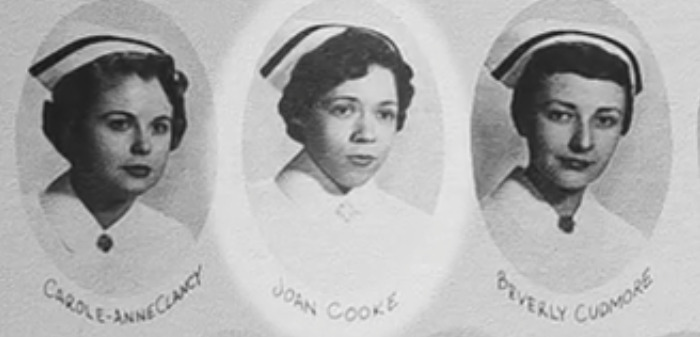
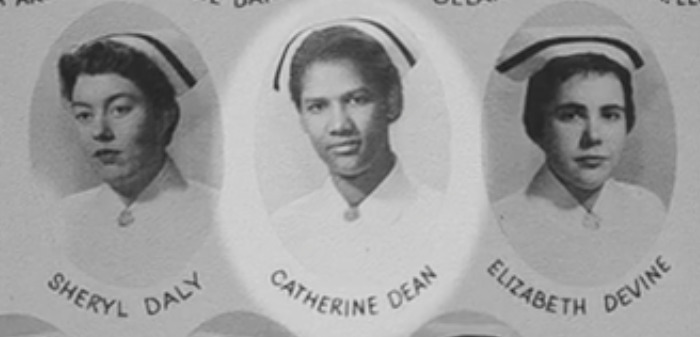
Jean Rix (from Guyana), Pearl Clunes (Trinidad), Aldith Farrar-Karram (Jamaica), Joan Cooke (Jamaica), and Catherine Dean are all nurses from the West Indies that studied at the St. Michael's Hospital in the 1950s. Jean Rix became the second Black nursing student to graduate St. Michael's School of Nursing, which happened in 1950. While, Ivy De Leon graduated in 1927, becoming the school's first ever nursing student of African descent. After the first student's admission, the school did not accept Black women for 23 years, another example of discrimination in education. These women came from all over West Indies, providing evidence of diverse experiences of immigrant women becoming nurses in Canada. Although they were allowed to study, many more conditions were put in place in attempts to discriminate nurses from the Caribbean, such as requiring second specialties (i.g. midwifery or psychiatry), that white nurses did not face when coming to Canada. Overall, these nurses' journeys show the Canadian govrnment's policies aimed at specifically decreasing immigration of Black people. Specific restrictions surrounding medical qualifications were meant to let in less immigrant women from the Caribbean, but instead brought talented specialists to the country.
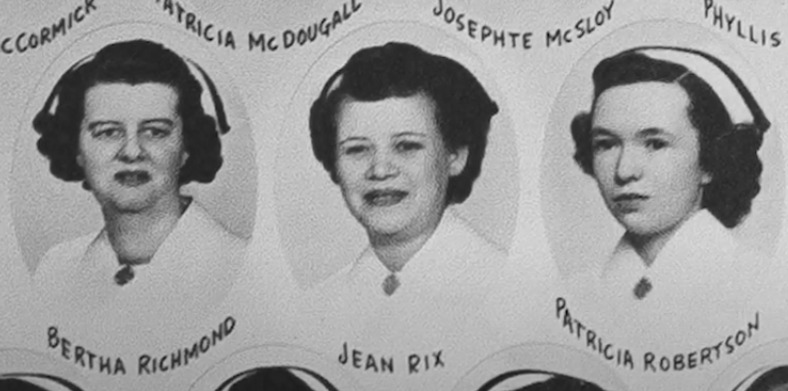
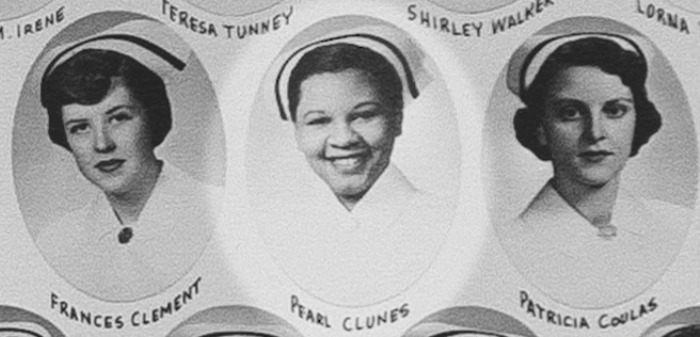
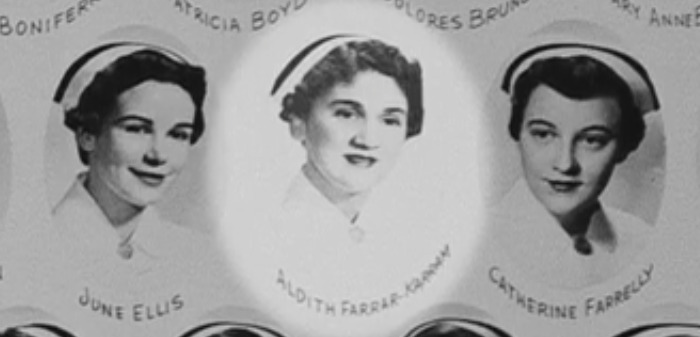
Jean Rix (from Guyana), Pearl Clunes (Trinidad), Aldith Farrar-Karram (Jamaica), Joan Cooke (Jamaica), and Catherine Dean (Bahamas) are all nurses from the West Indies that studied at the St. Michael's Hospital in the 1950s. Jean Rix became the second Black nursing student to graduate St. Michael's School of Nursing, which happened in 1950. While, Ivy De Leon graduated in 1927, becoming the school's first ever nursing student of African descent. After the first student's admission, the school did not accept Black women for 23 years, another example of discrimination in education. These women came from all over West Indies, providing evidence of diverse experiences of immigrant women becoming nurses in Canada. Although they were allowed to study, many more conditions were put in place in attempts to discriminate nurses from the Caribbean, such as requiring second specialties (i.g. midwifery or psychiatry), that white nurses did not face when coming to Canada. Overall, these nurses' journeys show the Canadian govrnment's policies aimed at specifically decreasing immigration of Black people. Specific restrictions surrounding medical qualifications were meant to let in less immigrant women from the Caribbean, but it did not stop these talented specialists from following the promise of more opportunities in Canada, diversifying the workplace and helping the Canadian people.
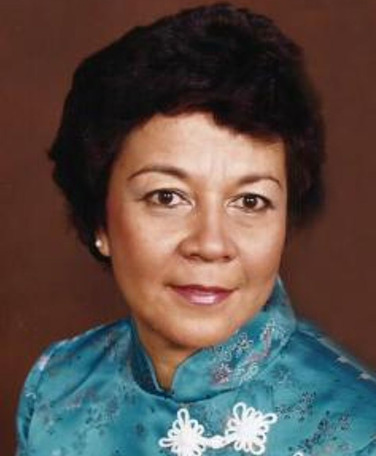
Rhoda (Young) Anstey, originally from Jamaica, started working at St. Michael’s Hospital in 1961. She became Head Nurse 7 years later, retiring in 1994. She is an example of an immigrant nurse from the West Indies, travelling to Canada for work. Other nurses like Pam Willock from Antigua(1964) and Gerry Simpson from Barbados (1966) worked at the same hospital. This is evidence of the large presence of Caribbean nurses in Canadian hospitals, Black Canadian women were not able to receive a nursing degree in their home country, so immigrants partially covered the need for nurses in Canada.