Browse Items (218 total)
Sort by:
Coin: nummus (A2) of Constantine I
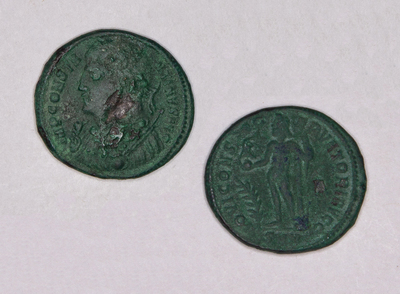
Obverse legend: IMP(erator) CONSTA-NTINVS AVG(ugutus), translation: Imperator Constantinus Augustus; laureate and draped bust of Constantine I facing left. Reverse legend: IOVI CON-ERVATORI AVGG(=duorum augustorim), translation: To Jupiter the…
Coin: antoninianus of Postumus
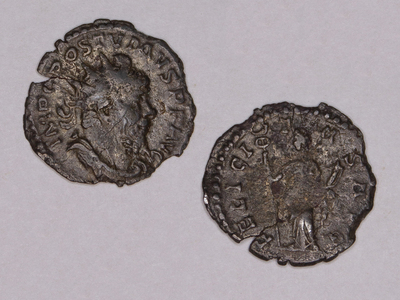
Obverse legend: IMP(erator) C(aesar) POSTVMVS P(ius) F(elix) AVG(ustus), translation: Emperor Caesar Postumus Dutiful Fortunate Augustus; radiate, cuirassed, and draped bust of Postumus facing right. Reverse legend: FELICI-T-AS AVG(usta),…
Coin: denarius of Trajan
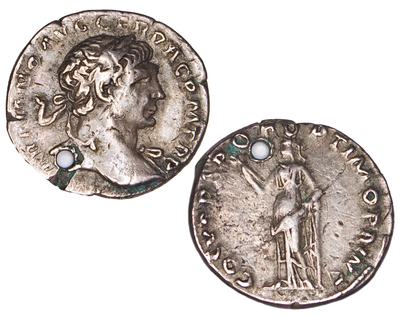
Obverse legend: [IMP](eratori) TRAIANO AVG(usto) GER(manico) DAC(ico) P(ontifici) M(aximo) TR(ibunicia) P(otestata), translation: To Imperator Trajan, Augustus, Germanicus, Dacicus, Pontifix Maximus, holder of tribunician power; laureate bust of…
Coin: as of Herennia Etruscilla
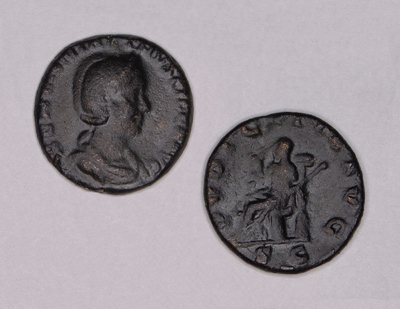
Obverse legend: HERENNIA ETRVSCILLA AVG(usta), translation: Herennia Etrusca Augusta; draped, diademed, bust of Herennia Etruscilla facing right. Reverse legend: PVDICITIA AVG(ustae) ex S(enatus)C(onsulto), translation: the modesty of the Augusta by…
Coin: denarius of Elagabalus
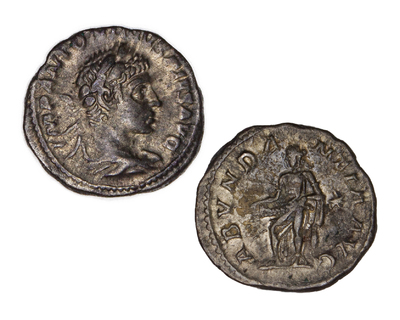
Obverse legend: IMP(erator) ANTONINVS PIVS AVG(ustus), translation: The Imperator Antoninus Pius Augustus; laureate and draped bust facing right. Reverse legend: ABVNDA-NTIA AVG(usta), translation: Augustan abundance; personification of Abundance…
Coin: nummus (AE 2) of Constantius Gallus
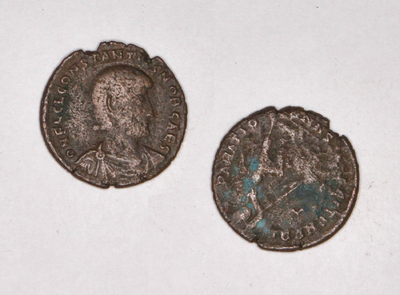
Obverse legend: D(ominus) N(oster) FL(avius) CL(audius) CONSTANTIVS NOB(ilissimus) CAES(ar), translation: Our Lord Flavius Claudius Constantius, Most Noble Caesar; draped, cuirassed, and bare-headed bust of Constantius Gallus facing right. Reverse…
Coin: nummus (AE 3) of Valentinian I
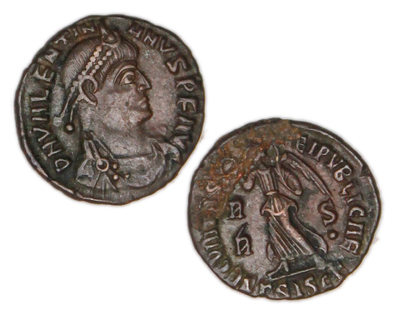
Obverse legend: D(ominus) N(oster) VALENTINI - ANVS P(ius) F(elix) AVG(ustus), translation: Our Lord, Valentinianus, the dutiful and fortunate Augustus; pearl-diademed, draped and cuirassed bust facing right. Reverse legend: SECVRITAS - REIPVBLICAE,…
Coin: semis of Domitian
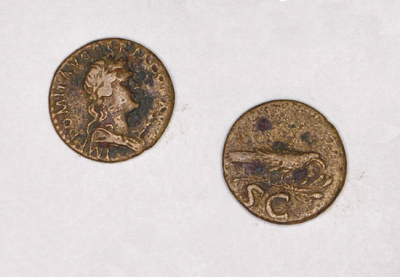
Obverse legend: IMP(erator) DOMIT(ianus) AVG(ustus) GERM(anicus) CO(n)[S(ul) XI], translation: Imperator Domitianus Augustus Germanicus Consul Eleven Times; draped bust of Apollo facing right, to right a branch of laurel. Reverse exergue: (ex)…
Coin: as of Gordian III
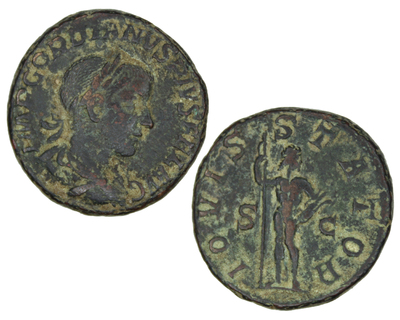
Obverse legend: IMP(erator) GORDIANVS PIVS FEL(ix) AVG(ustus), translation: Imperator Gordianus dutiful and fortunate Augustus; laureate, draped and cuirassed bust facing right. Reverse legend: IOVIS STATOR ex S(enatus)-C(onsulto), translation:…
Cylinder seal
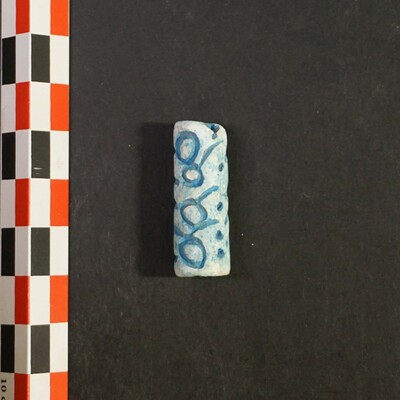
A small clay cylinder with a hollow middle for attachment to a necklace or bracelet. Engraved with a design along the surface for the purposes of rolling onto fresh clay in order to create a seal. Light blue in colour, with a deeper blue present in…
Stele with inscription and relief of the goddess Tanit
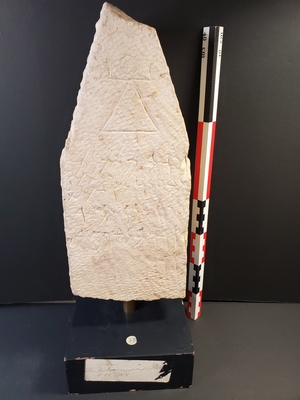
Black base with metal stand supporting a limestone monolith that contains an inscription and a large symbol at the precipice. The stone is trapezoidal in shape.
Bronze spearhead
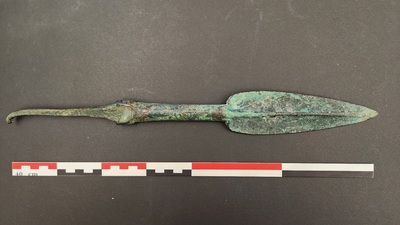
Bronze spearhead with a leaf-shaped blade and a prominent cross-section midrib. The tang is long and curved at the end. Faint decorative engravings around the neck of the blade near the beginning of the tang.
Cylinder seal
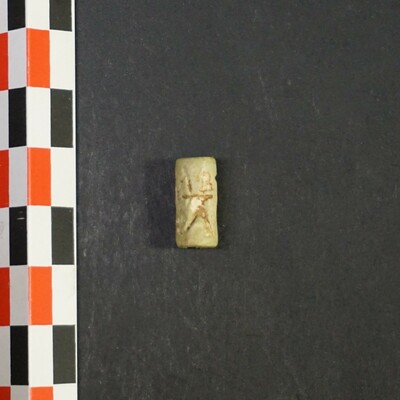
A small clay cylinder with a hollow middle for attachment to a necklace or bracelet. Engraved with a design along the surface for the purposes of rolling onto fresh clay in order to create a seal. Slightly greenish-beige in colour.
Papyrus fragment
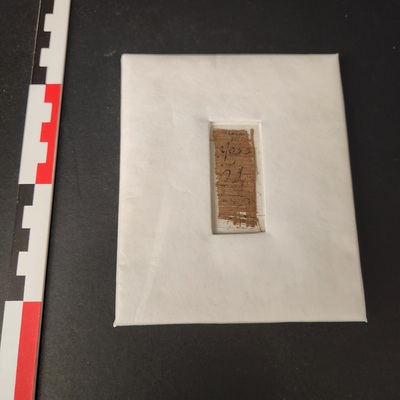
A fragment of papyrus mounted in a paper frame.
Papyrus fragment
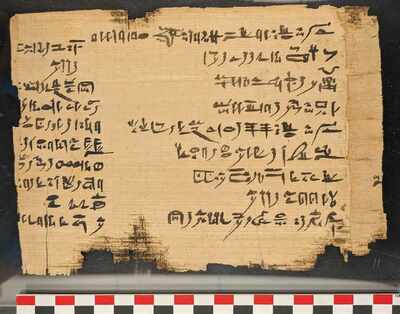
Rectangular papyrus from Roman Egypt with Hieratic text. The exact date in unknown however the Hieratic script stopped being used in the 3rd century CE. It is safe to assume that the Papyrus is not more recent than that date. The papyrus contains 2…
Phaistos Disk (reproduction)
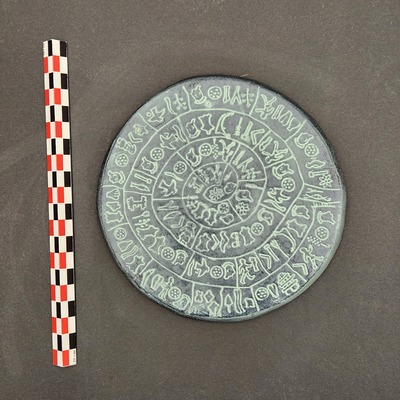
Ceramic disc with engraved symbols in a spiral pattern, made to replicate the Phaistos disc exhibited at the Heraklion museum (https://www.heraklionmuseum.gr/en/collections/#collections, accession number Π-Ν1358). Unlike the original, which is brown,…
Figurine of Aphrodite
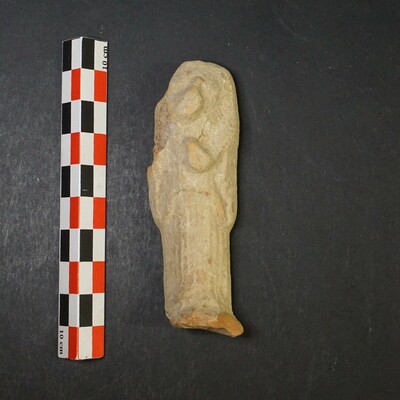
A small statuette of a female. She is wearing an archaic dress and holding an unknown object possibly with both hands. The back of the statuette is flat and plain.
Herakles and the hind metope (reproduction)
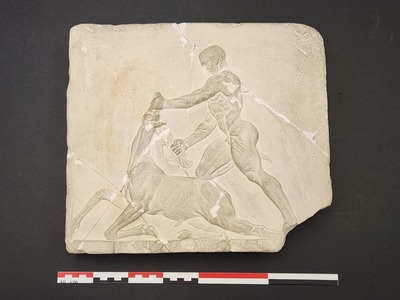
Rectangular relief depicting a nude, beardless Herakles wrestling the hind of Keryneia. The material is yellowed and textured to imitate the original marble. Herakles's left hand is grabbing the deer's mouth, his right hand is holding a horn, and his…
Egyptian papyrus fragment with Greek writing
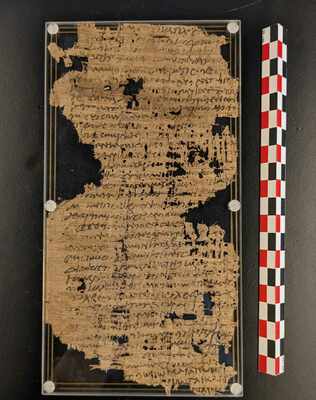
Rectangular papyrus from Roman Egypt with Greek script, written in the 13th year of Trajan (109-110 CE). Contains 37-38 lines of text written in Greek. Document is probably an application for a lease.
Wax writing tablet (modern reproduction)
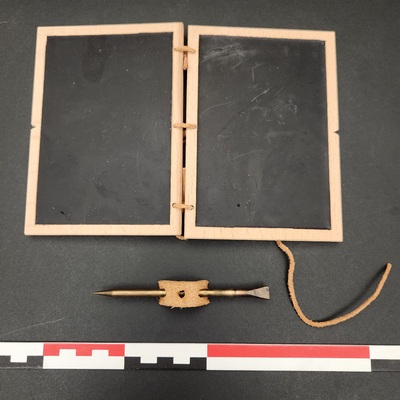
Two wood tablets, joined by a string, with a wax writing surface and a metal stylus.
Iron shortsword
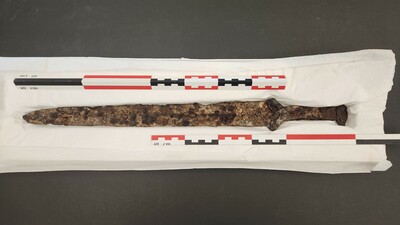
Iron shortsword. Seems to be made entirely of iron, both blade and handle. Small V-shaped cross guard. Butt of the handle is roughly oval shaped and extends further out than the handle.
Bronze spearhead
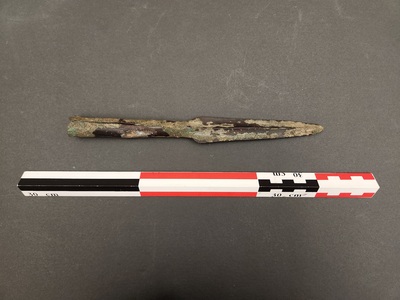
Bronze spearhead with a long socket. There is a round hole near the end of the socket, likely to be original.