
Browse Items (96 total)
-

Cropped Black T-Shirt
This black t-shirt can be found amongst all ages, genders, and lifestyle groups found at the University of Ottawa in 2025. This object is so particular because it crosses barriers allowing diverse groups of people to relate and ease themselves with common fashions. -

Reusable Lululemon Water Bottle
A reusable water bottle created by Lululemon that combines a minimalistic design with everyday functionality. Made from stainless steel with a silicone grip and a polypropylene lid, which helps keep drinks at a cool or warm temperature while reducing the need for single-use plastics. -

Apple AirPods Max
Apple AirPods Max headphones represents a widely adopted personal audio technology among university students. Known for their premium materials, active noise cancellation, and integration with the Apple device ecosystem, AirPods Max became a recognizable element of campus life -
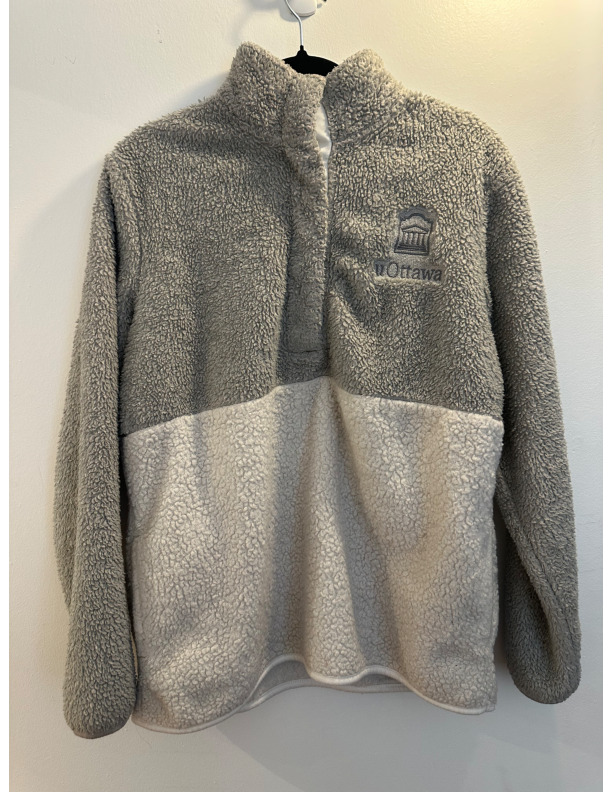
Sherpa Jacket
This sherpa jacket is a lightweight but cozy way to stay warm against the cold temperatures we face in Ottawa. Made to resemble sheepskin, this 21st century outwear piece is apart of both men and women's fashion making it a popular choice for everyone. -
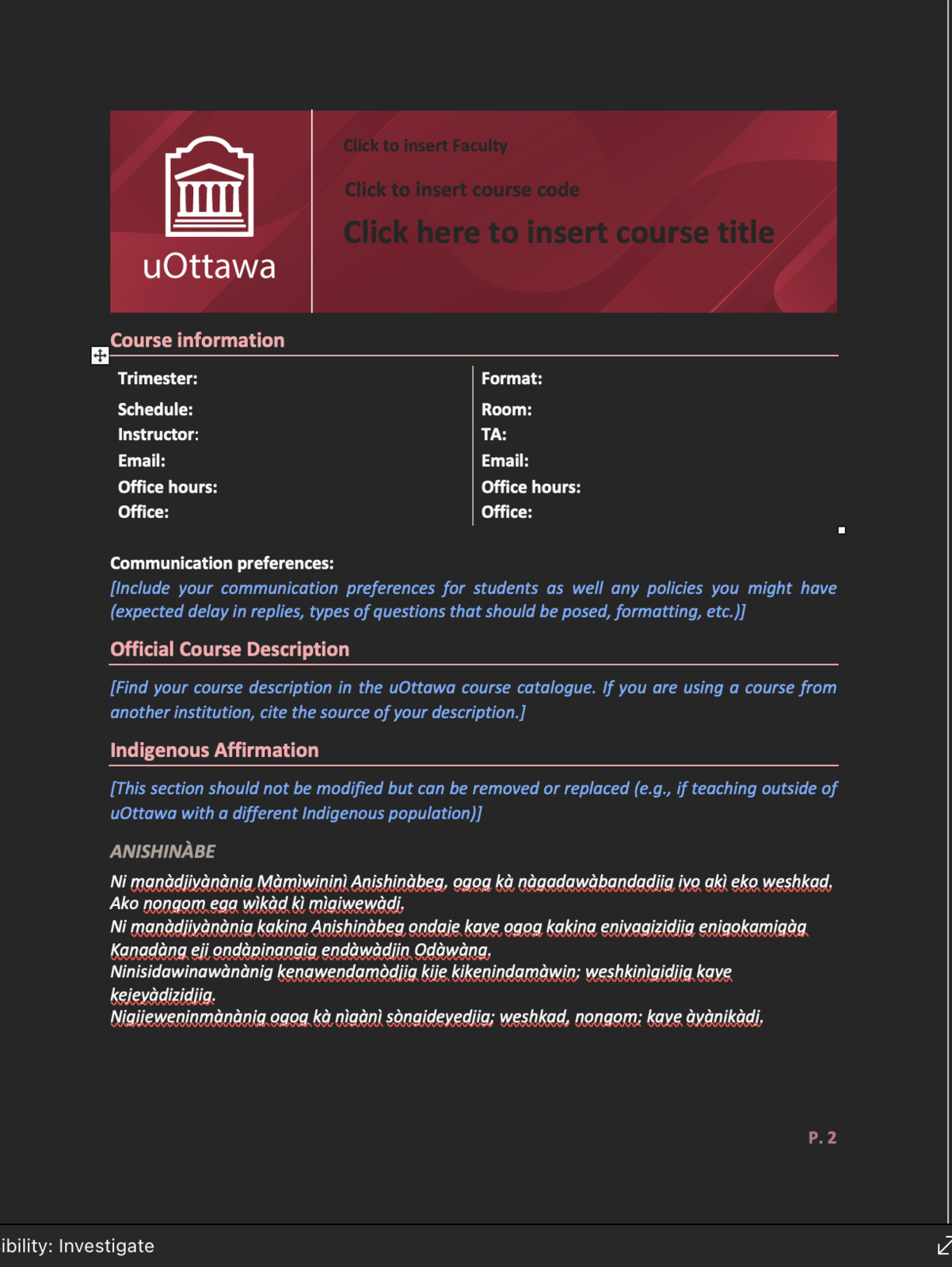
University of Ottawa Syllabus
A syllabus is a long, detailed document written by the professor that outlines the key information of a university course. It contains a course schedule, themes of lecture material, rules for class conduct, and technical information for the class. All professors are required to follow a certain format for their syllabi. The title page must have the University’s logo, the professor’s name, the class title and code, the location, day and time the class will take place, and also the professor’s office hours. If there is a teacher's assistant for the course, their office hours, name and email should also be included. For the rest of the syllabus, it should contain a description of the course, the objectives of the course, any required texts, the weight that each assignment and evaluation will have on the students’ final grade and a schedule for the semester. -

University of Ottawa Student ID Card.
This laminated plastic card is used as a form of identification for all uOttawa students in addition to uOttawa services like to open automated entry points, a source of payment, and a proof of ID for activities or spaces with specific access requirements, whether it’s in person or digitally. Recently, the university discontinued physical U-Pass cards, and it was absorbed by the UO Student Card, granting university students access to OC Transpo and STO public transportation through their student ID. Exams require student cards as photo ID to verify a student’s identity, as well as your student number which is on the card. As a key card, it grants access to the UO Dining Hall, residences, labs, classrooms, sports facilities, gyms, and libraries. The card can even be used as a debit card for Dining Hall expenses, for eateries on campus, or to spend uOttawa’s Flex Dollars. In 2025, new students can send in their photos for their card rather than having their picture taken in person. This represents how in 2025 education has evolved to be more hybrid, integrated with technology. -

Pedro the Panda
Pedro the Panda is a symbol for university students in Ottawa. It goes to the winner of the iconic “Panda Game” that takes place in early October between the two universities in Ottawa. It's where the Carleton University Ravens and the University of Ottawa Gee-Gees partake in a football game where the winner keeps it until the next game the following year. It represents pride for the winner and instills a greater sense of rivalry between the two schools.
The game alone is one of the most celebrated traditions in the Ottawa local area; Pedro is more than just a trophy, he is a mascot of the rivalry, a symbol of school spirit, and a part of the lives of many university students. It represents not just victory in a football game, but also bragging rights, student pride, and a connection to the legacy of the Panda Games. -

"Every Child Matters" Orange T-Shirt
These Orange “Every Child Matters” T-shirts are made specifically for raising awareness of Canada’s Truth and Reconciliation Day. These T-shirts are representative of the “Every Child Matters” movement with the purpose of spreading awareness and showing support. The University of Ottawa “Every Child Matters” T-shirt is both symbolically supportive to the Indigenous Community as well as financially, with proceeds donated to various charities supporting Truth and Reconciliation. The University of Ottawa students and staff are taught the history of Canadian Indigenous Peoples through guest lectures, and courses throughout the school year, all with the goal of awareness and support. In addition to this education, each course syllabus includes a mandatory land acknowledgement, with many professors adding additional education for their students. -

Hilroy 1 Subject Notebook
Hilroy Lined Notebooks offer students an opportunity to study away from their electronics and write notes, complete assignments and study by hand. While manually writing notes and coursework is no longer the mainstream method in University, many efficient studying and note taking techniques can only be done with pen and paper! Returning to old methods never fails and many students choose to create a hybrid study plan using both devices and handwritten notes. Hilroy Notebooks are the go-to for students offered in many colors and sizes perfect for any class! -

Conversation with David King
This interview explores the life story of David King, beginning with his childhood in Black River, Jamaica, and continuing through his immigration to Ottawa, Ontario, in 1976. The interview highlights key themes, including migration, identity formation, intergenerational knowledge, and cultural preservation. David's interview is punctuated by his keen sense of humour, kind disposition and detailed description of his childhood in Jamaica and the life he has built in Canada.David began his story by sharing details of his childhood in Jamaica, where he was raised by his grandmother, whom he believed was his mother until he was seven years old. He grew up in a small home with his Grandmother and fifteen of his cousins. During this time, his family struggled with food insecurity. They lived far from any stores, so his grandmother walked ten miles on Saturdays to shop for groceries and bring them home. Although there were many struggles, David looks back at this time fondly. He shared one story with a smile, stating,“Yeah, there was two beds in the house. 15 kids, and you sleep head to foot. So whoever get to the bed first, grab the corner. And if you're the edge, you get knocked off. **Laughs** Oh yeah, there were just two beds, and all the kids, they would sleep head to foot. My grandmother slept on the sofa. But I never see her sleep because she'll be up. We go to bed, wake up and she's still up. Oh yeah. It was great, because we thought we just live together, brothers and sisters. We had no idea.” (David King).Throughout David’s life, family has been an interesting, ever-changing reality. He was five years old when he was first introduced to his biological siblings, and continued to meet other siblings as he got older. Most shocking was his introduction to his biological mother when he was seven years old, who would return to take him to Canada when he was ten. David explained that even his last name, “King,” was not a direct link to family. It was a false name given to his mother when he was born by his birth father to avoid legal responsibility.When David was ten, his mother moved him far from his home to live with her and his siblings in Canada. He describes the event as being deeply traumatic, punctuated by his feeling of uncertainty and displacement. He described arriving in Canada in winter with nothing more than a backpack, the shoes on his feet and the clothing he wore. As he got to know the Canadian society, he found it strange and unfamiliar. He provided an example of this through a story of his first few weeks of school in Canada.“I start in grade five, but I had to go back one grade because I was trying to keep up with the language. I speak Jamaican, they couldn't understand a word I was saying, so they moved me back one, which is fine. (…) But it was scary because my first teacher I met, she came in. And she was dressed in a green dress and a green scarf. And back home, we don't wear makeup, right? This lady had this big green thing above her eyes. (…). And she came to give me a hug and I went ‘whoa.’ I still remember, it scared the hell out of me because I've never seen a person with makeup on. But yeah.” (David King).Today, David has been living in Canada for around fifty years. He’s married and has a family of his own. But he still finds himself reflecting on his move to Canada in 1976 with grief. Regardless of his tumultuous transition from Jamaica to Canada, David maintains a strong connection to his family and culture. He states that it is vital to pass his culture down to the next generation of Canadian-born Jamaicans. He does so through introducing them to Jamaican foods such as oxtail and rice and peas, celebrating Jamaican Independence Day, teaching them dominoes, and listening to reggae music. In his closing statement of the interview, David reiterates the importance of passing down culture to the next generations, stating,“the people should know, you should try to keep your culture of your country going and pass it on to your family members and kids. Because a lot of them have never been to Jamaica. I mean, I've been here for over 50 some years, and i’ve only been back like twice since I've been here and traveled. So it'd be good to pass on heritage, pass on the culture, teach them how to cook and the music and just read up on it. I'd like to go back to Jamaica, but I have to plan that. But yeah, it's been a long time.”David’s story provides insight into the lived experiences of Caribbean immigrants and demonstrates how cultural traditions are maintained over time through community, food, music, and family practices. -
Conversation with Lance
This interview features Lance, a Haitian man in his early 20s, who immigrated to Canada with his mother, father, and older sister in 2011. He and his family came to Canada due to a 7.0 magnitude earthquake in Haiti, which occurred in 2010, and caused the Haitian economy to crash due to the high death toll and extensive damage to the country’s infrastructure (Pallardy 2026). He explained that his father was a judge in Haiti and already had professional connections to Canada, which is why they chose to come here. During our interview, he recounted what a day in his life was like when he lived in Haiti, sharing anecdotes about the heat, the loud bustling noises around him, the intense heat in the afternoons and playing soccer. Now living in Canada, Lance’s life is different. However, he has found ways to celebrate his Haitian heritage, such as by observing all the major holidays from back home. He provided examples of a few of his favourites, such as Christmas, January 1st/Haitian independence day, and a holiday in Canada usually celebrated around Halloween called Gide. He also works hard to cook traditional food such as a fried pork dish called griot. Overall, he wishes that Canadians could see Haiti for what it is, rather than believe all they see in the media about Haiti and its people. It is important to him that Canadians see past the politics of Haiti and see the people of the country for who they are.
Resource on the 2010 Haiti earthquake -
Conversation with Hakim Marquez.
This interview features Hakim, a Venezuelan migrant living in Canada. Hakim spent the majority of his life in Venezuela, but Canada was not the first place he had lived abroad. In truth, Hakin was born in France and returned to Venezuela soon after. He later moved to Canada at the age of fifty-one, seeking opportunities in education and technology. Since then, he’s found success working at the University of Ottawa in Teaching Learning Support Services. Initially, Hakim's family had limited access to Latin American culture, let alone Venezuelan culture, and the Spanish language while living in Ottawa. However, they have been able to find a connection through an introduction to another Latin American family at their daughter’s school, and Hakim’s wife has since begun working at the Spanish Embassy. Beyond the social connections they have formed with other Latin Americans in Ottawa, Hakim and his family also prioritize maintaining their culture at home. He notes in the interview that social media has been one avenue that has helped them stay connected to Venezuela. Other ways they celebrate their family heritage are by making traditional foods, like Arepas, and by celebrating major Latin holidays. They listen to Latin music and dance, keeping their cultural heritage alive! -
Conversation with Monica Fosado
This interview features Monicaa Fosado, a vibrant member of Ottawa’s cultural landscape, sharing her personal passions, cultural identity, and community engagement rooted in her Mexican heritage. She pursued her academic journey in Canada at Carleton University, where she completed a master’s degree in journalism.
In her free time, she is highly active and engaged in personal hobbies that bring her joy and connection. She teaches salsa dancing at least once a week, and plays soccer regularly. She emphasized both physical activity and social connection as important parts of her routine. Food also plays a central role in how she maintains her connection to her Mexican heritage, regularly preparing traditional dishes such as tacos and quesadillas not only as meals but also as meaningful cultural practices. She also celebrates culturally significant traditions, such as the Day of the Dead, honouring the celebration's importance in Mexican culture. However, what stands out most is how she chooses to engage with her culture on her own terms. She maintains her cultural identity through food, language, and personal traditions, while also contributing to the community in her own way. She teaches Spanish one-on-one, helping others learn the language while sharing aspects of her culture in an informal setting. Her story offers an important insight into the diversity of immigrant experiences. While some individuals seek out strong cultural communities abroad, she demonstrates that cultural identity can also be maintained in more private, self-defined ways.
Her life in Ottawa is a blend of independence, cultural pride, and active engagement, showing that belonging does not always require a formal community hub, but can instead be created through everyday practices and personal choices. -
Conversation with Shameena
This interview features Shameena, who migrated from Guyana to Toronto, Canada, at the age of Sixteen with her family. She explained that her father decided to bring them to Toronto because he saw Canada as offering his family better opportunities, education, health care, food, and a higher standard of living. Shameena explained that, luckily, Guyana is one of the few predominantly English-speaking places in the Caribbean, which made coming to Toronto easier, as she and her younger siblings were already proficient in the city's main language. Shameena speaks lovingly about her home in Toronto, where she has established a strong community not only of Guyanese people but also of people of the same religion, and she deeply appreciates the way she can engage with religion locally. Beyond her faith, Shameena describes the primary focus of Guyanese culture to be food and family. Extended family relations are weighted similarly to close relations, as everyone is included in traditions and events. Even without specific social events, families still gather regularly. Food strengthens their cultural roots. Despite immigration from Guyana to Toronto, she continues to uphold her culinary practices and familiar dishes. There are also specialized markets where Guyanese can purchase food for cultural dishes. Given that Toronto is a large and diverse city, Shameena states that Guyanese feel welcome there.Shameena explained that she sees similarities between Guyana and Toronto in that both are immensely diverse places. She enjoys being part of a global community and, although there are differences between her life in Guyana and Canada, she remains deeply connected to her community and family. -
Conversation with Miguel Gonzalez
This interview features Miguel Gonzalez, who immigrated from Venezuela to Canada to escape what he describes as a “difficult situation” unfolding there. Miguel had family in Ottawa and Montreal prior to moving to Canada, and selected Ottawa as his home base because of his family's prior experince with English, which he believed would allow them to better integrate into the community. Family is central to Miguel’s identity and experince in Canada. He has many family members who immigrated to Montreal, and he sees them frequently. As a husband and father of two, he is motivated to provide stability and opportunity for his children. He believes success is measured not only by professional achievements but also by the ability to support loved ones and remain grounded in one’s values. Maintaining strong relationships is important to him, whether within his household or his broader social circle. Miguel has a passion for helping others with mobility and supporting them. He finds it deeply important to have mutual support and information-sharing, particularly within immigrant and Latin communities. He believes collaboration and empathy are essential for overcoming challenges, especially in unfamiliar systems. Having seen how easily people’s skills can be overlooked, he strongly believes in recognizing the knowledge and experience individuals bring. Overall, Miguel is guided by respect, hard work, and a strong sense of responsibility toward others. These beliefs carry over into how he celebrates and shares his Venezuelan culture, as he prioritizes seeing his loved ones share knowledge and supporting the broader Latin American community. -
Conversation with Ángel
Ángel Albarrán-Ponce is a 33-year-old PhD student at the University of Ottawa who originally comes from Mexico City, Mexico. His experiences as an international student and member of Ottawa’s Latin American community highlight how immigrants maintain cultural connections while adapting to life in a new country.
Ángel moved to Canada primarily for academic reasons and is currently pursuing doctoral studies, balancing a demanding research schedule with efforts to stay socially and culturally engaged. Ángel describes his daily routine as “really busy with work,” reflecting the intensity of graduate studies. Despite this, he prioritizes social connection during his free time. He enjoys attending salsa events in Ottawa, spending time with friends, and sharing meals, activities that allow him to maintain a sense of community while living abroad. These moments of connection are especially important for international students who may be far from family and familiar cultural environments. Maintaining cultural traditions is central to Ángel’s identity. He expressed pride in being Mexican and highlighted important celebrations such as Mexican Independence Day on September 15 and Día de los Muertos. For Ángel, participating in or remembering these traditions helps him stay connected to his cultural roots while living in Canada.
During the interview, he described the Mexican community as “welcoming,” “united,” and “chill,” emphasizing a shared sense of openness and hospitality. These qualities help foster connections among individuals who may come from different countries but share similar cultural values and experiences as immigrants. At the same time, Ángel reflected on broader social issues affecting his home country. He discussed what he called “modern colonization,” explaining that increased tourism and development in certain regions of Mexico have transformed local communities. From his perspective, these changes can leave residents feeling disconnected from their homeland as traditional ways of life are altered to accommodate outside influences. This insight highlights the complex relationship between globalization, tourism, and cultural preservation. Overall, Ángel’s experiences demonstrate how immigrants balance academic responsibilities, cultural identity, and community connections while living abroad. His reflections offer valuable insight into how members of Ottawa’s Mexican community maintain traditions, celebrate their heritage, and navigate the challenges of building a life far from home. -
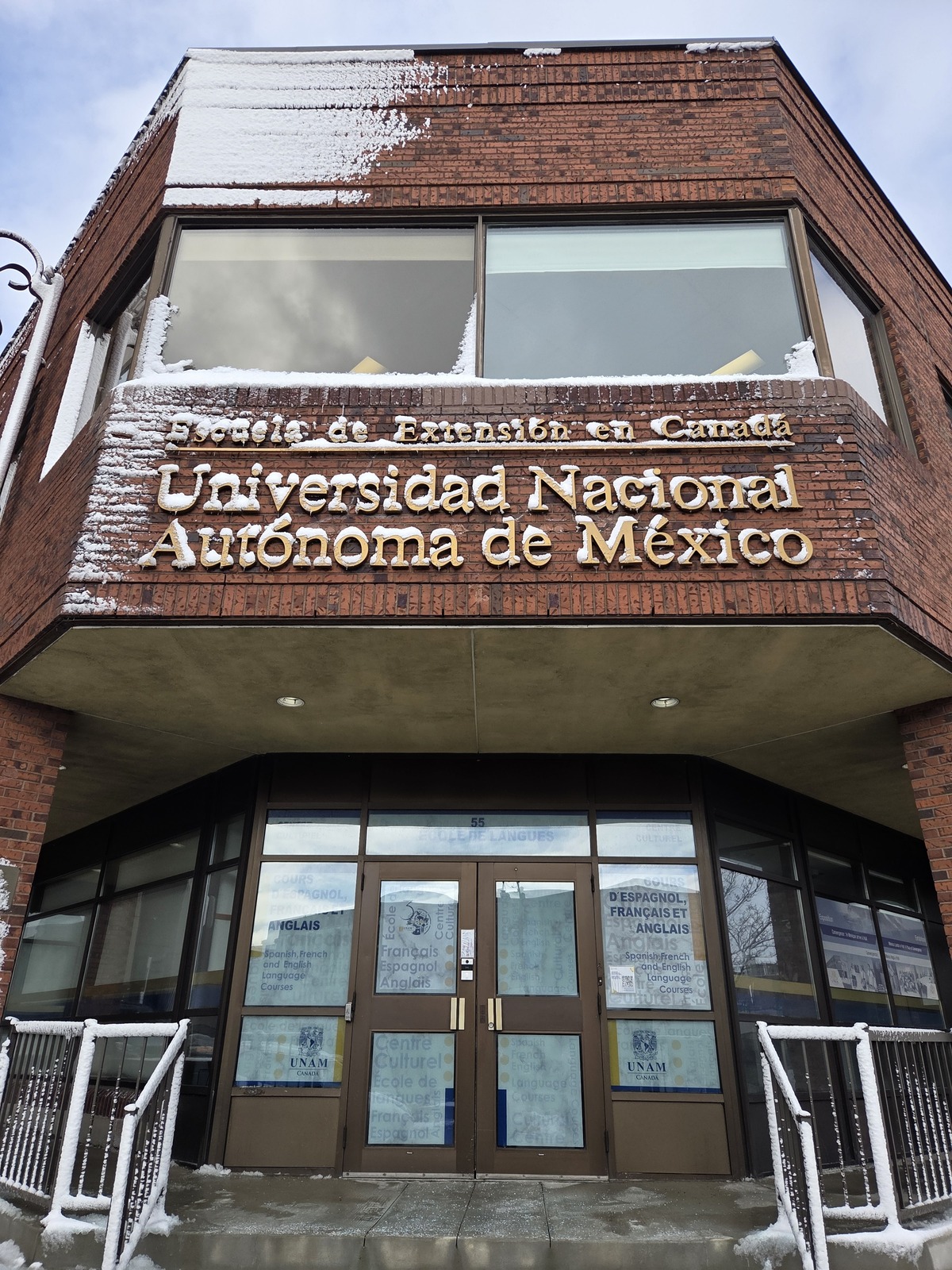
Conversation with UNAM-Canada
The organization we interviewed for this project is UNAM-Canada, an extension of the Universidad Nacional Autónoma de México (UNAM), Mexico’s largest and oldest public University. UNAM has thirteen international offices located in multiple countries, such as the United States, France, Germany, Spain, China, Chile, and, more recently, the United Kingdom. Founded in 1995, UNAM-Canada serves as the university’s international office in Canada. Located in downtown Hull, in Gatineau, this extension currently employs eighteen staff members. As part of this project, we interviewed Alex Méndez, the Academic Affairs Chief Executive at UNAM-Canada, and Brenda Colín, the Administrative Lead at UNAM-Canada.
The UNAM-Canada primarily offers language courses in Spanish, French and English, as well as courses on Mexican and Latin American culture, welcoming more than 800 students each year (Unam Canadá 2019). Most of the students enrolled in Spanish courses come from the region and generally fall into two main categories. The first group consists mostly of retirees who enjoy traveling to Latin America and would like to improve their Spanish skills. The second group includes government employees or professionals who require Spanish for specific purposes and therefore will take classes with UNAM-Canada. When it comes to English and French courses, most participants are international students from UNAM in Mexico. In fact, twice a year, during the summer and winter semesters, the school holds a program called PUMA+. Through this program, Mexican students spend three weeks in Canada developing their English and French skills. In addition, UNAM-Canada is one of only two accredited institutions in Canada authorized to offer the SIELE examination, which provides an internationally recognized certification of Spanish language proficiency (Unam Canadá 2026). As a result, UNAM-Canada has established itself as one of the most important language learning institutions in the National Capital region, especially regarding the teaching and the certification of the Spanish language.
Furthermore, another important aspect of UNAM-Canada is its connection to the broader UNAM network, widely recognized as a hub for research and innovation across multiple disciplines (TV UNAM 2017). Indeed, during the interview, it was pointed out that UNAM is involved in a wide range of scientific and academic fields. As Brenda Colín explained, UNAM has developed many important contributions that not everyone knows about: it has its own satellite. It also has two research vessels. By sharing these achievements through its Canadian programs, UNAM-Canada helps bring greater visibility to the global impact of Mexican and Latin American research. This is not only beneficial for raising awareness among local Canadian communities, but also for highlighting the key role that Latin American institutions like UNAM has in developing knowledge on a global scale.
In addition to promoting the Spanish language, as well as Mexican and Latin American culture, UNAM-Canada’s mandate is to build academic bridges between Canada and Mexico and to further strengthen UNAM’s presence abroad. One clear example of this would be the many Mexican students who come to Canada to conduct research at universities such as the University of Ottawa, Concordia University, and McGill University. These academic exchanges are actively supported by UNAM-Canada, which has been collaborating with regional universities to develop and expand such opportunities over time. UNAM-Canada also serves as an important venue for conferences, round tables, book and film presentations, symposiums, as well as painting and photography exhibitions, in addition to concerts and theatre performances. The institution has classrooms, a specialized library focused on Mexican and Latin-American books, a cafeteria and a multipurpose room that functions as both an auditorium and art gallery (Unam Canadá 2019). Moreover, UNAM-Canada is widely recognized for organizing the Day of the Dead celebration in collaboration with the Embassy of Mexico and the City of Gatineau. Every year, the institution installs an altar, either in the school’s multipurpose room or at Gatineau’s city hall and hosts a variety of cultural activities related to the celebration, bringing together members of the regional community.
We decided to interview UNAM-Canada because of its importance in promoting Mexican and Latin American culture in the National Capital Region. Although this university mainly focuses on language courses and Mexican and Latin American cultural activities, its impact goes beyond the academic sphere. Indeed, the organization actively contributes to strengthening the sense of community in the region by offering activities that encourage relationships between students and citizens. Whether through language courses, a variety of cultural events, or by facilitating academic exchanges between Mexico and Canada, UNAM-Canada fosters intercultural understanding and builds connections between local and international communities. Thus, the university’s participation and the digital archiving of the interview would help make the general public more aware of the important role of this organization in promoting UNAM and Mexico, as well as in strengthening intercultural bonds.
If you would like to learn more about UNAM-Canada, we encourage you to visit their website: https://canada.unam.mx/fr/accueil/
If you would like to learn more about UNAM, we invite you to watch this video: https://youtu.be/8VGgHcOO8TM?si=04-1UyCAJ5kYl0dZ
Bibliography:
Unam Canadá. 2019. “Histoire - Unam Canadá.” Last modified November 12. https://canada.unam.mx/fr/histoire/.
Unam Canadá. 2026. “Service International D’Évaluation De La Langue Espagnole (SIELE) - Unam Canadá.” Last modified February 23. https://canada.unam.mx/fr/service-international-devaluation-de-la-langue-espagnole/.
TV UNAM. 2017, December 6. “UNAM La Universidad De La Nación - Video Institucional.” Video, 4 min., 43 sec. https://www.youtube.com/watch?v=8VGgHcOO8TM. -
Conversation with Eduardo
This interview features Eduardo, a Cuban immigrant living in the Ottawa-Gatineau region, whose experiences reflect the complexities of migration, shaped by strong family responsibility, cultural changes, and the lasting influence of life in Cuba. Eduardo spoke to us about growing up in Santa Clara, Cuba, and how he was raised in a rural farming family before later moving to the city. He describes life in Cuba as deeply shaped by both community and restriction. While daily life included music, dominoes, and large-scale carnival celebrations that brought people together, it was also influenced by government surveillance, which created a sense of caution and limited trust outside the family. Subsequently, he notes loyalty as a strong value in his life.Another integral social value we learned from him was food. Back in Cuba, he mentions how important food becomes as it is heavily tied to crucial memories and traditions; it represents the social connections made. However, many of the Cuban dishes he lovingly detailed to us, such as arroz congri, have been largely abandoned.
Eduardo moved to Canada after being encouraged by his niece, who spoke of greater opportunities and a better quality of life. Migration did not mark a separation from his family, but rather an increased sense of responsibility toward them. For many years, he worked to support his parents and relatives in Cuba financially, often prioritizing their needs over his own. This sense of responsibility, “pressure” as he called it, shaped his daily decisions, often leading him to feel guilty about enjoying simple comforts. This sense of obligation shaped his daily decisions and motivated him to work consistently. Even after the passing of his parents, Eduardo continues to support extended family members, including a cousin who remains in Cuba. More recently, he was able to bring his sister to Canada, marking a significant shift in both his responsibilities and relief from the pressure he once carried.Today, Eduardo’s life in Canada is more centred around work and stability than cultural celebration. He does not actively participate in Cuban traditions such as carnival, and instead has focused on building a secure life. Eduardo did not marry a Cuban woman, he does not live in a Cuban cultural diaspora. Although he previously visited Cuba regularly and remained closely connected to family and friends there, he has not returned in recent years due to worsening social conditions. Reflecting on this, Eduardo acknowledges that he has, in some ways, left parts of his Cuban identity behind, showing the complex nature of cultural adaptation through migration.
-
Conversation with Lauren Keshvari Leyva
This interview features Lauren Keshvari Leyva. We had the honour of discussing Cuban culture with Lauren, a first-generation Cuban-Canadian. Lauren highlighted that Cubans pride themselves on hard work and family. Upon immigrating with her mother, she was immersed in Canadian culture and society, which she had to learn and adapt to quickly. A struggle that brought her family closer and really ingrained the importance of family within her household. Lauren mentioned that growing up in Canada, she and her family would attend Latin Fests. These festivals showcased Latin American and Spanish culture through live music, dance, and food. Her greatest source of connection to her roots came from her family. Throughout the interview, Lauren shared some of her favourite foods and music that help her feel connected to her heritage and culture, especially fried plantains and Cubanos, which are sandwiches made with seasoned pork and placed between soft, slightly sweet bread. An important point that Lauren highlights at the end of our interview needs to be repeated: "... every Latin immigrant has a different story, and every Latin culture and country is not the same. And I think that's also important to keep in mind when meeting Latin immigrants and interacting with Latin immigrants, because we all have different experiences and you want to be very careful not to overgeneralize as well, just to maintain a certain level of respect for everyone's unique culture." -
Conversation with Lucia Rios
Lucia Rio is a Brazilian-born psychotherapist and doctoral student currently living in Ottawa, Canada. She moved to Canada several years ago, initially to Winnipeg, and later to Ottawa to pursue her studies. She currently holds a bachelor’s degree in psychology and a master's in public health. She recently decided to pursue her PhD in anthropology. Since moving to Ottawa, a place where Lucia has no family, she has built a strong community through new friends and participation in Latin American organizations, including Saravade and Acher, both named after Brazil's African religion.
In the interview, she explained that a strong value in the Brazilian community is prioritizing community and connection over individualism. Lucia is very involved in Ottawa’s Latin American culture. She participates in this through volunteering with organizations that promote music, tradition, and important values rooted in Latin American and Brazilian history. Her favourite event in Ottawa is the Carnival. She describes this event as a symbol of resilience, unity and cultural expression. To maintain her heritage, she takes great pride in her Brazilian accent. She believes her accent is a proud representation of her past and should never be hidden.
Finally, she shows pride in her heritage through her food. Dishes like feijoada, which is a Brazilian stew, and large barbecues help her share her heritage with her new Ottawa friends.
As a queer individual, Lucia explained the political shift in Brazil, which contributed largely to her decision to move to Canada. She expressed in her interview that she felt much safer in Canada. Overall, Lucia highlighted how important community and culture are to her and how they affect everyone. Lastly, Lucia is proud to share her story on this website and hopes that, in the future, it will be more language-accessible so that more immigrants can use it and connect with stories similar to theirs. -
Conversation with Irene Robalino
This interview features Irene Robalino, a fourth-year student in the International Studies and Modern Language program at the University of Ottawa. She was born in Ecuador but grew up outside Toronto in a strong Latin American community of friends and family. Since moving to Ottawa, Irene has built a small Latin American community here and lives with three other Latin American roommates, two of whom have family connections to Colombia and one from Venezuela. In this interview, Irene discusses different ways she stays connected to her culture, such as speaking Spanish with family and friends, listening to Ecuadorian music and especially cooking. Irene wishes more people knew about Ecuador’s cultural dishes, especially since shared meals are a big part of not just Latin American culture but also family connection. Her favourite dish that she has recently learned to make is Ecuadorian Ceviche, a combination of shrimp, fish, lime, cilantro, and tomato, traditionally served with Plantain chips. Throughout our conversation, Irene emphasized childhood and community when celebrating her Ecuadorian culture and her heritage. She articulates this, stating,“there's a huge emphasis on, like, you know, taking care of every family member [...] we're all very close-and every-there's so many gatherings that are just centered around, like, eating and just dancing and-and just being happy.” (Irene Robalino 5:11). -

Conversation with Tamara Toledo from the Latin American Canadian Arts Project (LACAP)
We interviewed a representative-Tamara Toledo-- of the Latin American Canadian Arts Project or LACAP. Their mission showcased a good example of support for the community, by the community. Tamara's passion was infectious: “Because my background is in the arts, that sort of has been my focus with that activist intention of changing how art is understood, accepted, and the narratives that are a part of the Canadian dialogue.”
LACAP is a Toronto-based organization that helps contemporary Latin American artists who are living in Canada connect to resources, such as help with exhibitions and research. They also provide public programming. LACAP frequently works with Toronto's institutions, such as Ontario College of Art & Design University (OCAD) and York University, providing lectures and seminars about Latin American artists and the history of Latin American art. LACAP’s two founders are Tamara Toledo and Rodrigo Barreda, who is in operations management. Toledo’s background in Art history and curation allows her to understand the artists' needs on a deeper level and provides mentorship for up-and-coming Latin artists. Having attended OCAD herself, she first-hand encountered the issues that many fellow artists were experiencing, allowing her to work directly with the University's programming to create a more inclusive curriculum.LACAP only has two paid employees; everyone else is contracted, depending on project funding. In 2025, they had 3 paid staff who received payroll thanks to an additional grant they received. In general, the organization relies heavily on a fluctuating number of volunteers, meaning that lots of people are constantly coming and going.
LACAP is always looking for helping hands--you can apply on their website if you are interested in getting involved with the Latin arts community.One of LACAP’s main initiatives is Sur Gallery, located right on Toronto's Waterfront. The gallery is a dedicated space used to present contemporary Latin American and LatinX art. This venue and its programming focus on the dialogue between artists, scholars, and communities while encouraging collaboration across borders and artistic disciplines: “Initiatives are aimed to socially innovate, critically engage, lending itself to opportunities of national relevance to begin to develop global networks of exchange.” (LACAP, 2026) Toledo saw the lack of Latin American representation in the art scene of Toronto and understood the issues many Latin artists were experiencing throughout the art community. This left her and her partner to create LACAP to allow the artists to build a strong foundation in their craft to succeed in the Canadian art world. One of her favourite projects is at the Sur Gallery. She visited four Canadian cities and interviewed 15 Latin American artists for the exhibit. Toledo and her team curated a series of video interviews, forming video portraits of Latin American artists across the country, providing a platform for the artists' voices and experiences.
One of the ways you can support this organization is by donating. In this context, dollars go toward promoting Latin American art in different ways, such as by inviting classes to visit their galleries, by providing resources to artists for seminar-style workshops, or by supplying art tools to beneficiaries in the community. These donations can be made by cheque or via their website: https://lacap.ca/support-lacap/donate/. You can also visit their most recent project, Sur Gallery, by appointment only (for now), situated at 100-39 Queens Quay East in Toronto, Ontario.
The work that the organization does is incredibly important as it acts as one of the only support bodies for the Latin American art community in Canada. LACAP strives to employ a mainly grassroots approach, as explained by Tamara in our interview: “(...)20 years ago there was a lack of representation, visibility, of the Latin American diaspora in galleries and institutions, and so for me the motivation was to change that and to create that change and it had to be done from a grassroots place.”
The gallery plans for the long term; The Covid epidemic required them to shift gears and create alternative plans to showcase their artists. Currently, LACAP is undergoing structural and organizational changes, in order to continue to serve their community as best as they can by responding to constantly changing needs. -
Conversation with Jorge Garcia
This interview shared the story of Jorge Garcia, a Salvadoran immigrant living in Canada. Jorge immigrated to Canada after fleeing the Civil War in El Salvador. Throughout this interview, he reflects on memories from his move to Ottawa, the ways he has seen the city transform, his broader experience engaging with Canadian culture as a Latin American man, and how he stays connected to his Salvadoran culture.
Upon his arrival in Canada, Jorge stated that he prioritized learning about and integrating into Canadian society. He noted that the longer he’s lived in Canada, the more he's come to understand its diversity, particularly between anglophone and francophone communities. Jorge speaks of his efforts to assimilate into Canadian society while not forgetting his roots, and discusses his perspective on Canada’s bilingualism and questions he has had about French culture in Canada, stating,“Personally, I try to keep myself merging in not forgetting my roots, even though I'm in Canada. I'm part of the Canadian society now. Now, I have learned a lot about the Canadian society. What's the French? What's the English side? Why is it so important for the French constitution when they say that this is a country that is bilingual? When in certain parts of Canada, that bilingualism doesn't apply.”Jorge considers his efforts to connect with and learn about the different communities in Canada to sit at the core of his belief system, and described how, as someone living in a predominantly French neighbourhood, he’s enjoyed getting the chance to learn about French Canadian culture and their language. Building on this, Jorge describes how he feels it is his responsibility and pleasure to work towards improving and contributing to Canadian society as a Canadian; his goal is to be there to support not only the Latin American communities in Canada but society at large.
Jorge celebrates his Salvadoran roots through maintaining connections to family. He also prepares and eats Salvadoran food, including rice and bean dishes, and ‘specialty foods' like pupusas, tamales, and cow tongue. Jorge explains that in previous decades it was hard to find ingredients for such dishes, but as Canada’s Latin American community grows, so does the market for such foods, and supply has risen to meet demand.
Another means with which he maintains his connection to his culture is through Latin American mass media, such as television, which is now accessible online. Jorge attends festivals and cultural events, such as the Latin American community festival in September, and he proudly notes that October is Canada’s designated Latin American Heritage Month.
Finally, Jorge concluded our interview, stating that many Latin American immigrants arrive in Canada after being forced to flee their home countries because of traumatic events such as warfare. He articulates this, stating, “Sometimes we deal with those demons when we come here, and we confront a different society.” With this knowledge, Jorge hopes that his story, as well as those preserved on Anthroharvest, will provide insight and education to Canadians, Latin American immigrants, and those considering immigrating to Canada, helping them adapt to life in Canada. -
Conversation with Diego Martinez
Diego Martinez is a 22-year-old engineering undergraduate student studying at the University of Ottawa. Diego immigrated from Mexico City, Mexico, to Calgary when he was four years old because his father found a job in the oil and gas industry. Diego believes that his family’s decision to immigrate to Canada was a good choice because it is safer than Mexico. After graduating from high school, Diego moved from Calgary to Chelsea, QC, to live with his uncle and cousin and pursue his studies at the University of Ottawa. Diego describes Chelsea as having a small Latin American community. However, he found a larger community presence at uOttawa. Throughout the interview, Diego discusses the key aspects of his culture, namely language, celebrations, art, and family ties. He talks about how all aspects of his culture have family elements. For example, he mentions that Christmas is an important celebration in Mexico that gets the whole family together. Additionally, he talks about how the arts are used to connect the family.
Diego and his family make sure to keep the culture and heritage alive by speaking Spanish daily. Diego also has a friend who is learning Spanish at the time of this interview, and he takes time to explain how fun it is to speak with him and how much he’s enjoyed getting the chance to use his language outside of his home. He also discusses how his family in Canada makes sure to travel to Mexico to visit their relatives. When asked about his favourite Mexican food, Diego highlighted tortilla soup as his first choice. He enjoys making a variety of traditional foods weekly. He described tortilla soup as a comforting staple food from his childhood, often prepared by his uncle while he was growing up in Mexico.
One thing that Diego thinks is very important is travelling to countries in Latin America. He wants people to be curious when they travel by trying new foods or visiting different landmarks. Essentially, he wants people to really explore the culture as much as possible. He also mentions that an exchange is a great opportunity because you can learn the language and experience everyday life there.
Although Mexico has an amazing culture and is a great place to visit, Diego stresses that there are still issues like cartel violence and corruption that people should be aware of. However, like travelling anywhere in the world, there is always some level of risk. -
Conversation with Tatiana
This interview features Tatiana, a Colombian immigrant living in Canada. Tatiana is a Political Science student at the University of Ottawa. She immigrated from Tunja, northeast of Bogotá, to Canada at the age of 18, seeking new opportunities and to expand her knowledge of the world beyond her hometown. During our conversation, Tatiana opens up about the efforts she’s made to stay connected to her Colombian heritage and the struggles she's faced along the way. One of the main things Tatiana has found difficult to access in Ottawa is ingredients and fresh produce, as she enjoyed at home. Fresh fruit, in particular, holds a special place in her heart, as her family in Colombia owns a fruit farm and she has strong memories of always having delicious fruit at her table. She describes this experience, stating,“I'd say at least once a week. Like the thing I used to love about Colombian foods is like fruits. And my family, at least my mom's side, they have a whole farm to grow fruits. So my house always has them. And here the selection is so limited and it's so tasteless. And I find myself craving like a juice, a lemonade with coconut or with cherry, because we have lemonade at all (*******) times. Like it's good, like a good juice, And I found a store here in Byward that kind of sells juices, but it's like $12 for a glass, which I find it's overpriced.”She noted that when she’s feeling homesick or has a pull to reconnect with her culture, she tends to seek out restaurants that serve Colombian food. In general, Tatiana explained that she sees a few different Latin American businesses around Ottawa, particularly in the Byward Market. Outside of food, Tatiana describes the differences she has noticed between Canadian and Colombian culture during her interview. Particularly, Colombians' collectivism, which she feels is a core value of her culture. She articulated this, stating,“I feel as if Colombians think of their community first a lot of times before taking a decision that might impact somebody else than them. Out of respect, perhaps, consideration, or just costum, because that's how you're taught to be. And I kind of go by that because I don't find a reason as to why I should oppose. I think it's a nice thing to do. Like Canadians are, or I've noticed, they're more individual-driven. They want to do stuff for them first and then other people come later in consideration, which doesn't necessarily have to be something bad, but it's not something I want to assimilate into.”In part due to this community mentality, Tatiana also feels that Colombians are more spontaneous by nature. She explained that when at home, people often reach for more immediate plans, such as going for a walk or going to the store. With this in mind, she shared some of the downsides of this mentality, noting that she experienced significantly more peer pressure in Colombia, particularly regarding high-risk behaviour.Ultimately, Tatiana finds that the majority of her celebrations are community-driven. She finds herself seeking out her found family in Canada and loved ones in Colombia. She makes an effort to return to Colombia whenever she is off from school, and thus enjoys her culture firsthand fairly often while also establishing a new community in Ottawa.