
Roman Concrete
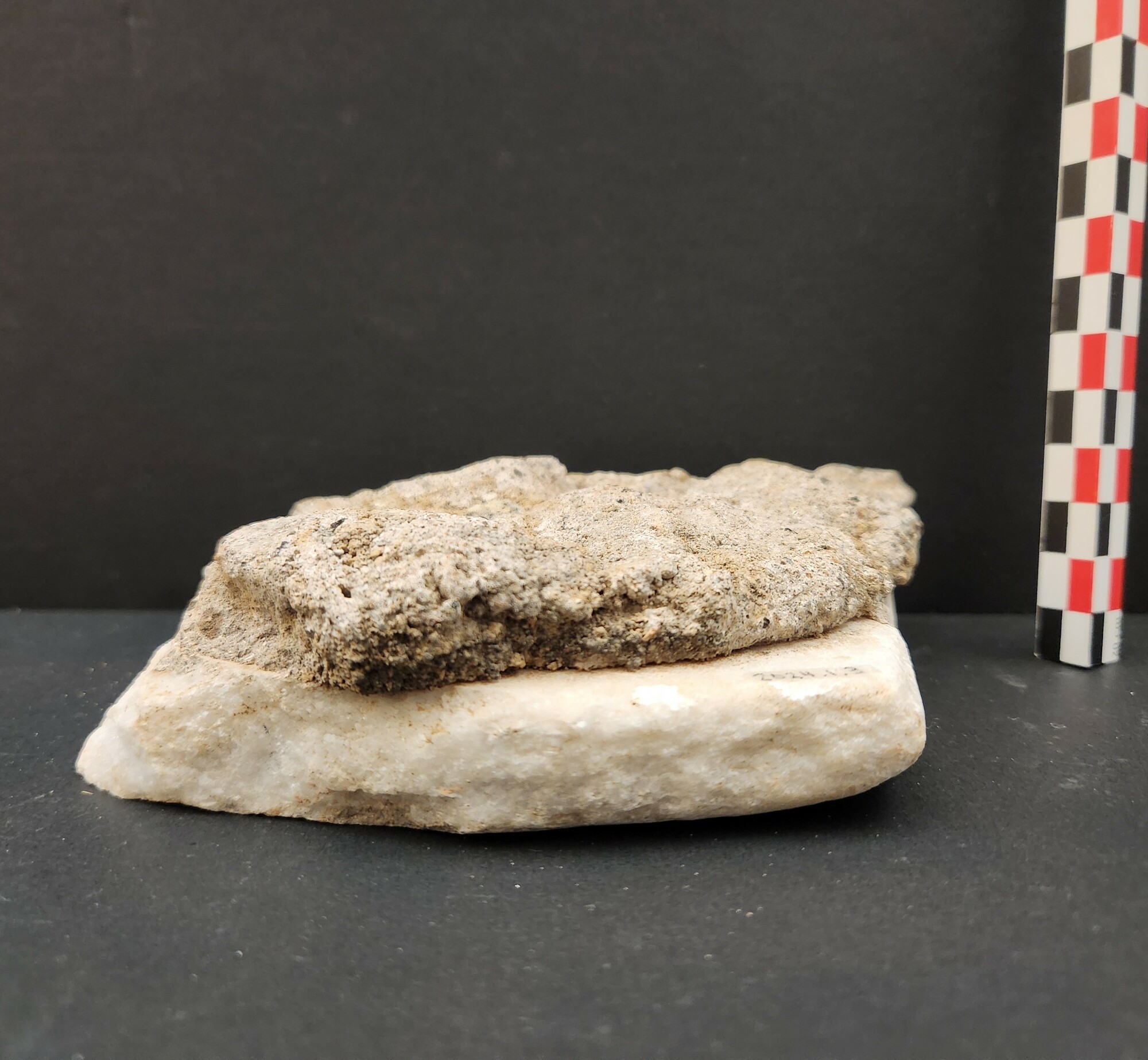
This is an example of Roman conrete, found stuck to the back of the marble graffito.
Roman concrete was one of the most significant inventions toward the development of Roman architecture, partly due to its strikingly sophisticated and modern design. In essence, Roman concrete is rubble bound together with mortar, exactly like how it is made today. When constructing buildings, such as in new colonies, the concrete would be mixed on-site and placed by hand layer by layer, rather than by the modern method of pre-mixing and pouring.[1]
The defining feature of Roman concrete was the use of volcanic ash as a binding agent in the mortar. Soluble silica compounds in the volcanic ash react with the lime in the rubble when mixed with water, resulting in a cement-like gel. This would create a very resilient and dense mortar perfect for buildings.[2]
Sources
[1] Morgetta, M. 2021. The Origins of Concrete Construction in Roman Architecture: Technology and Society in Republican Italy. Cambridge: Cambridge University Press. 28.
[2] Morgetta 2021, 8-10.