
Aphrodite Figurine
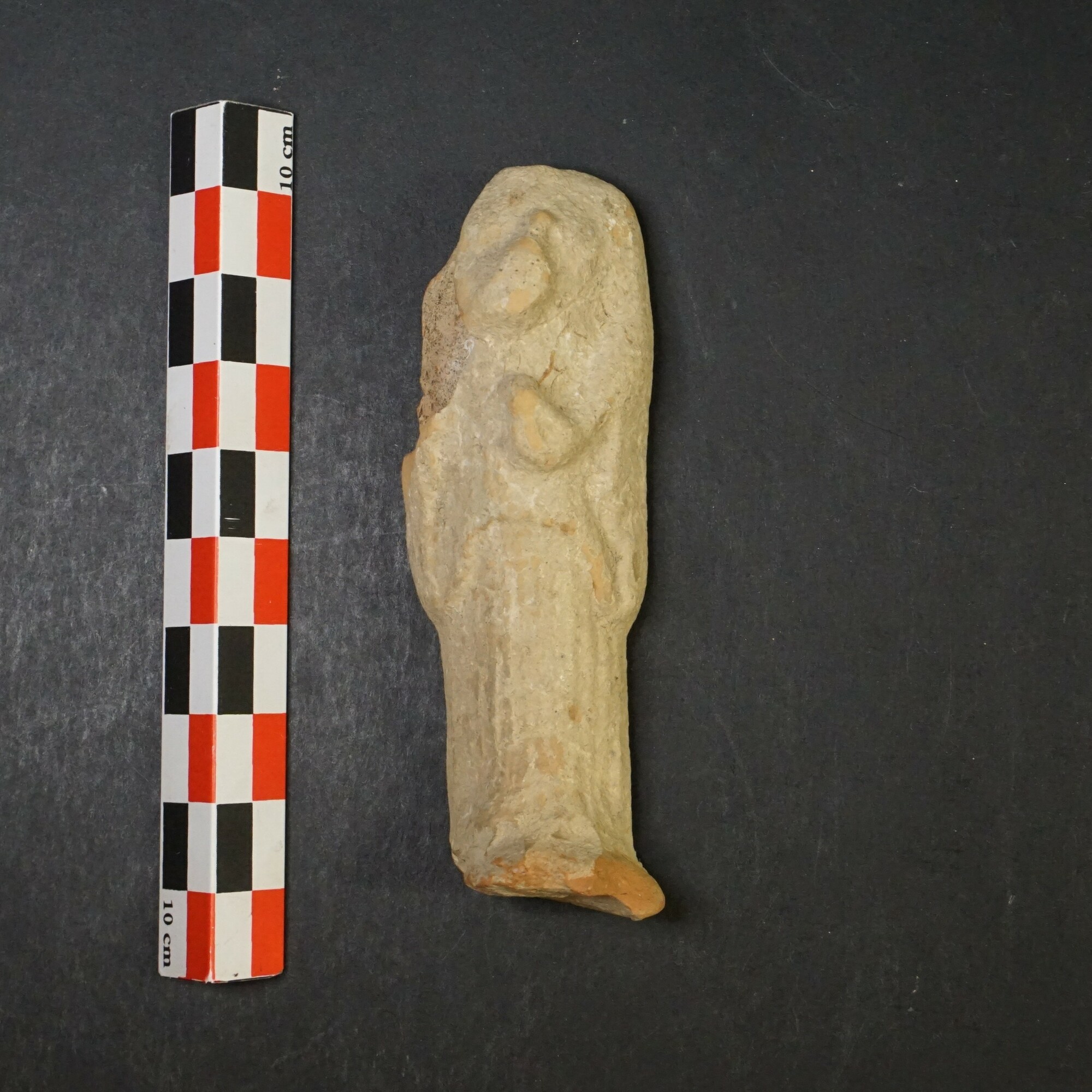
Ritual Figurines and Idols
A common expression of reverence to a god or a goddess in the ancient Mediterranean was through the use of statues or idols. In their rituals, the Greeks and Romans treated statues and figures of their gods as vessels for the gods themselves. They treated these statues as they would a god: they would dress, wash, parade, and protect statues of their gods at altars placed in temples and sanctuaries.[1] This artefact is likely a figure of Aphrodite, the Greek goddess of love and beauty.
Aphrodite
Aphrodite was one of the most widely worshipped gods in ancient Greece, and she was highly venerated in the Roman world under the name Venus. She represented many things: romantic attraction, the blending of bodies in sexual and martial contexts, the adornment of the body with jewellery, and she was known to be a protector of sailors due to her birth from sea-foam.[2]
The apparent multifacetedness of Aphrodite is perhaps explained by her possible origins outside of Greece dating back many centuries. The Greeks of the early Archaic period saw extensive contact with the civilizations of the ancient Near East, Levant, and Cyprus through seafaring trade.[3] Through this contact by land and sea, native goddesses of love and warfare in these regions may have inspired the more familiar Greek iteration. Ishtar/Inanna, the millenia-old Mesopotamian goddess of love and war, an obscure native Cypriot mother goddess named Kypris, and Astarte, the Pheonician goddess of similar disposition, are all prime suspects for Aphrodite’s formation due to many similar traits, pedigrees, and mythological tales that surround these deities.[4]
For further reading on the origins of Aphrodite in the ancient Near East before the Greeks, consult the bibliography below.
Sources
[1] Bremmer, J. 2021. Greek Religion: Second Edition. Cambridge: Cambridge University Press. 31-34, 46.
[2] Cyrino, M. 2010. Aphrodite. London: Routledge. 1-5.
[3] Burkert, W. 1992. The Orientalizing Revolution. Cambridge: Cambridge University Press. 6-14
Penglase, C. 1997. Greek Myths and Mesopotamia: Parallels and Influence in the Homeric Hymns and Hesiod. Oxford: Oxford University Press. 5-6.
[4] Budin, S. 2014. "Before Kypris was Aphrodite." in Transformation of a Goddess: Ishtar – Astarte – Aphrodite, edited by D. T. Sugimoto. Fribourg: Academic Press Fribourg: 195-215.