
Artemis of Ephesus Figurine
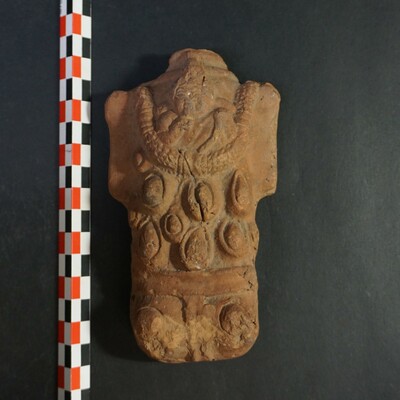
Ritual Figurines and Idols
A common expression of reverence to a god or a goddess in the ancient Mediterranean was through the use of statues or idols. In their rituals, the Greeks and Romans treated statues and figures of their gods as vessels for the gods themselves. They treated these statues as they would a god: they would dress, wash, parade, and protect statues of their gods at altars placed in temples and sanctuaries.[1] This is likely a shard of a larger figure of Artemis from the city of Ephesus in Greek Ionia, what is today western Turkiye.
Artemis Ephesia
Artemis of Ephesus (or Artemis Ephesia) is one of the most interesting examples of devotion to a single deity in antiquity. The city of Ephesus was the home of other gods, most notably a cult to Dionysus, but the city was best known for its worship of Artemis at her colossal temple.[2] This temple, the Artemision, has been named one of the seven wonders of the ancient world by several Greek writers in the Hellenistic period. Antipater of Sidon set it apart from the others in his writings, saying that “when I saw the house of Artemis that mounted to the clouds, those other marvels lost their brilliancy, and I said, ‘Lo, apart from Olympus, the Sun never looked on aught so grand.’”[3]
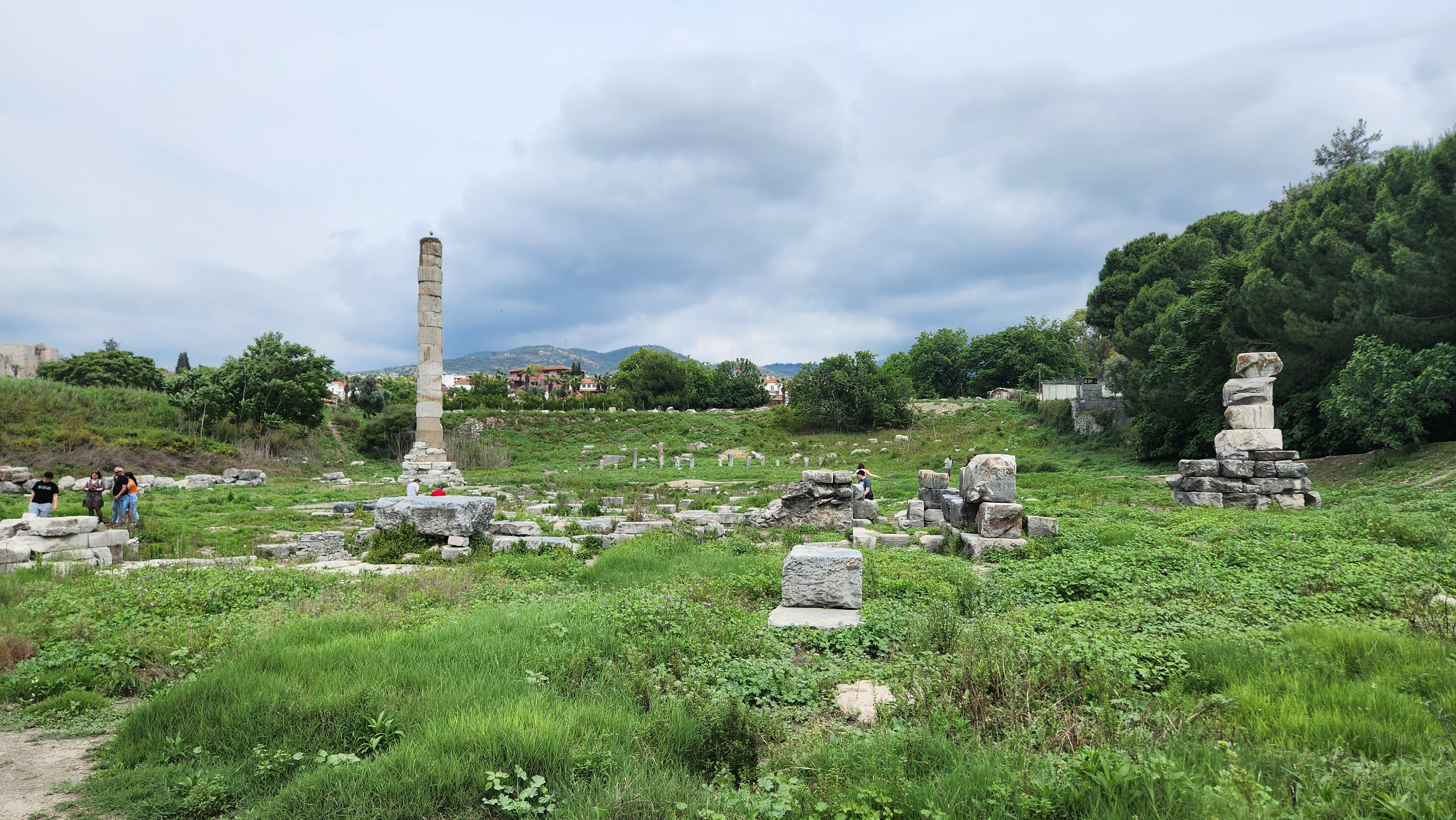
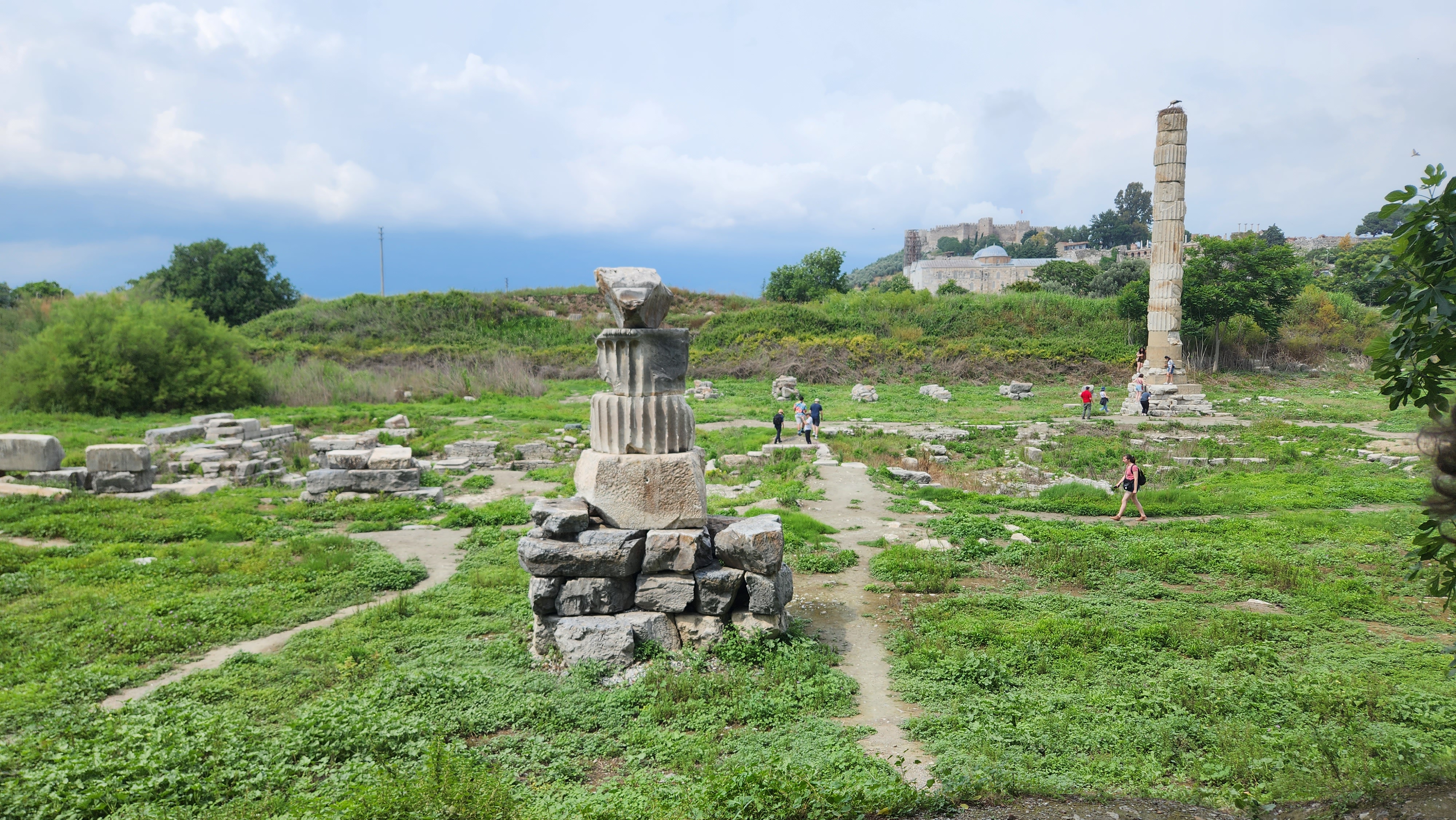
The modern remains of the temple to Artemis of Ephesus
Photo: Rhys Tushingham, Ephesus, Turkiye (2023-06-03)
The design of this figurine is the primary reason for its identification with Artemis Ephesia, as it resembles known cult statues of the city’s goddess. The original cult statue was made of wood, in line with other early examples of Greek altar statues, but later statues from the Roman era were made of marble.[4] The most striking feature of statues of Artemis Ephesia are the many spherical bulbs on her body. Scholars have long theorized about them, identifying them as breasts, eggs, grapes, nuts, and beehives, to name but a few.[5] One promising theory by Seiterle suggests that they represent bull scrotums, since there is evidence that in a typical bull sacrifice to the goddess they would apparently hang them on the statue.[6] Just like statues of other Greek goddesses, this would have been clothed, jewelled, and paraded in religious processions.[7]
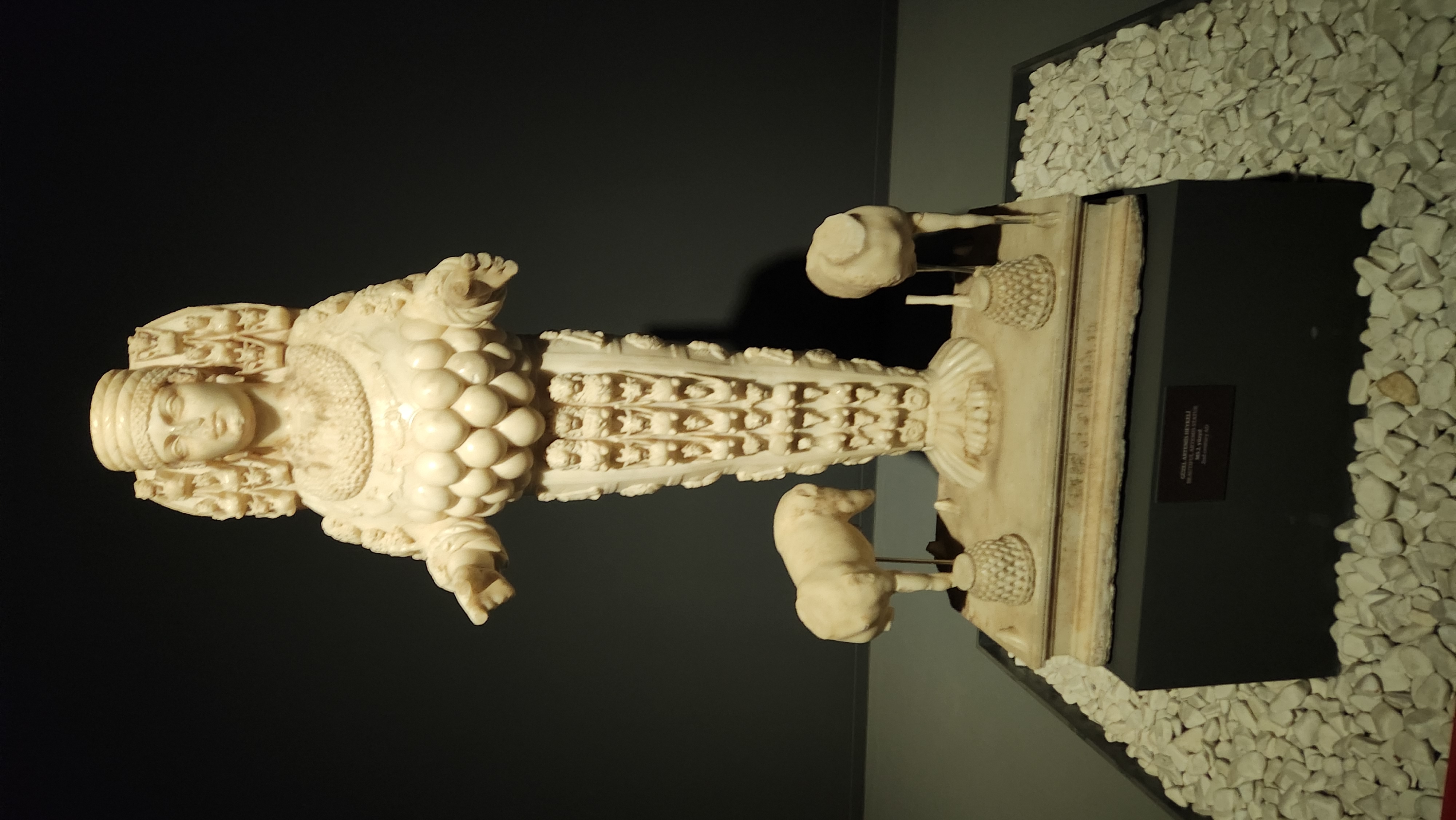
The cult statue of Artemis of Ephesus
Photo: Rhys Tushingham, Ephesus Museum, Turkiye (2023-06-03)
Sources
[1] Bremmer, J. 2021. Greek Religion: Second Edition. Cambridge: Cambridge University Press. 31-34, 46.
[2] Immendörfer, M. 2017. Ephesians and Artemis: The Cult of the Great Goddess of Ephesus as the Epistle's Context. Tübingen: Mohr Siebeck: 109-110.
[3] The Greek Anthology III: 9.58. Translated by W. R. Paton. 1917.
[4] Immendörfer 2017: 147.
[5] Immendörfer 2017: 148.
[6] Immendörfer 2017: 149.
[7] Immendörfer 2017: 151.