Browse Items (218 total)
Sort by:
Pyramidal loom weight
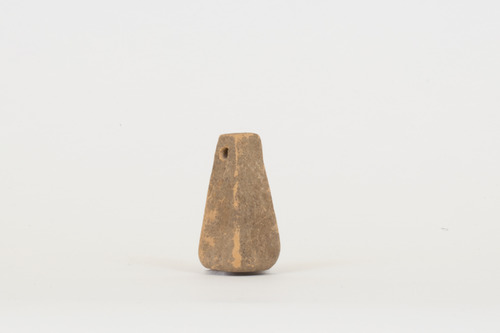
Loom weights are used to keep the warp (vertical) threads of the warp-weighted loom pulled tight and in place during weaving. Pyramidal loom weights are by far the most common type found in Italy in the first millennium BCE. This loom weight should…
Pyramidal loom weight
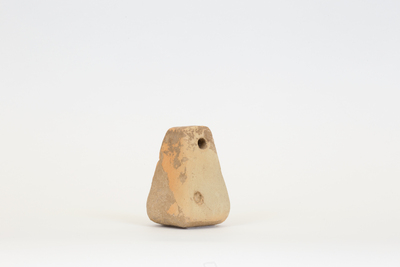
Loom weights are used to keep the warp (vertical) threads of the warp-weighted loom pulled tight and in place during weaving. Pyramidal loom weights are by far the most common type found in Italy in the first millennium BCE. This loom weight should…
Trapezoidal loom weight
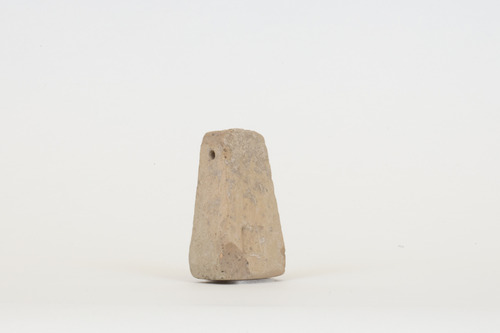
Loom weights are used to keep the warp (vertical) threads of the warp-weighted loom pulled tight and in place during weaving. Pyramidal loom weights are by far the most common type found in Italy in the first millennium BCE. This loom weight should…
Pyramidal loom weight
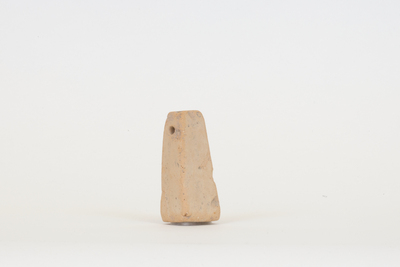
Loom weights are used to keep the warp (vertical) threads of the warp-weighted loom pulled tight and in place during weaving. Pyramidal loom weights are by far the most common type found in Italy in the first millennium BCE. This loom weight should…
Pyramidal loom weight
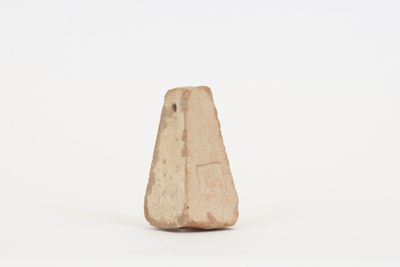
Loom weights are used to keep the warp (vertical) threads of the warp-weighted loom pulled tight and in place during weaving. Pyramidal loom weights are by far the most common type found in Italy in the first millennium BCE. This loom weight should…
Pyramidal loom weight
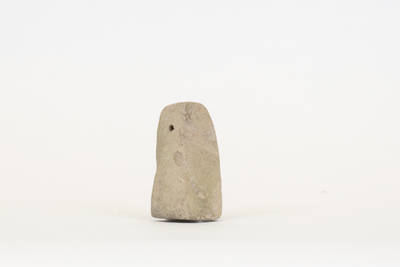
Loom weights are used to keep the warp (vertical) threads of the warp-weighted loom pulled tight and in place during weaving. Pyramidal loom weights are by far the most common type found in Italy in the first millennium BCE. This loom weight should…
Pyramidal loom weight
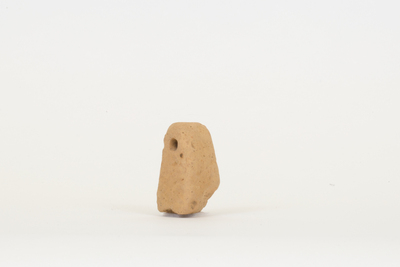
Loom weights are used to keep the warp (vertical) threads of the warp-weighted loom pulled tight and in place during weaving. Pyramidal loom weights are by far the most common type found in Italy in the first millennium BCE. This loom weight should…
Black Glaze Skyphos with disparate handles
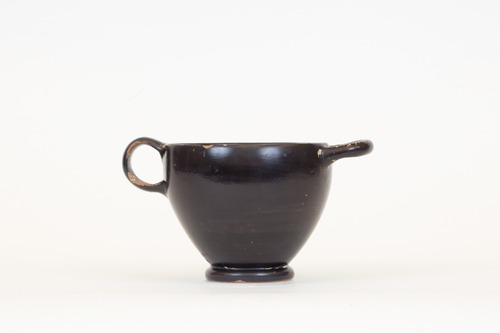
Attic Type B skyphos with thin walls and ring foot; two handles one horizontal, one vertical both attached below rim. Light, thin black slip typical of this class. Resting surface of foot and base are reserved except for a ring painted around the…
Lamp with Dog
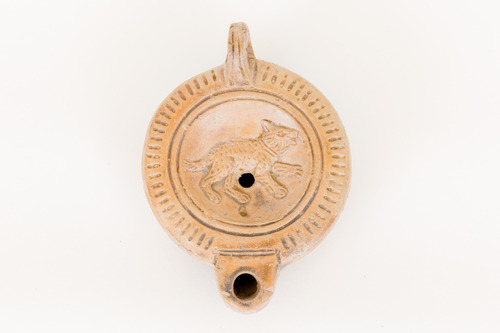
Light pinkish brown clay with light slip; pierced lug handle; flat nozzle with rounded termination, defined by two ridges at base;; recessed discus surrounded by two concentric grooves, followed by a pattern of short bars set perpendicular to the…
Red Figure Footed Plate
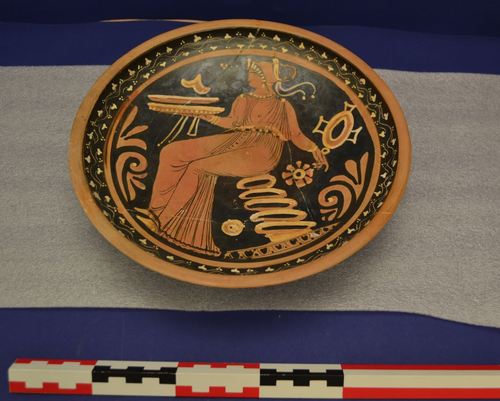
The surface has a central tondo, in which is displayed a maenad in profile seated on what appears to be a rocky outcropping (heavily stylized), with hair swept up, and partly covered and held in place by a jeweled sakkos. She wears a diaphanous…
Red Figure Footed Plate
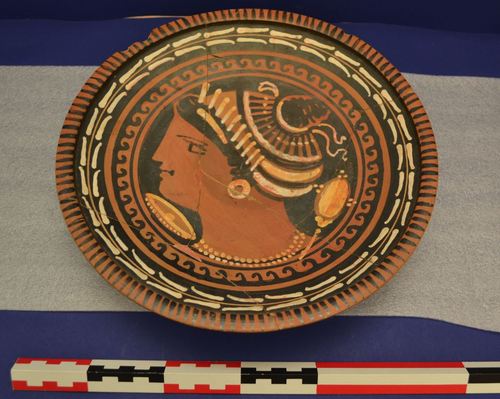
The surface has a central tondo, in which is displayed a female head in profile, with hair tied in a bun and held in place by a kekryphalos (hair net) highlighted with white and ochre paint. Below her chin is a small libation bowl, behind her head, a…
Apulian Red Figure Kantharos
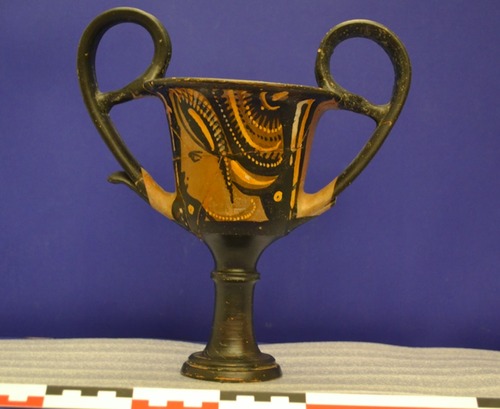
Apulian kantharos with volute handles and stemmed foot; on each side is displayed a female head in profile with necklace and hair, worn in a bun and covered by a kekryphalos (hairnet); decorated in the red figure style and technique: details are…
Red Figure Hydria
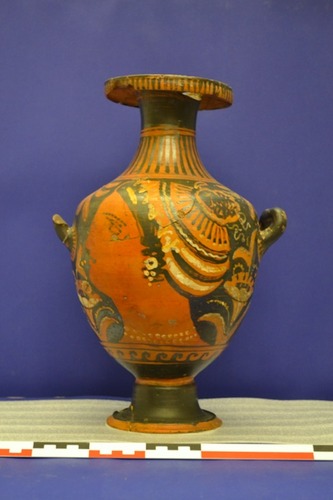
The front displays a female head in profile, with hair tied in a bun, and covered by a kekryphalos. The back displays a large palmette located beneath the vertical pouring handle attached at neck; florals extend from each side of the palmette,…
Terracotta Pig Rattle
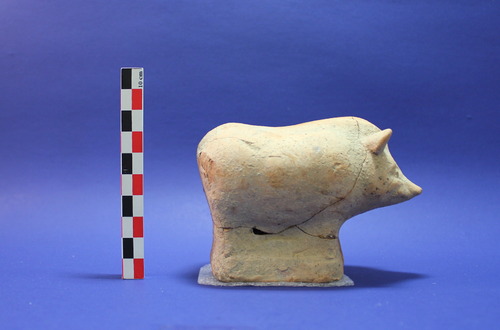
The lower portion of the pig is block-like and terminates in a base, defined on one side by a slight carination. The front shows more detail than the other three sides: the legs are cursorily differentiated and the face is naturalistic with…
Protome Jug
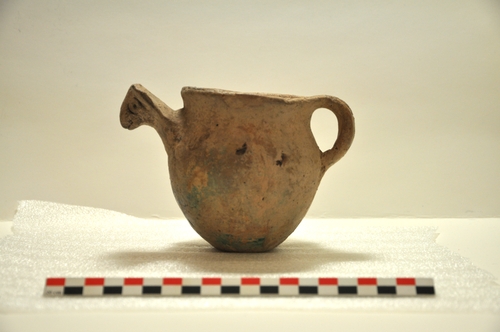
Shape: flat-based jug with single loop handle attached at rim and widest diameter of the body; the side opposite the handle is decorated with a protome of a ram, extending from just below the rim; the animal has a long neck and large eyes; the…
Lamp with Pegasus
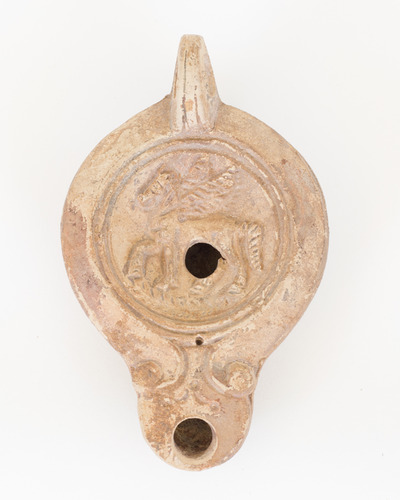
Colour: reddish brown with slip. Pegasus (winged horse) facing left. The composition is defined by two concentric ridges. The top of the nozzle is defined by two spiral elements on each side, with three dots in between. There is a filling hole…
Statuette of faun (reproduction)
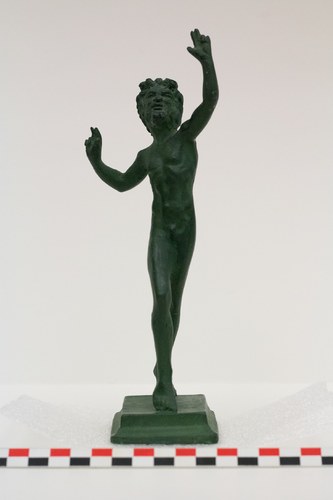
Loose interpretation, a miniature of the Roman statue, the Dancing Faun, in the garden of the House of the Faun in Pompeii.
Lamp with Artemis
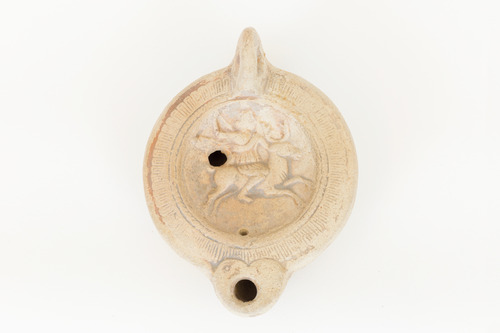
Terracotta oil lamp; reddish buff fabric with traces of red slip. Discus iconography: Artemis on stag facing right; she wears a short tunic (her right breast is bared) and holds a spear. Behind her is a filling-hole; a smaller filling (?) hole is…
Bronze stylus
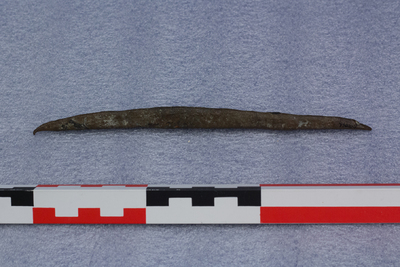
Loosely triangular in section; the sides taper into sharp points at both ends.
Coin: nummus (AE 2) of Maximinus II (also known as Maximinus Daza)
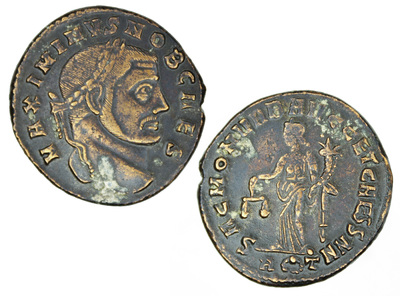
Obverse legend: MAXIMINVS NOB(ilissimus) CAES(ar), translation: Most Noble Caesar Maximinus; laureate head of Maximinus II facing right. Reverse legend: SAC(ra) MON(eta) VRB(is) AVGG(=Augustorum) ET CAESS(=Caesarum) NN(=Nostrorum), translation: The…
Coin: nummus (AE 3) of Constantine II
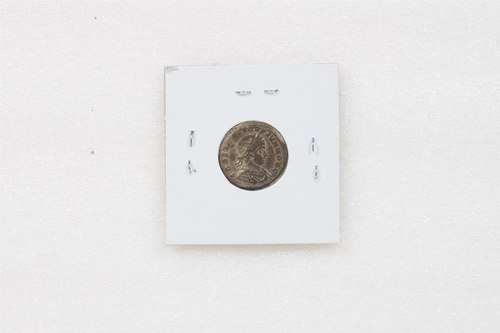
Obverse legend: CONSTANTINVS IVN(ior) NOB(ilissimus) C(aesar), translation: Constantinus the Youth, Most Noble Caesar; draped, cuirassed, and laureate bust of Constantine II facing right. Reverse legend: CAESARVM NOSTRORVM, translation: of our…
Coin
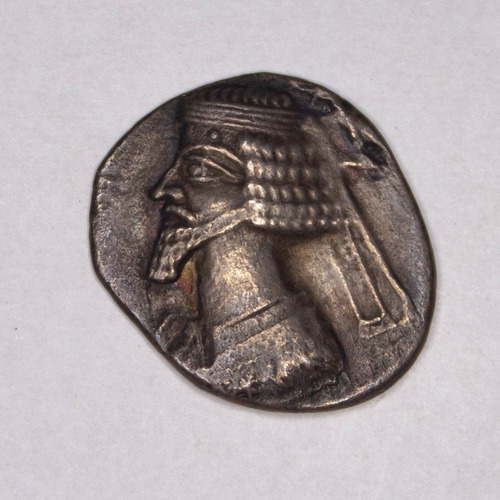
Oval in shape.
Obverse: Bust facing left, headdress, bearded.
Reverse: Figure seated right (?), surrounded by square border of characters.
Obverse: Bust facing left, headdress, bearded.
Reverse: Figure seated right (?), surrounded by square border of characters.
Coin
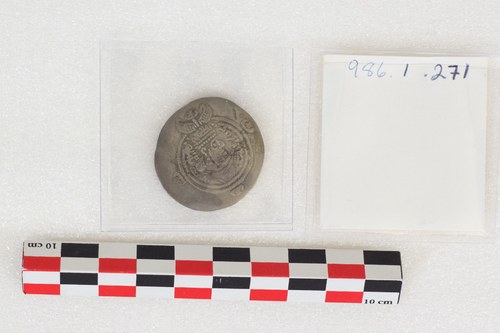
Oval in shape.
Obverse: Bust facing right, wearing headdress; two borders present at north, east, west, and south positions.
Reverse: Two figures standing facing forward with a column (?) in between them; three borders, same symbol as on obverse…
Obverse: Bust facing right, wearing headdress; two borders present at north, east, west, and south positions.
Reverse: Two figures standing facing forward with a column (?) in between them; three borders, same symbol as on obverse…
Follis of Justinian I
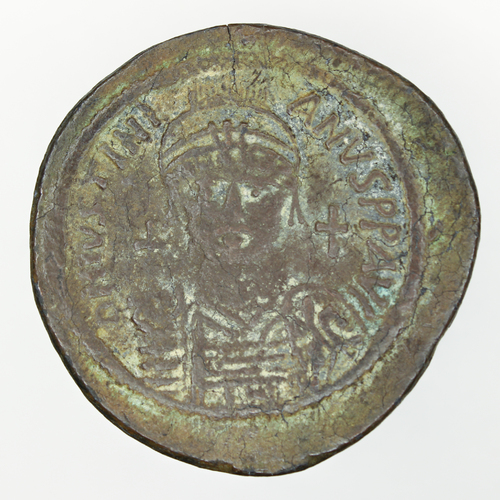
Obverse legend: D(ominus)N(oster) IVSTINI-ANVS P(er)P(etuus) AVG(ustus), translation: Our Lord Justinian, Perpetual Augustus; helmeted and cuirassed bust of Justinian I facing front, holding globus cruciger in right hand and shield in left, crosses…