
Browse Items (195 total)
- Collection: Museum of Classical Antiquities Artefacts
Sort by:
Apulian Red Figure Kantharos
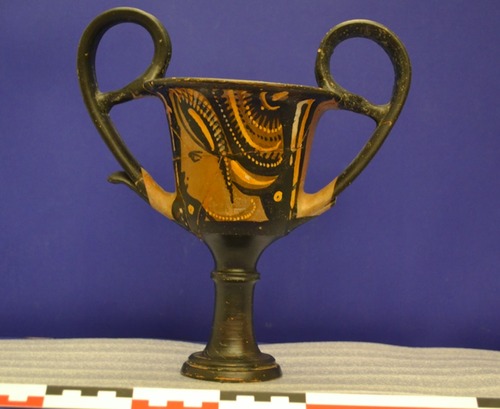
Apulian kantharos with volute handles and stemmed foot; on each side is displayed a female head in profile with necklace and hair, worn in a bun and covered by a kekryphalos (hairnet); decorated in the red figure style and technique: details are…
Red Figure Footed Plate
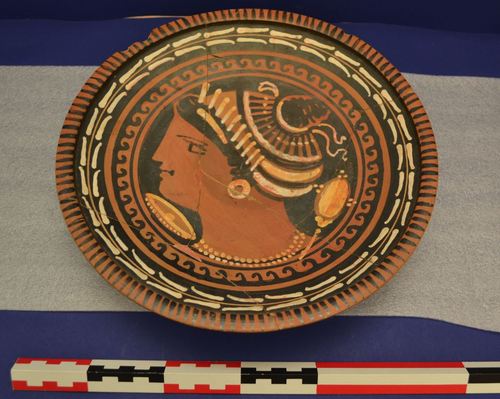
The surface has a central tondo, in which is displayed a female head in profile, with hair tied in a bun and held in place by a kekryphalos (hair net) highlighted with white and ochre paint. Below her chin is a small libation bowl, behind her head, a…
Red Figure Footed Plate
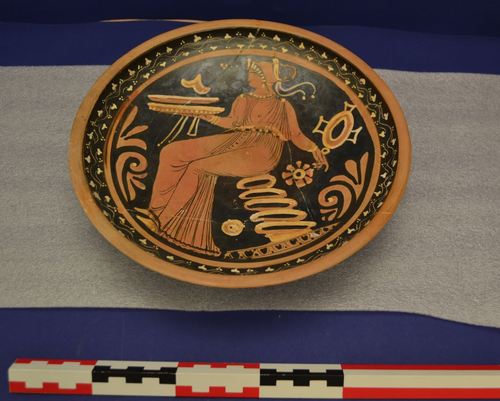
The surface has a central tondo, in which is displayed a maenad in profile seated on what appears to be a rocky outcropping (heavily stylized), with hair swept up, and partly covered and held in place by a jeweled sakkos. She wears a diaphanous…
Lamp with Dog
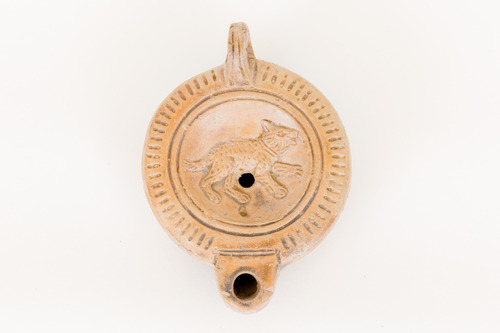
Light pinkish brown clay with light slip; pierced lug handle; flat nozzle with rounded termination, defined by two ridges at base;; recessed discus surrounded by two concentric grooves, followed by a pattern of short bars set perpendicular to the…
Black Glaze Skyphos with disparate handles
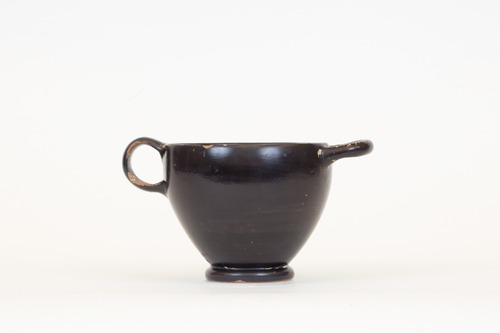
Attic Type B skyphos with thin walls and ring foot; two handles one horizontal, one vertical both attached below rim. Light, thin black slip typical of this class. Resting surface of foot and base are reserved except for a ring painted around the…
Pyramidal loom weight
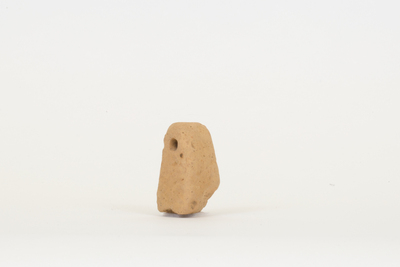
Loom weights are used to keep the warp (vertical) threads of the warp-weighted loom pulled tight and in place during weaving. Pyramidal loom weights are by far the most common type found in Italy in the first millennium BCE. This loom weight should…
Pyramidal loom weight
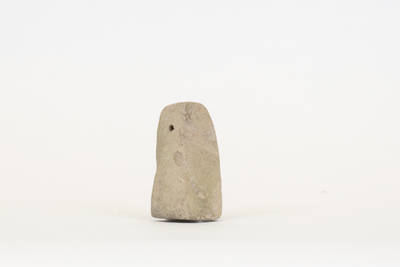
Loom weights are used to keep the warp (vertical) threads of the warp-weighted loom pulled tight and in place during weaving. Pyramidal loom weights are by far the most common type found in Italy in the first millennium BCE. This loom weight should…
Pyramidal loom weight
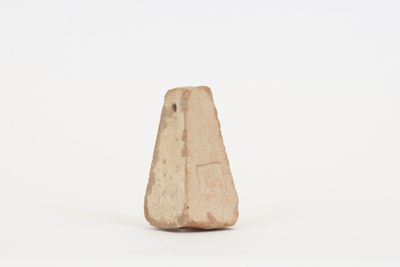
Loom weights are used to keep the warp (vertical) threads of the warp-weighted loom pulled tight and in place during weaving. Pyramidal loom weights are by far the most common type found in Italy in the first millennium BCE. This loom weight should…
Pyramidal loom weight
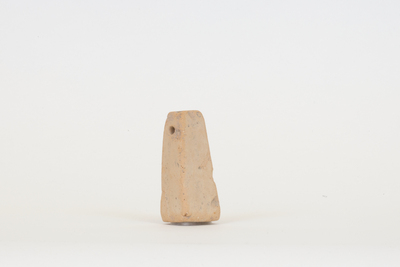
Loom weights are used to keep the warp (vertical) threads of the warp-weighted loom pulled tight and in place during weaving. Pyramidal loom weights are by far the most common type found in Italy in the first millennium BCE. This loom weight should…
Trapezoidal loom weight
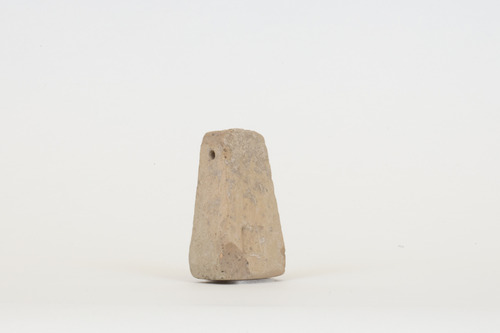
Loom weights are used to keep the warp (vertical) threads of the warp-weighted loom pulled tight and in place during weaving. Pyramidal loom weights are by far the most common type found in Italy in the first millennium BCE. This loom weight should…
Pyramidal loom weight
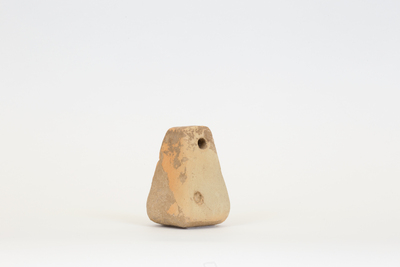
Loom weights are used to keep the warp (vertical) threads of the warp-weighted loom pulled tight and in place during weaving. Pyramidal loom weights are by far the most common type found in Italy in the first millennium BCE. This loom weight should…
Pyramidal loom weight
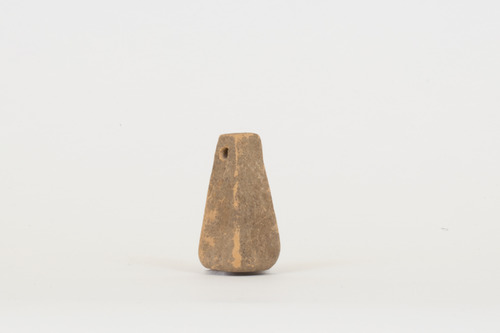
Loom weights are used to keep the warp (vertical) threads of the warp-weighted loom pulled tight and in place during weaving. Pyramidal loom weights are by far the most common type found in Italy in the first millennium BCE. This loom weight should…
Pyramidal loom weight
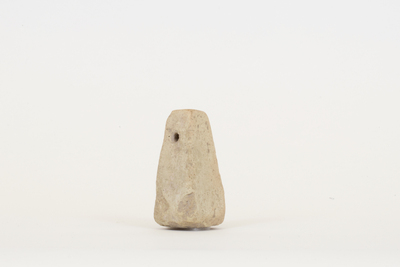
Loom weights are used to keep the warp (vertical) threads of the warp-weighted loom pulled tight and in place during weaving. Pyramidal loom weights are by far the most common type found in Italy in the first millennium BCE. This loom weight should…
Pyramidal loom weight
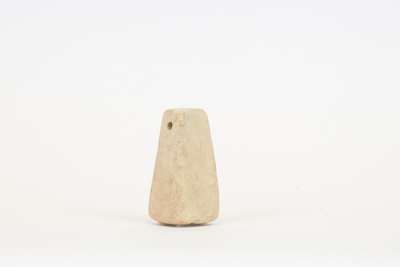
Loom weights are used to keep the warp (vertical) threads of the warp-weighted loom pulled tight and in place during weaving. Pyramidal loom weights are by far the most common type found in Italy in the first millennium BCE. This loom weight should…
Pyramidal loom weight
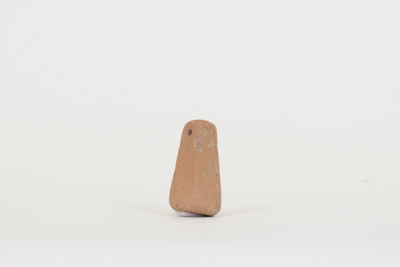
Loom weights are used to keep the warp (vertical) threads of the warp-weighted loom pulled tight and in place during weaving. Pyramidal loom weights are by far the most common type found in Italy in the first millennium BCE. This loom weight should…
Pyramidal loom weight
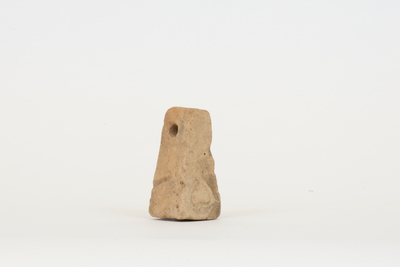
Loom weights are used to keep the warp (vertical) threads of the warp-weighted loom pulled tight and in place during weaving. Pyramidal loom weights are by far the most common type found in Italy in the first millennium BCE. This loom weight should…
Pyramidal loom weight
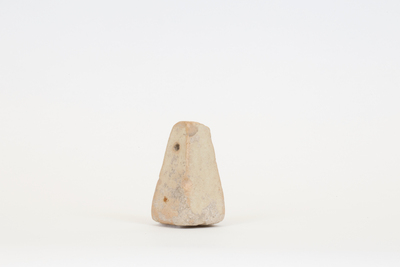
Loom weights are used to keep the warp (vertical) threads of the warp-weighted loom pulled tight and in place during weaving. Pyramidal loom weights are by far the most common type found in Italy in the first millennium BCE. This loom weight should…
Pyramidal loom weight
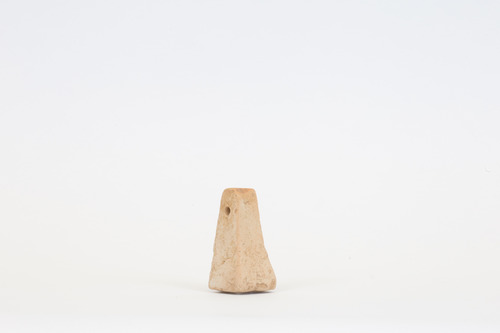
Loom weights are used to keep the warp (vertical) threads of the warp-weighted loom pulled tight and in place during weaving. Pyramidal loom weights are by far the most common type found in Italy in the first millennium BCE. This loom weight should…
Pyramidal loom weight
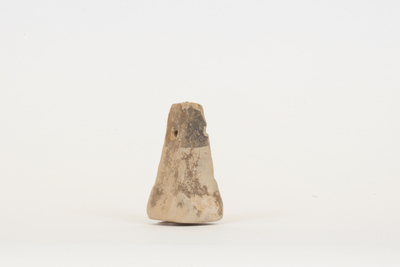
Loom weights are used to keep the warp (vertical) threads of the warp-weighted loom pulled tight and in place during weaving. This loom weight should be dated to the Archaic or Classical period on the basis of comparison to other loom weights from…
Pyramidal loom weight
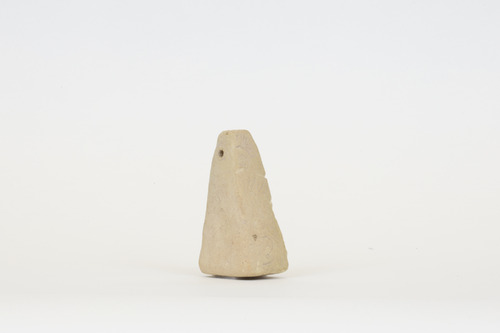
Loom weights are used to keep the warp (vertical) threads of the warp-weighted loom pulled tight and in place during weaving. This loom weight should be dated to the Archaic or Classical period on the basis of comparison to other loom weights from…
Coin: antoninianus of Elagabalus (fourrée)
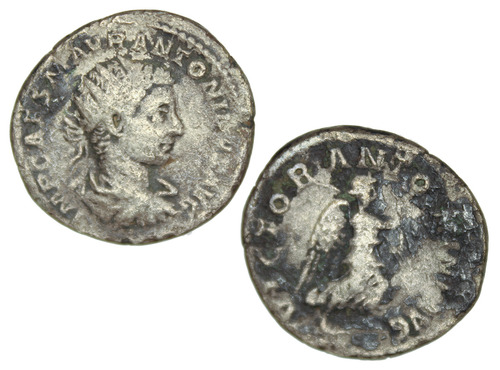
Obverse legend: IMP(erator) CAES(ar) M(arcus) AVR(elius) ANTONINVS AVG(ustus), translation: Imperator Caesar Marcus Aurelius Antoninus Augustus; Draped bust of Elagabalus wearing a radiate crown, facing right. Reverse legend: VICTOR(ia) ANTONINI…
Coin: sestertius of Antoninus Pius
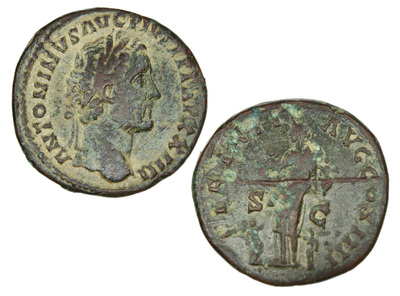
Obverse legend: ANTONINVS AVG(ustus) PIVS P(ater) P(atriae) TR(ibunicia) P(otestate) XXIIII, translation: Antoninus Augustus Pius, father of the country, with tribunician power for the twenty-fourth time; laureate head of Antoninus Pius facing right.…
Coin: as of Hadrian
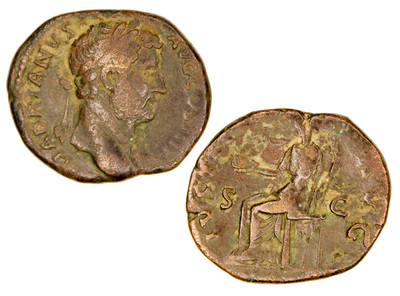
Obverse legend: HADRIANVS AVG(ustus) COS(=consul) III [P](ater) [P](atriae), translation: Augustus Hadrian, consul three times, father of the country; laureate bust of Hadrian facing right. Reverse legend: IVST[ITIA] AVG(usti), translation: Justice…
Coin: denarius of Domitian
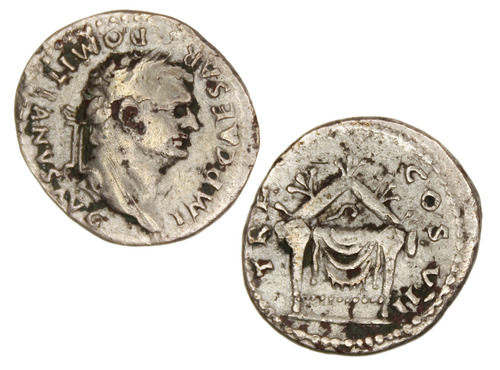
Obverse legend (retrograde): DOMITIANVS AVG(ustus) IMP(arator) CAESAR, translation: Domitian Augustus Imperator Caesar; laureate head of Domitian facing right. Reverse legend: TR(ibunicia) P(otestate) CO(n)S(ul) VII, translation: Consul with…
Coin: nummus (AE 2) of Valentinian II
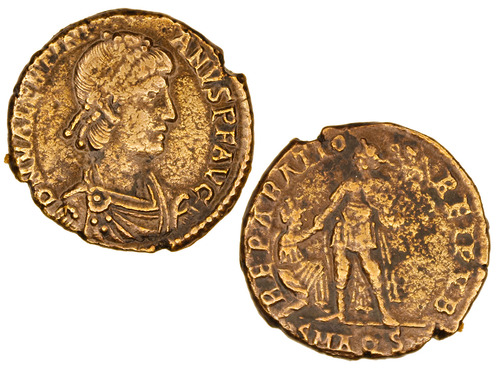
Obverse legend: D(ominus) N(oster) VALENTINI-ANVS P(ius) F(elix) AVG(=Augustus), translation: Our Lord Valentinian II, Dutiful Fortunate/Successful Augustus; draped, pearl diademed bust of Valentinian II facing right.
Reverse legend: REPARATIO…
Reverse legend: REPARATIO…