
Cylinder Seals
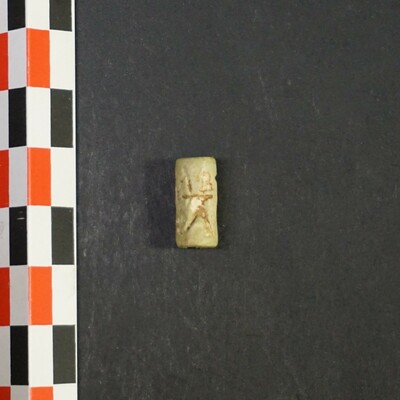
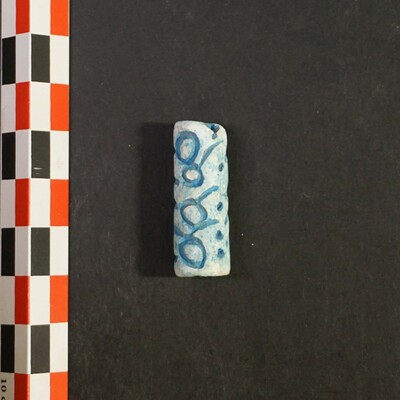
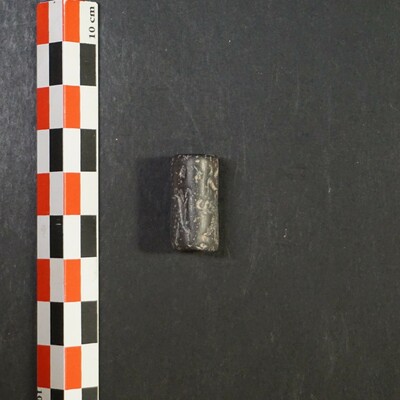
Cylinder Seals
Cylinder seals were a staple of daily life in the Near East for thousands of years. In Anatolia and Mesopotamia, the first records of their use date to the Neolithic period as they replaced stamp seals as the primary method of signing documents, formalizing transactions, and determining ownership. They were made from a variety of materials like bone, stone, ivory, and in some cases even gemstones. Because of their ubiquity, the material and design of your cylinder seal was representative of your culture, social class, profession, and prestige. It was also one of the few everyday items that were common to both the average person and the nobility.
In the Neolithic and Uruk periods, animal, natural and geometric patterns were common. Later seals in the Akkadian period began representing human figures, likely to be kings or mythological figures.
A hole down the middle of the cylinder enabled the user to wear it on their wrist and neck or simply pin it to their garments. On the surface, engravings were carved in reverse (negative) in the round, which would leave a continuous impression when rolled onto a fresh clay surface. This way, the design left on the dried clay would act as a person’s seal or signature.
Cylinder seals are very useful to archaeologists. What people chose to decorate their cylinder seals with indicate what that culture deemed important, and they inform anthropologists about what people of the time possessed, such as specific species of animal or plant they had domesticated.
Sources
Arbuckle, B. 2012. "Animals in the Ancient World", In A Companion to the Archaeology of the Ancient Near East, edited by D. T. Potts. Oxford: Wiley Blackwell. 216.
Tengberg, M. 2012. "Fruit-Growing", in A Companion to the Archaeology of the Ancient Near East, edited by D. T. Potts. Oxford: Wiley Blackwell. 193.
Yücel, Ç., and Parıltı, U. 2023. "Ancient Cylinder Seals from Upper Mesopotamia." Anatolian Research 29: 31-50.