
Latin
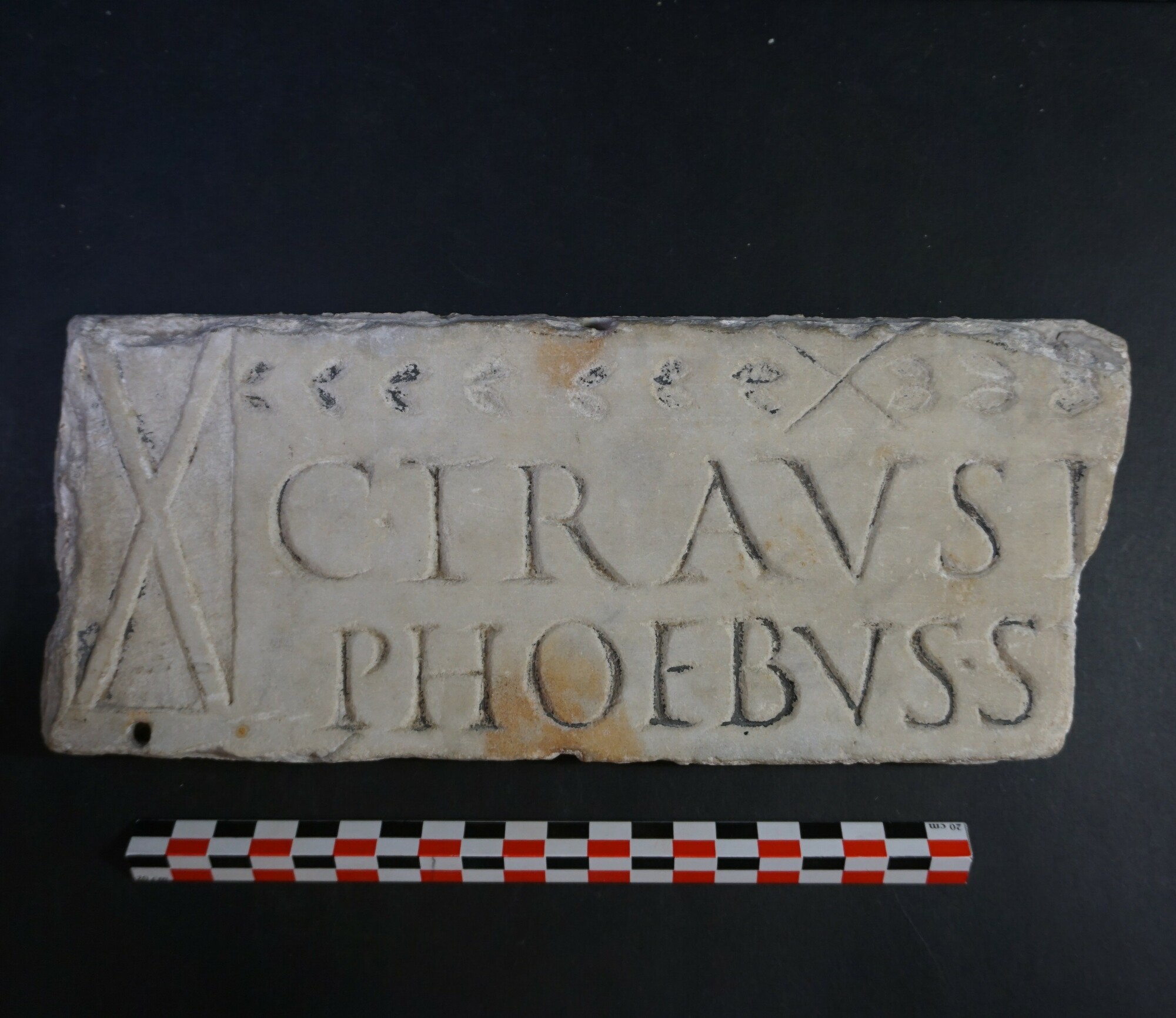
Latin is an Indo-European language that originated in central Italy prior to the foundation of Rome, and was greatly influenced by the surrounding Etruscan and Greek speakers. It served as the dominant language of the Romans from its foundation to the end of the Empire. For this reason, its importance to the development of Mediterranean writing and languages cannot be overstated.
The expansion of the Roman Empire throughout the Mediterranean led to the usage of Latin far beyond Italy and into conquered territory. At the height of the Empire in the first and second centuries CE, it was spoken on multiple levels of society from Portugal to England to Palestine. Having this common language helped connect various cultures and regions for the first time. Even after the decline of the Western Roman civilization, Latin continued to have a significant influence on the development of other European languages.[1]
Into the Middle Ages, various dialects of Latin across Europe continued to develop and mix with local languages, eventually giving rise to the Romance language group: Spanish, Italian, French, Portuguese, and Romanian. In the Renaissance, writing in Latin became synonymous with high culture and sophistication. It was the go-to language for writing scientific and philosophical works, such as Isaac Newton’s 1687 work Philosophiae Naturalis Principia Mathematica.[2]
Latin has not lost this connection to academia and the elite. It is still taught in some European schools, and was a mandatory course in Ontario schools until 1968.[3] Latin in its medieval form was also preserved through the Roman Catholic Church, which continues to use it as an official language today. Latin also perseveres in the modern day through common idioms like carpe diem - “seize the day”, bona fide - “in good faith”, and et cetera - “and others”.
For a detailed analysis of this artefact's translation, see this article on translating a Latin inscription.
Sources
[1] Ledgeway, A. 2012. From Latin to Romance: Morphosyntactic Typology and Change. Oxford: Oxford University Press. 1.
[2] Wright, R. 1983. "Unity and Diversity Among the Romance Languages." Transactions of the Philological Society 81: 7-15.
[3] Allen, K. 2010. "Latin lovers fight to keep the language in Ontario’s schools." Toronto Star.