
Papyri - Hieratic, Demotic, Greek and Coptic
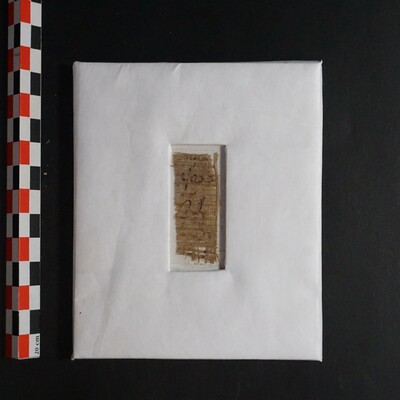
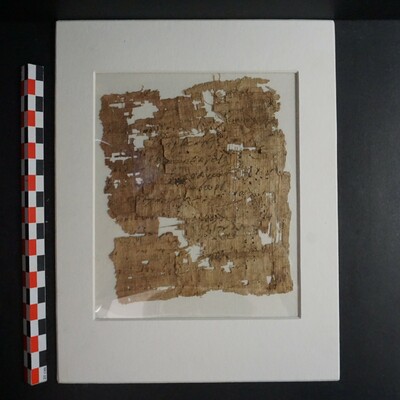
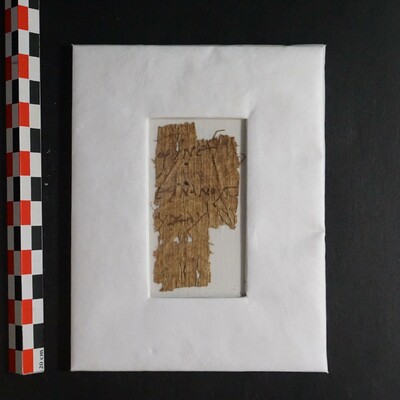
Papyrus was a writing medium made from the papyrus plant that grew along the banks of the Nile River in Egypt. Its usage spans thousands of years, from at least 3000 BCE to 1000 CE. Although it was exported and used throughout the ancient world, most surviving fragments are found in Egypt where the hot and dry climate allowed for its preservation.
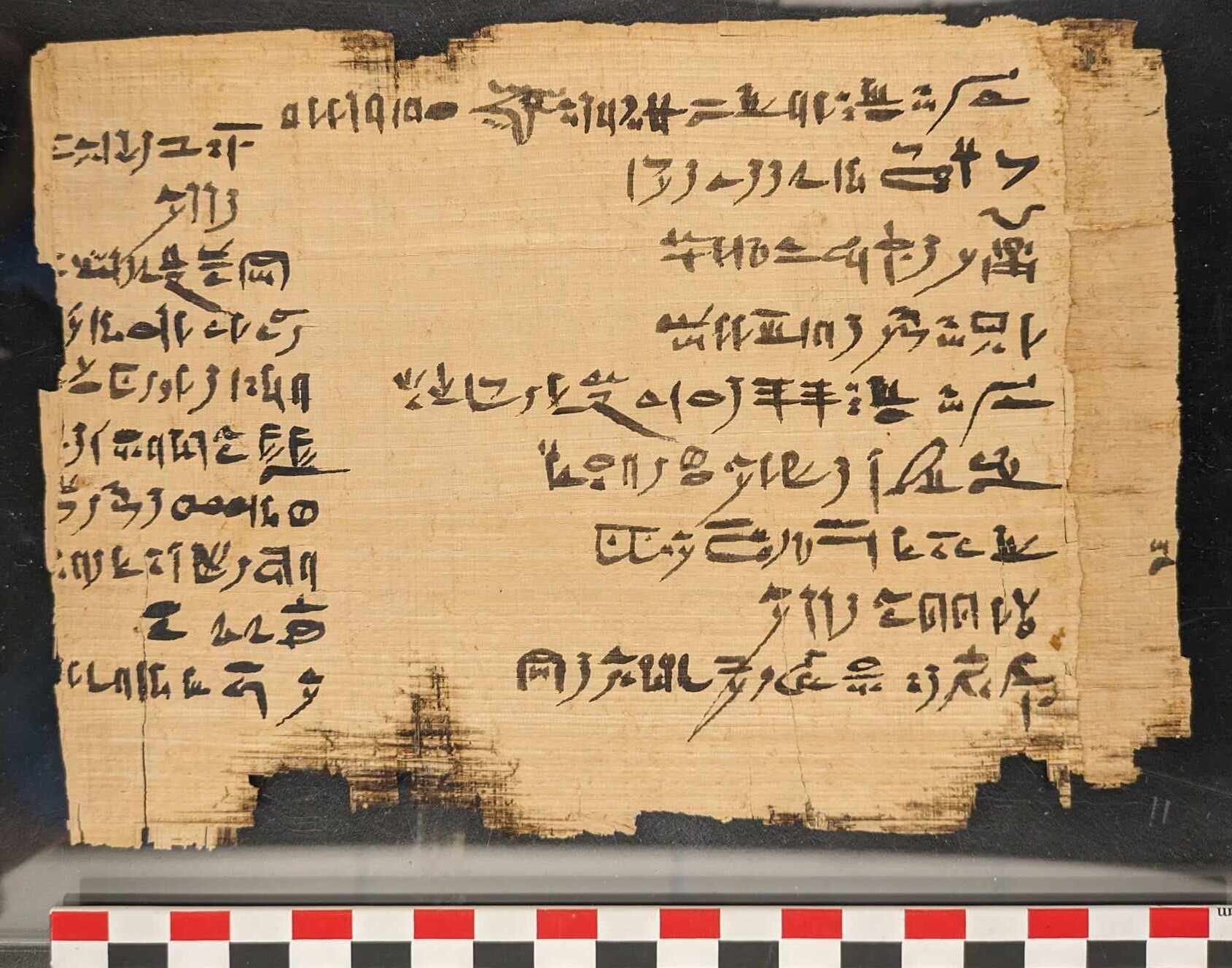
Hieratic
Hieratic was a cursive script used to write the Egyptian language from the late fourth millennium BCE to the middle first millennium CE. Because it was easier to learn and use than hieroglyphs, hieratic became widespread and was used for day-to-day record keeping, correspondence, literature, medical, and magical documents. With the rise of the demotic script in the 7th century BCE, hieratic became associated with religious uses. This gave it its name, which means "priest" in Greek. The papyrus presented to the left is a great example of a preserved hieratic papyrus.
Due to its continuous habitation and advantageous geography, Egypt has become a culturally dynamic region of the Mediterranean that went through many conquests by foreign armies. These frequent changes resulted in a uniquely diverse society culturally and linguistically.
Demotic
After the collapse of the Egyptian New Kingdom in 1069 BCE, but prior to Alexander the Great’s conquest of Egypt in 332 BCE, demotic was Egypt’s main writing system, adn Demotic Egyptian was the language.[1] Developed from hieratic, demotic means “of the people” in Greek. Demotic Egyptian was one of three languages featured on the famous Rosetta Stone. Since it had the same inscription written in Greek and in hieroglpyhs, it served as the key to deciphering the Egyptian hierglyphic system of writing.
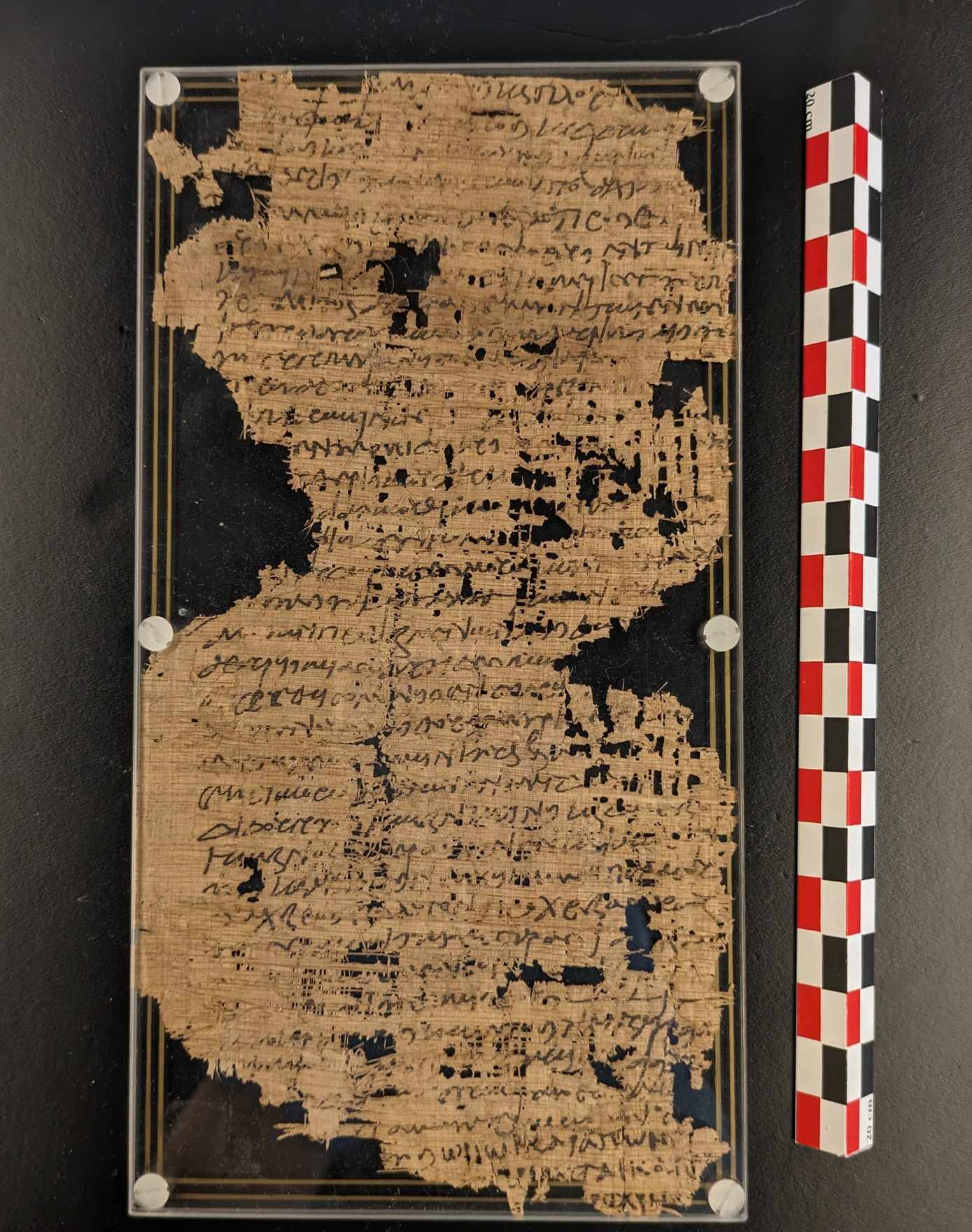
Coptic
In the Ptolemaic period, Greek became the language and writing system of the elite, and over the following centuries Demotic Egyptian and Greek mingled to form Coptic (derived through Arabic from Aegyptos, the Greek name for Egypt).
Coptic would become the language that would persist in Egypt and the Middle East for another thousand years until Arabic eventually became the dominant language starting in the 7th century CE. The word “Copt” would eventually come to represent the Christian population in Egypt and surrounding regions from the Roman period to the modern day.
It is theorized that the first uses of the Coptic language was for the purposes of spreading Christianity in Egypt. In the first century CE, the Christians in Alexandria needed a way to teach scripture to local Egyptians, and this was achieved by developing a script that communicated the Egyptian language but using Greek characters. For this reason, many of the earliest Coptic papyri contain copies of biblical texts. Since the early Egyptian Christians were interested in converting local Egyptians, many different dialects of Coptic formed, differing slightly in usage of symbols and sounds due to local vernacular. Dialects include Sahidic, the most common and widespread; Fayumic, centred around Fayum; and Bohairic, the longest lasting dialect still used today as an ecclesiastical language of the Coptic Church in Cairo.[2]
The Coptic language still lives on in these marginal communities today, but in a much reduced liturgical context, similar to the role of Latin in the Roman Catholic Church.
Sources
[1] Ayad, M. 2013. "The Pre-Christian Period." In The Coptic Christian Heritage: History, Faith and Culture, edited by L. Farag. New York: Routledge. 13.
[2] Takla, H. 2013. "The Coptic Language." In The Coptic Christian Heritage: History, Faith and Culture, edited by L. Farag. New York: Routledge. 179-187.